Certified IB Maths AI HL Tutors in Global to Help You Achieve 7/7 Across All Components
IB Maths AI HL is one of the most assessment-diverse IB subjects, featuring distinct assessment components that each require a specialized analytical approach.

GULIA
43/45
TANISHA
43/45
ADAA
43/45
RUSHIL
45/45
ESHAAN
42/45
VISHAAL
43/45Start your journey with the right guidance.
Your information is kept private and never shared with third parties.
+1.8
Average grade improvement
91%
Students score 6 or 7
600+
Maths AI students tutored
4.9/5
Average tutor rating
Maths AI HL Results That Speak For Themselves


Start your journey with the right guidance.
Our Placements


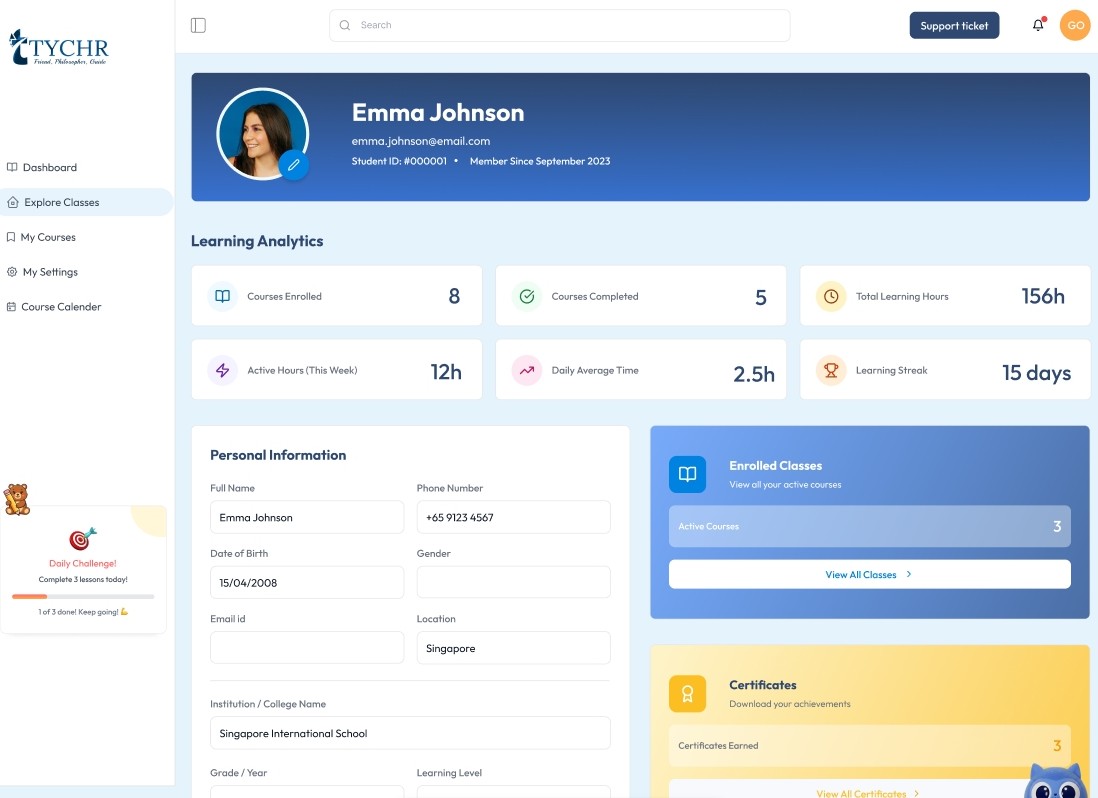
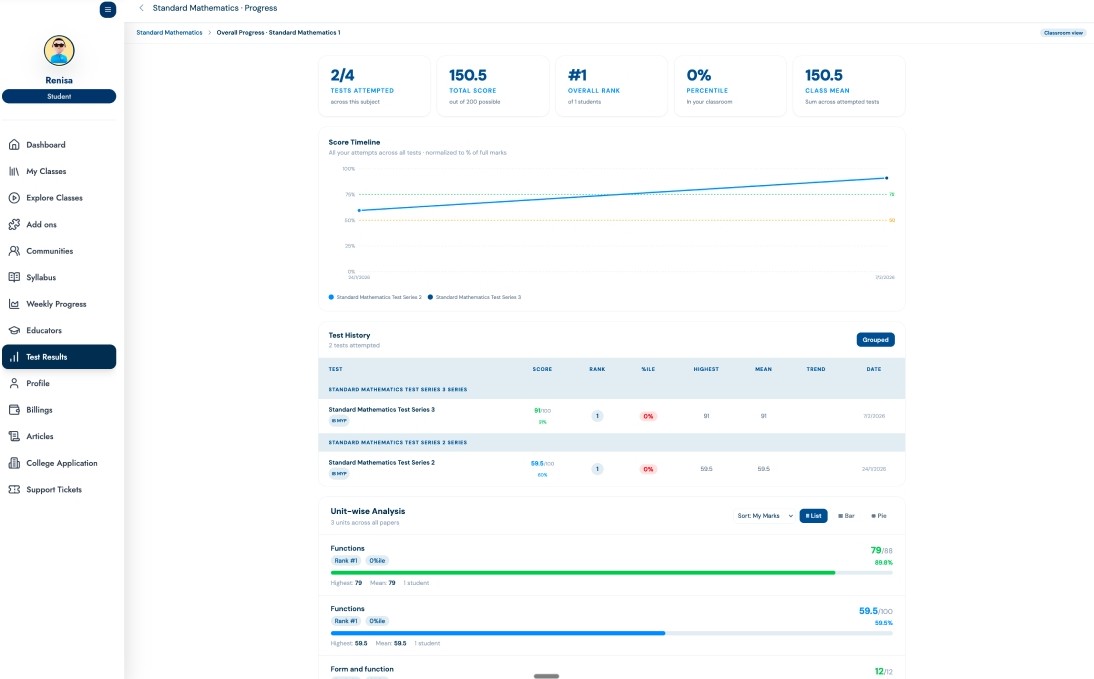
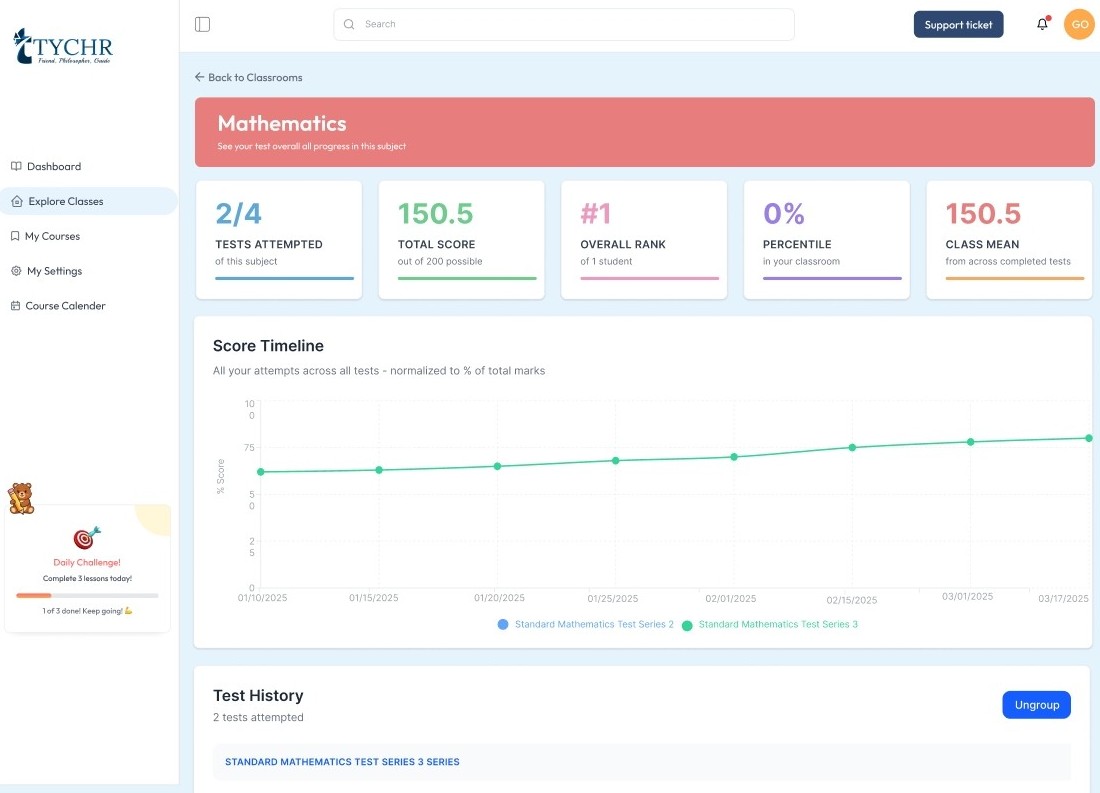
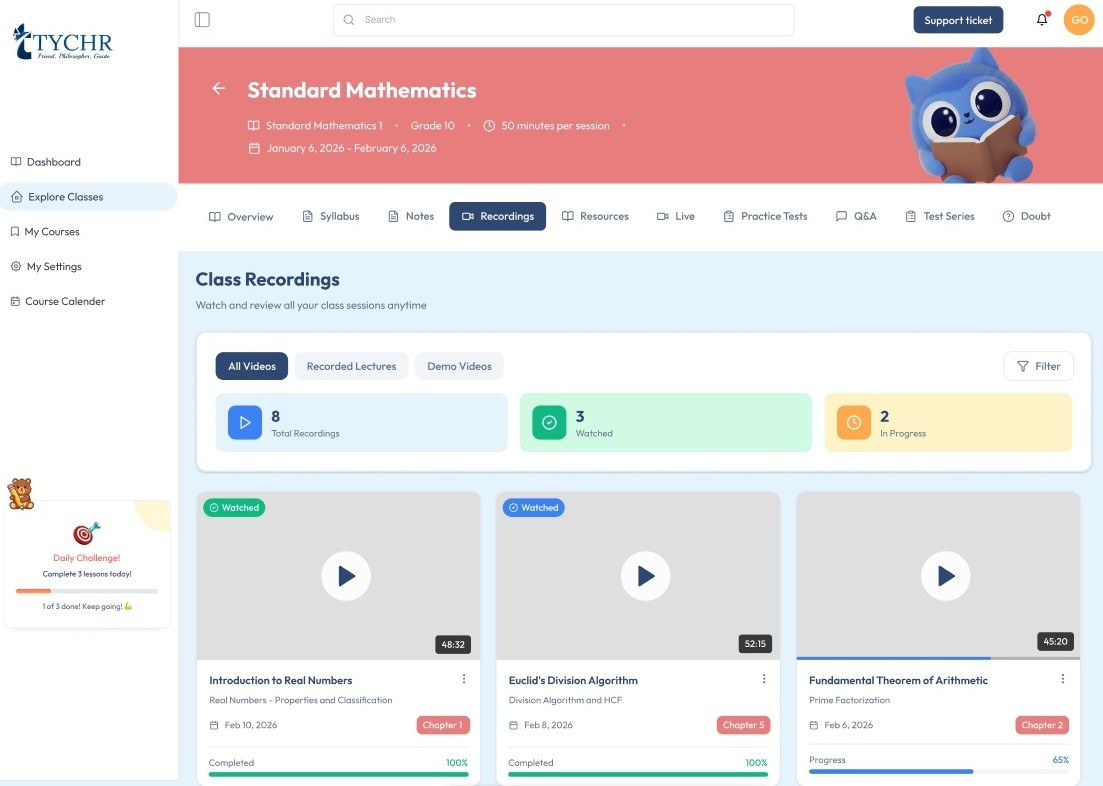
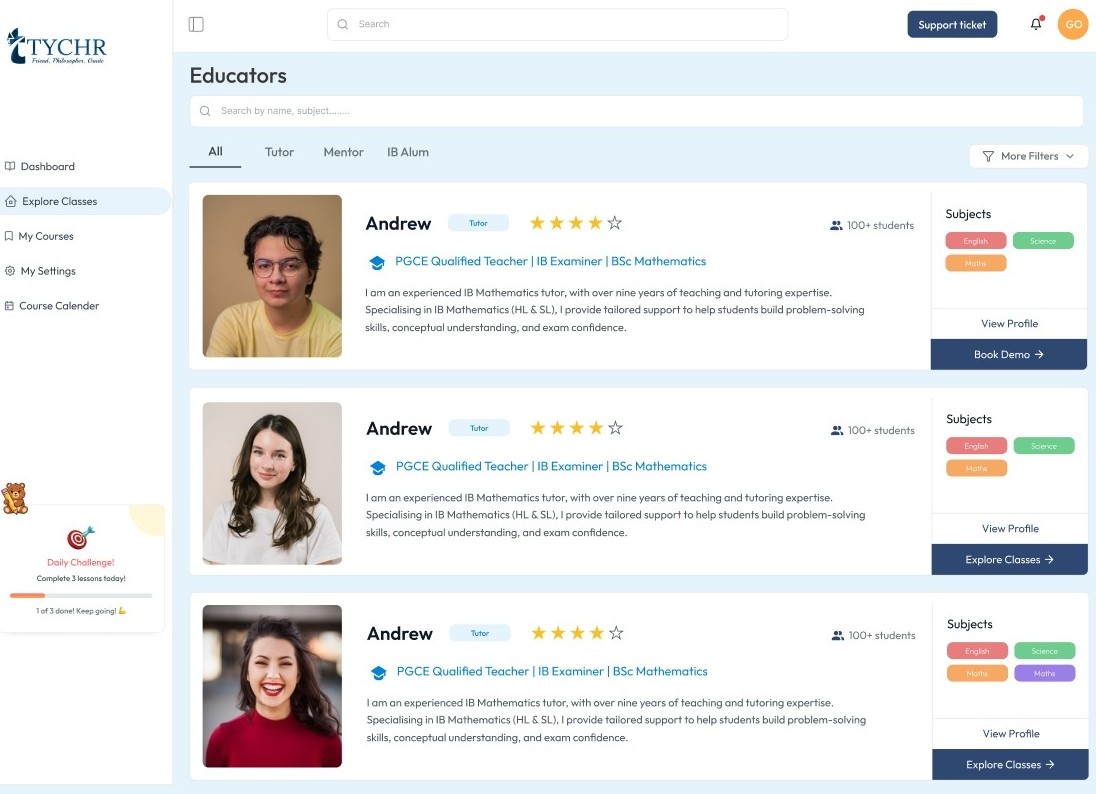
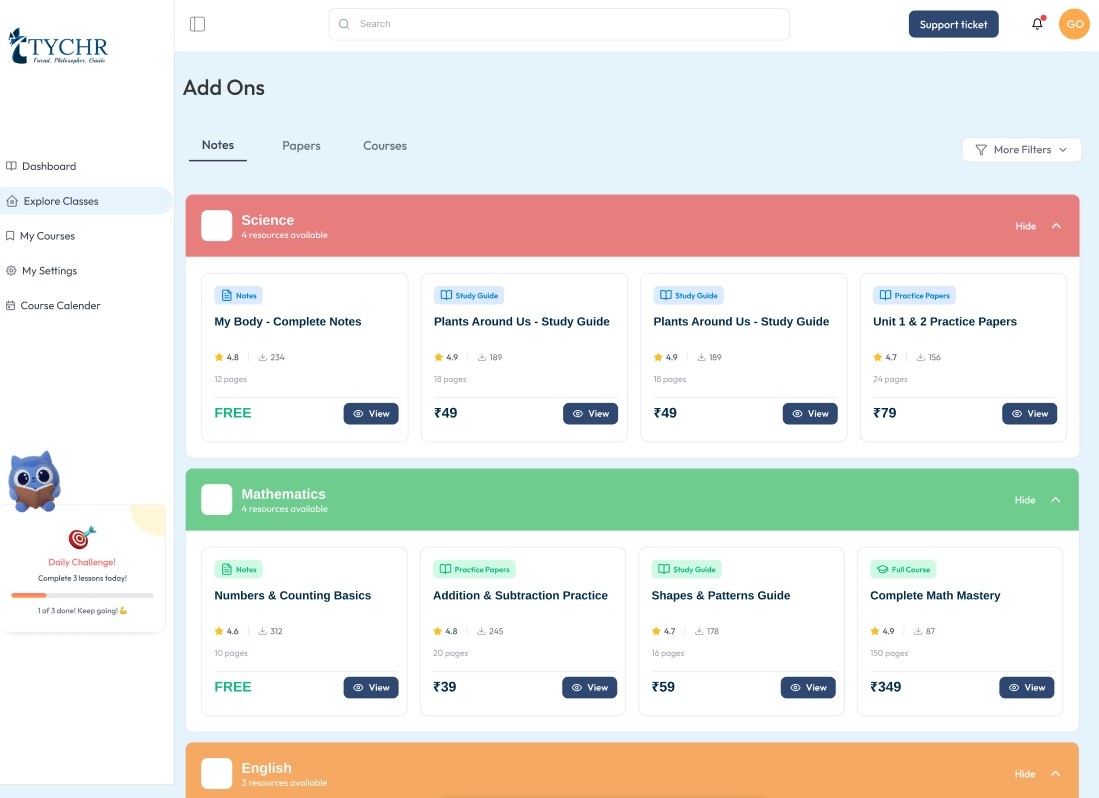
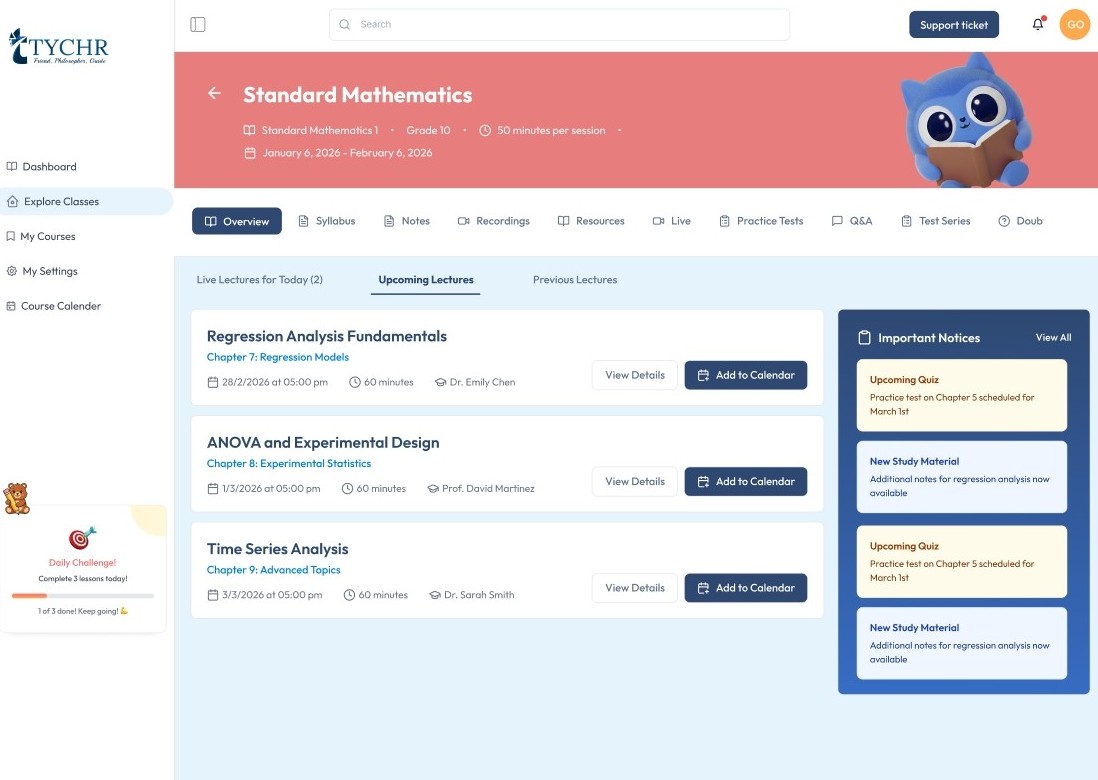
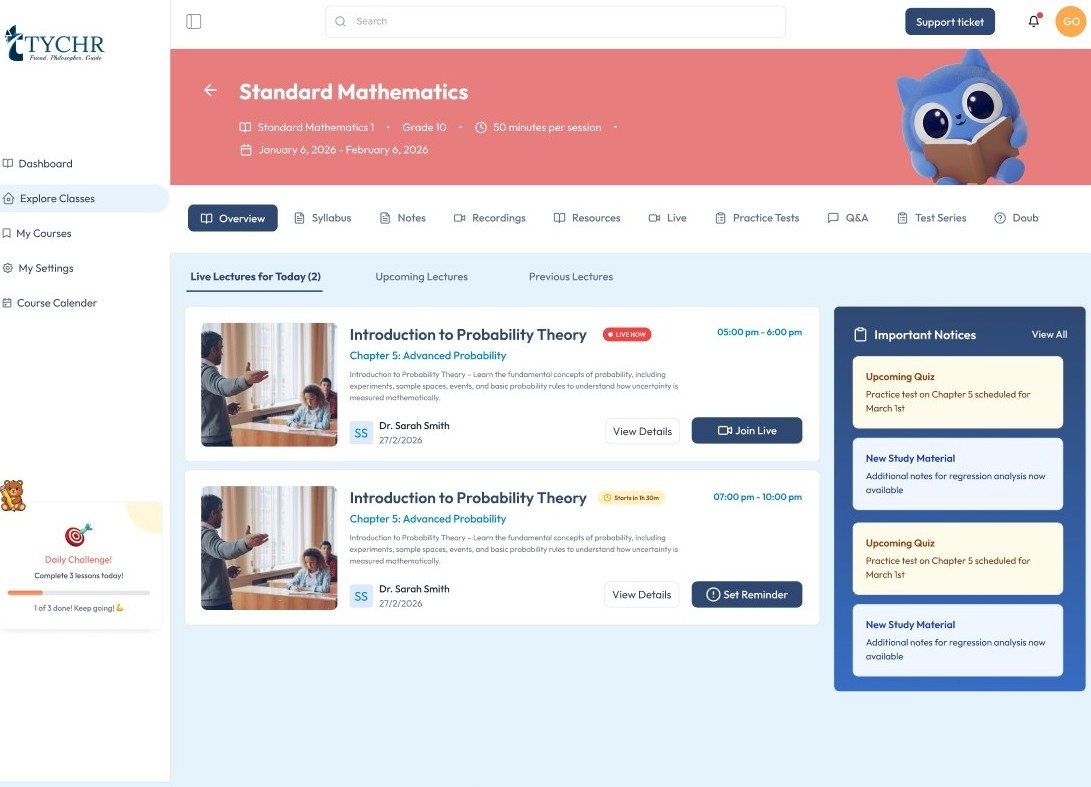
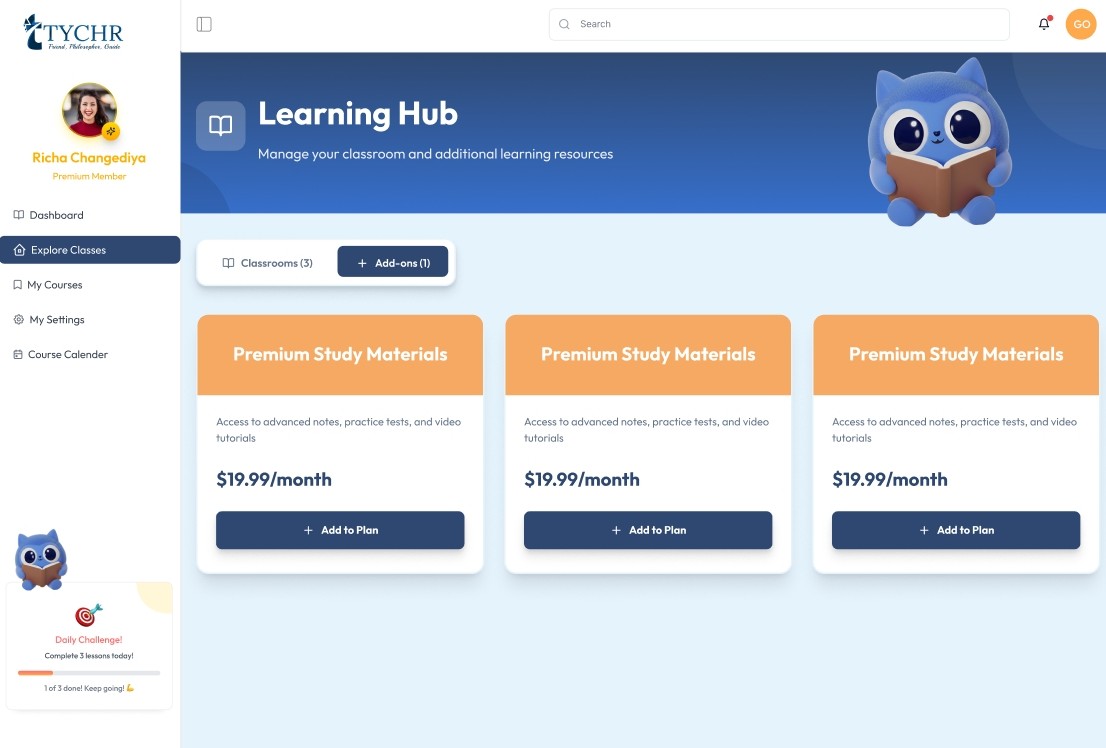
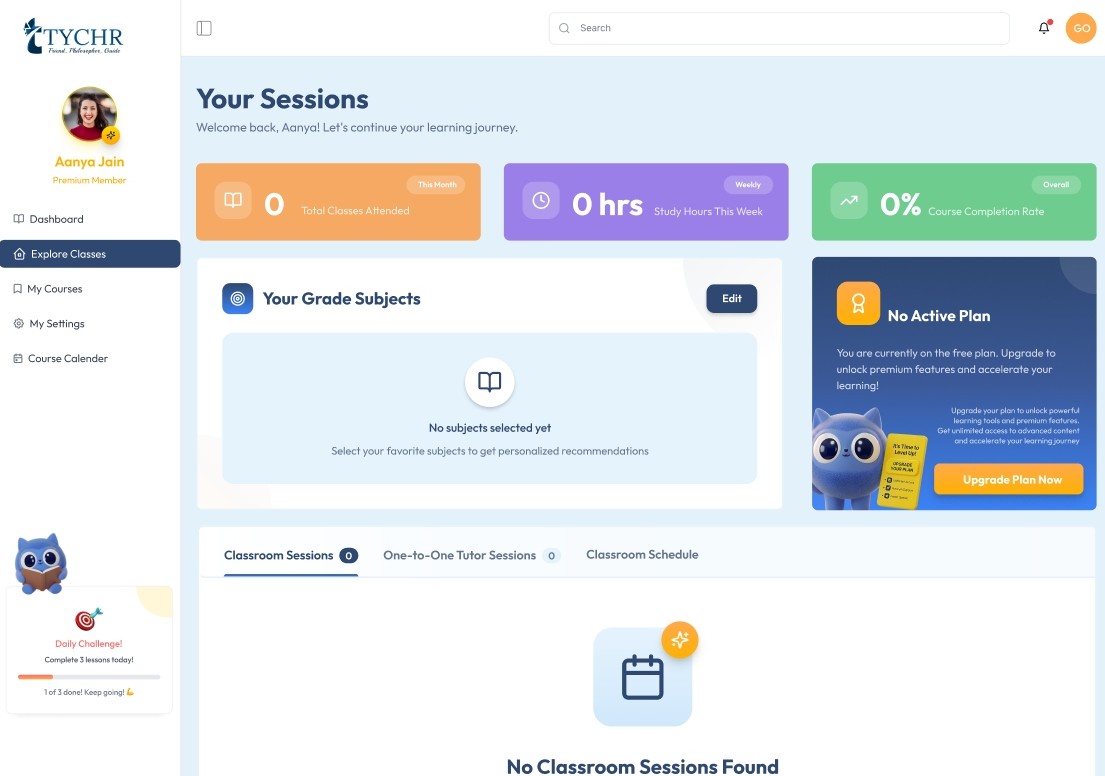
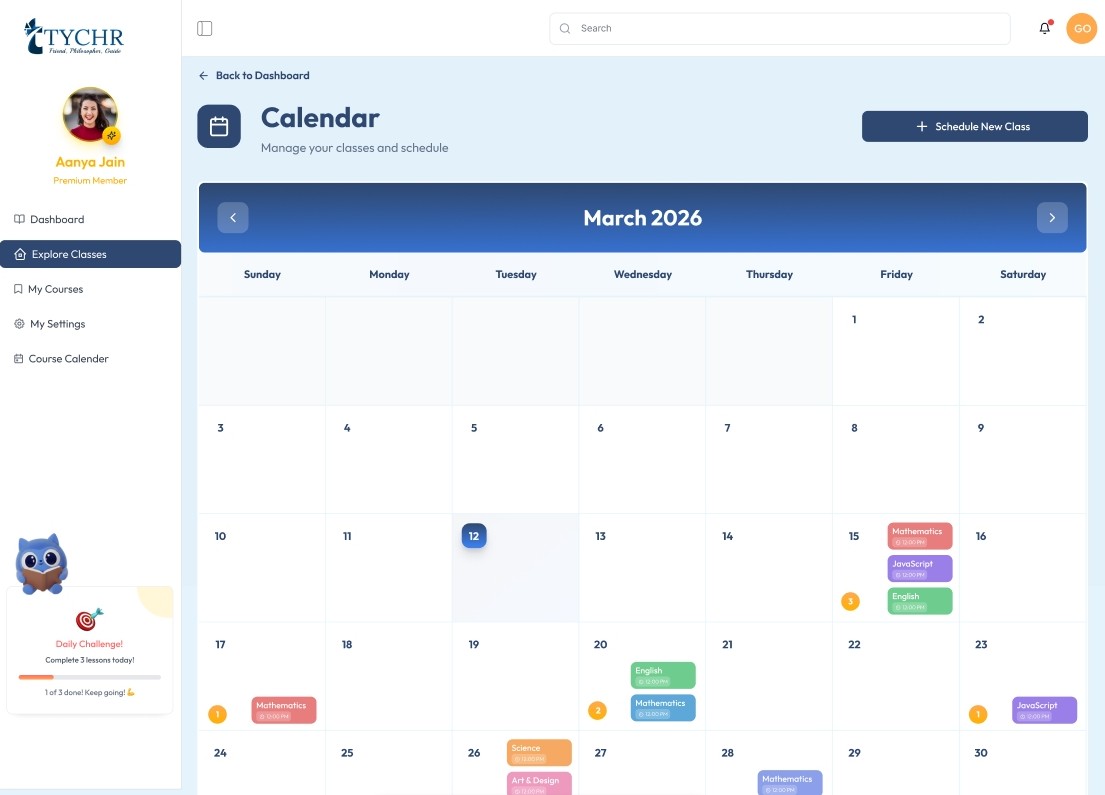
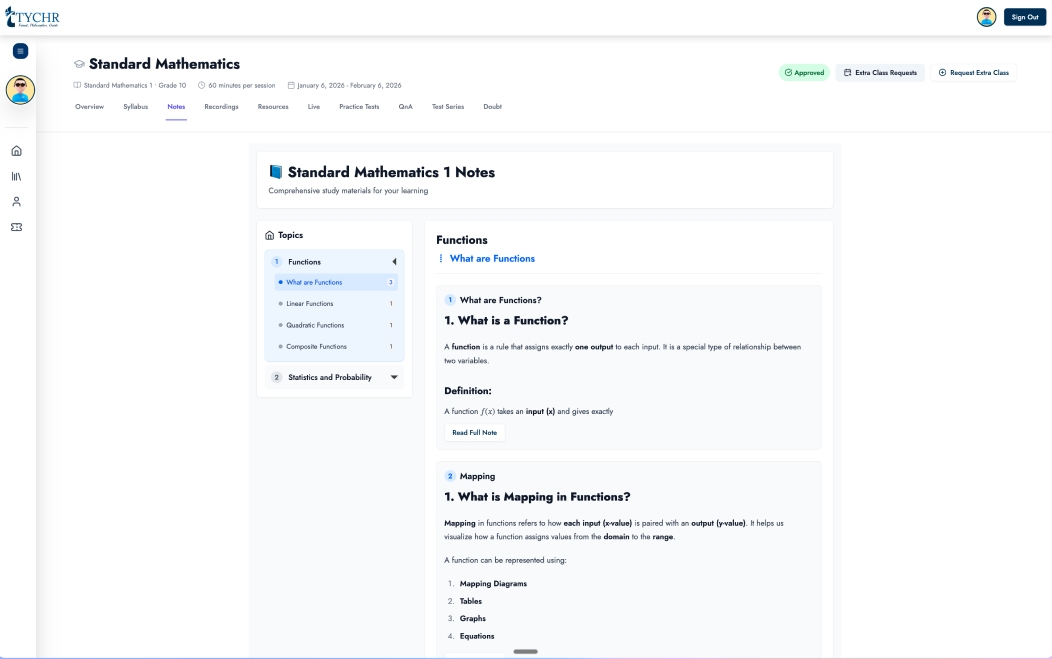
Explore our learning system
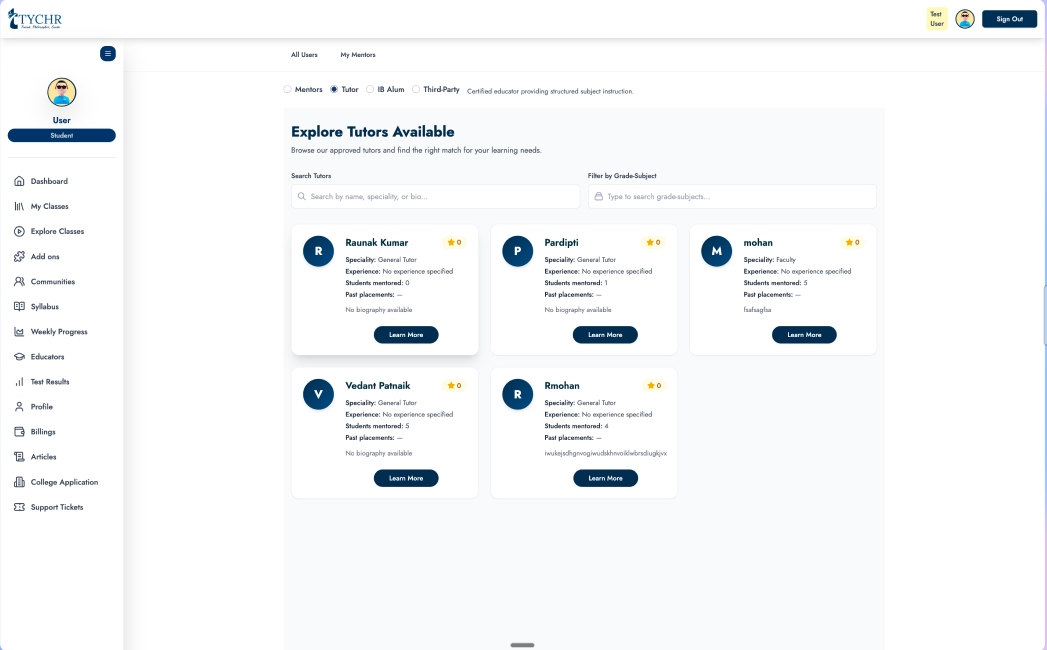
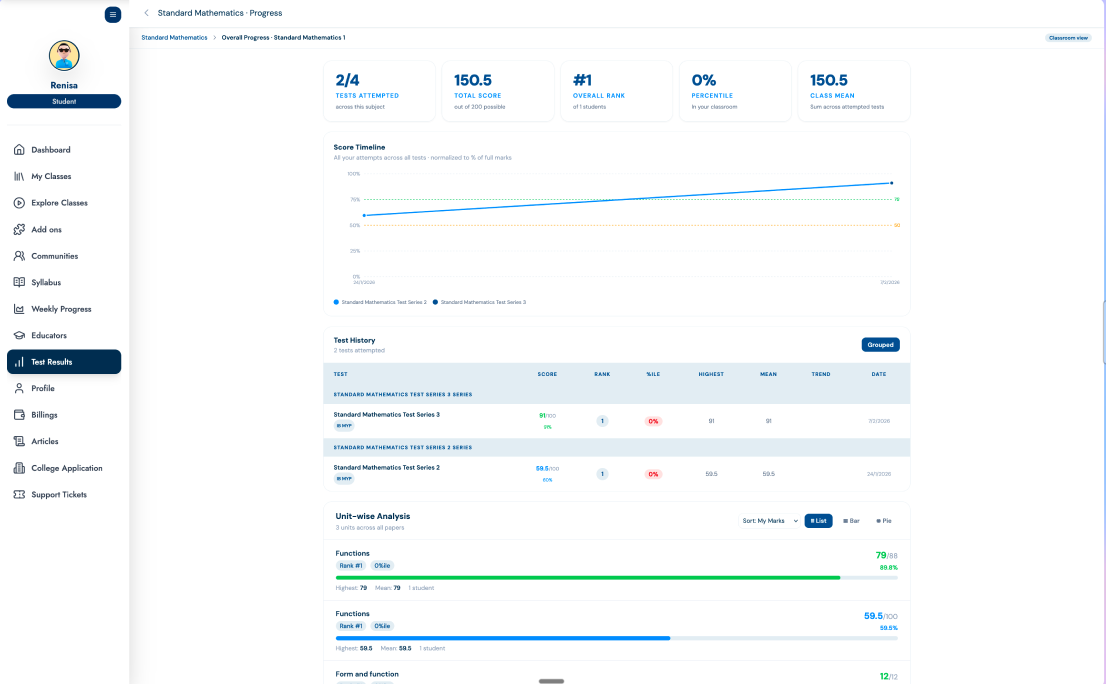
A platform designed around how students actually learn — adaptive, intuitive, and always one step ahead.
5000+
Students enrolled
100+
Expert tutors
95%
Satisfaction rate
70+
Countries reached
What Is IB Mathematics: Applications and Interpretation HL?
Course Structure & Assessment Overview
Course Framework
IB Mathematics: Applications and Interpretation HL is designed for students who enjoy applying mathematics to real-world contexts through mathematical modelling, statistics, technology, and practical problem-solving. The course develops mathematical reasoning, inquiry, interpretation, communication, and the effective use of technology while preparing students for university study and careers that value applied mathematics.
240 Teaching Hours
Recommended teaching hours for IB Mathematics: Applications and Interpretation HL
5 Syllabus Areas
Core mathematics areas covering number and algebra, functions, geometry and trigonometry, statistics and probability, and calculus
4 Assessment Components
Paper 1, Paper 2, Paper 3, and the Mathematical Exploration
80% External Assessment
Total weighting from Papers 1, 2, and 3
HL Assessment Breakdown
Paper 1 (30%)
Calculator-allowed examination consisting of compulsory short-response questions covering the breadth of the syllabus. Students are expected to demonstrate knowledge, understanding, mathematical reasoning, and appropriate use of technology.
Paper 2 (30%)
Calculator-allowed examination consisting of compulsory extended-response questions. Questions assess mathematical problem-solving, modelling, interpretation, reasoning, and the effective use of technology.
Paper 3 (20%)
Calculator-allowed examination focused on problem-solving and mathematical reasoning. Students tackle unfamiliar and complex problems requiring interpretation, strategy, technology, and clear mathematical communication.
Mathematical Exploration (20%)
An individual mathematical exploration based on a topic chosen by the student. The investigation emphasizes mathematical communication, appropriate techniques and tools, computation, interpretation, evaluation, and reflection.
HL vs SL — Key Differences
Understanding the Key Differences Between IB Mathematics: Applications and Interpretation HL and SL
| Aspect | Higher Level (HL) | Standard Level (SL) | Impact |
|---|---|---|---|
| Recommended Teaching Hours | 240 hours | 150 hours | HL includes 90 additional recommended teaching hours, allowing greater depth and breadth across the five syllabus topics and mathematical inquiry skills |
| Syllabus Depth | Greater depth and complexity across all five topics | Core syllabus across all five topics | HL provides more extensive mathematical content, applications, modelling, problem-solving, and reasoning |
| Paper 1 | 2 hours (30%) | 1 hour 30 minutes (40%) | Both levels use compulsory short-response questions, but HL has a longer examination and carries a lower percentage weighting |
| Paper 2 | 2 hours (30%) | 1 hour 30 minutes (40%) | Both levels use compulsory extended-response questions with technology allowed; HL provides greater scope for advanced problem-solving and application |
| Paper 3 | 1 hour (20%) | Not applicable | HL students complete two compulsory extended-response problem-solving questions requiring mathematical reasoning and application to unfamiliar problems |
| Internal Assessment | Exploration (20%) | Exploration (20%) | Both HL and SL complete an individual mathematical exploration. The updated assessment criteria focus on problem specification, abstraction, computation, and interpretation |
Why Choose Math AI HL?
- Planning to pursue university studies where stronger mathematical preparation is beneficial, such as economics, data science, business, finance, or other quantitative fields
- Interested in applying mathematics to real-world situations through modelling, statistics, technology, and data analysis
- Want to develop stronger mathematical reasoning and problem-solving skills
- Enjoy working with complex and unfamiliar mathematical problems
- Comfortable using a graphic display calculator and technology as part of mathematical problem solving
- Want greater depth across functions, geometry and trigonometry, statistics and probability, calculus, and number and algebra
HL Challenges We Address
- Managing the greater depth and workload of the HL syllabus across all five mathematical topics
- Applying mathematical models and techniques to unfamiliar real-world contexts
- Solving complex and unfamiliar problems in the HL Paper 3 examination
- Planning and developing a strong Mathematical Exploration
- Using technology and a graphic display calculator effectively for modelling, computation, and data analysis
- Communicating mathematical reasoning clearly and interpreting results in context
- Managing time effectively across Papers 1, 2, 3, and the Mathematical Exploration
IB Mathematics: Applications and Interpretation HL Paper 1
Short-Response Questions — Strategies & Techniques
Time Management & Question Strategy
01. Understand the Question
- 1.Read each question carefully and identify exactly what is being asked.
- 2.Recognize the mathematical topic and select an appropriate method or model.
- 3.Identify useful information, variables, units, and calculator requirements before calculating.
02. Solve Efficiently
- 1.Use appropriate mathematical techniques and your graphic display calculator efficiently.
- 2.Show sufficient working to communicate your method and reasoning clearly.
- 3.Keep track of units, notation, rounding, and significant figures where applicable.
03. Check & Interpret
- 1.Review calculator inputs and numerical results before moving on.
- 2.Check whether your answer is reasonable in the context of the question.
- 3.Use remaining time to revisit difficult or unanswered questions and correct obvious errors.
What Examiners Reward
Paper 1 assesses students through compulsory short-response questions covering the breadth of the IB Mathematics: Applications and Interpretation HL syllabus.
Examiners reward accurate mathematical methods, appropriate use of technology, clear reasoning, correct interpretation of results, and effective mathematical communication.
The Core Higher Level Challenge
HL students need to move efficiently between different areas of mathematics, including functions, statistics and probability, calculus, geometry and trigonometry, and number and algebra.
Our tutors train students to identify the required method quickly, use their calculator effectively, and present concise working that supports their answers.
Simulated Exam Drills From Day OneIB Mathematics: Applications and Interpretation HL Paper 2
Extended-Response Problem Solving, Technology & Mathematical Modeling
Essay Structure & Timing
Analyse the Problem (Work efficiently according to the demands of each question)
- Read the question carefully and identify what is being asked.
- Identify the relevant mathematical concepts, variables, and information provided.
- Choose an appropriate mathematical method, model, or technology tool.
- Consider the context before beginning the calculation.
Develop the Solution (Allocate time according to question difficulty and available marks)
- Show the important mathematical steps and reasoning clearly.
- Use your graphic display calculator effectively where appropriate.
- Record relevant intermediate values and mathematical results.
- Apply mathematical models and techniques accurately.
- Interpret results within the context of the problem.
- Keep track of units, notation, rounding, and significant figures where applicable.
Review & Interpret (Use remaining time to review your solutions)
- Check important calculations and calculator inputs.
- Verify that your final answer addresses the question asked.
- Check units, notation, rounding, and significant figures where appropriate.
- Consider whether your result is reasonable in context.
- Return to incomplete or uncertain parts if time remains.
Comparative Approaches
Mathematical Modeling
Build or apply an appropriate mathematical model, use technology to investigate the problem, and interpret the resulting mathematics in context.
Best for:
Real-world problems involving functions, statistics, data, and technology
Sequential Problem Solving
Work through each part logically, communicate your method clearly, and use previously calculated values accurately when progressing through the problem.
Best for:
Multi-part extended-response questions where later parts depend on earlier results
Technology-Supported Problem Solving
Use your graphic display calculator as an effective mathematical tool while retaining clear working, reasoning, and interpretation.
Best for:
Complex calculations, graphs, statistics, regression, and numerical analysis
Top Tips from Our HL Tutors
Understand Each Question Carefully
Read the question closely, identify the information provided, determine what is being asked, and choose an appropriate mathematical approach before calculating.
Show Clear Mathematical Working
Present the key mathematical steps, formulas, substitutions, and reasoning needed to communicate how you reached your answer.
Use Appropriate Mathematical Language
Use precise mathematical notation and terminology when describing functions, statistics, probability, calculus, modelling, graphs, and results.
Interpret Results in Context
Explain what your mathematical result means in the context of the problem, including appropriate units, rounding, and interpretation where required.
Use Technology Effectively
Use your graphic display calculator efficiently for calculations, graphs, statistical analysis, regression, and verification while clearly communicating the mathematical reasoning behind your answer.
Check Your Answers
Review calculations, calculator inputs, notation, units, rounding, and the reasonableness of your final answers before moving to the next question.
Mathematical Exploration
Comprehensive Mathematical Exploration Coaching to Help You Plan, Investigate, Communicate, Interpret, and Refine a Strong IB Mathematics: Applications and Interpretation HL Exploration
Preparation Timeline
Weeks 1–2
Problem Specification & Planning
- ✓Choose a meaningful mathematical problem or real-world context for investigation
- ✓Define a clear problem in context and identify the desired outcomes
- ✓Develop a focused plan for the mathematical investigation
- ✓Identify the information, data, tools, or techniques needed to address the problem
Weeks 3–4
Abstraction & Mathematical Formulation
- ✓Identify and justify appropriate assumptions
- ✓Select suitable mathematical techniques, tools, technology, or data
- ✓Translate the problem into an appropriate mathematical form
- ✓Explain why the selected mathematical approach is suitable for the investigation
Weeks 5–6
Computation & Mathematical Communication
- ✓Carry out relevant calculations accurately using appropriate mathematical methods
- ✓Use technology effectively where it supports the investigation
- ✓Present equations, graphs, tables, calculations, and mathematical reasoning clearly
- ✓Maintain accurate mathematical notation and communication throughout the exploration
Weeks 7–8
Interpretation, Evaluation & Refinement
- ✓Interpret mathematical results in the context of the original problem
- ✓Evaluate whether the desired outcomes have been achieved
- ✓Identify limitations, assumptions, or weaknesses in the investigation
- ✓Refine the mathematical approach or conclusions where appropriate
Presentation Structure
Problem Specification
Criterion A — 4 marksEstablish the problem in context and clearly identify the desired outcomes of the mathematical investigation.
Abstraction
Criterion B — 6 marksIdentify appropriate assumptions, select suitable techniques and tools, and express the problem in an appropriate mathematical form.
Computation
Criterion C — 4 marksCarry out relevant calculations accurately and communicate the mathematical processes, methods, and results clearly.
Interpretation
Criterion D — 6 marksInterpret the results, evaluate the desired outcomes, and refine the investigation where appropriate.
How It Works
Exploration Topic Brainstorming
Develop focused, engaging, and IB-appropriate mathematical investigation ideas connected to a meaningful context or area of interest.
Problem Specification
Turn an initial idea into a clearly defined mathematical problem with a focused context and meaningful desired outcomes.
Mathematical Modeling & Abstraction
Receive guidance on selecting assumptions, mathematical techniques, tools, data, and models that appropriately represent the problem.
Computation & Mathematical Communication
Improve calculations, mathematical notation, graphs, tables, technology use, and the clear communication of mathematical reasoning.
Interpretation & Evaluation
Learn how to interpret results in context, evaluate whether desired outcomes were achieved, identify limitations, and refine the investigation.
Criterion-Based IA Reviews
Receive structured feedback based on the four current IB Mathematics exploration criteria: Problem Specification, Abstraction, Computation, and Interpretation.
IB Mathematics: Applications and Interpretation HL Problem-Solving Strategies
Master Mathematical Reasoning, Technology & Exam Techniques
Core Topic Preparation
Build confidence across number and algebra, functions, geometry and trigonometry, statistics and probability, and calculus.
Concept & Formula Mastery
Build a strong mathematical foundation so you can select and apply the right methods confidently.
- Organize key formulas and relationships by syllabus topic
- Understand when and why each mathematical method applies
- Practice using formulas with real-world and unfamiliar problems
- Review common errors and misconceptions regularly
GDC & Technology Skills
Develop accurate and efficient Graphic Display Calculator (GDC) skills for mathematical problem-solving and data analysis.
- Use statistical and regression functions effectively
- Graph functions and investigate mathematical relationships
- Solve numerical and graphical problems efficiently
- Use technology to support calculations, modelling, and verification
Mathematical Modelling
Learn to connect mathematical concepts with real-world situations through modelling, analysis, and interpretation.
- Translate real-world situations into mathematical models
- Select appropriate functions, statistics, or mathematical techniques
- Identify assumptions and evaluate limitations
- Interpret mathematical results within the original context
Exam Problem-Solving Strategies
Approach short-response, extended-response, and unfamiliar problem-solving questions with confidence across Papers 1, 2, and 3.
Question Analysis
- 1.Identify the mathematical concepts and information provided
- 2.Determine exactly what the question is asking
- 3.Identify relevant variables, units, and constraints
- 4.Choose an appropriate mathematical method or technology
Structured Problem Solving
- 1.Show the important mathematical steps and reasoning
- 2.Use your GDC efficiently where appropriate
- 3.Record relevant intermediate results
- 4.Apply mathematical methods consistently across multi-step problems
Review & Interpretation
- 1.Verify important calculations and calculator inputs
- 2.Check units, notation, rounding, and significant figures where applicable
- 3.Interpret your answer in the context of the problem
- 4.Return to incomplete or uncertain parts if time remains
Connecting Concepts Across the Syllabus
Strong mathematical understanding allows you to approach both familiar and unfamiliar problems with confidence. Our tutors help students connect concepts across the syllabus, use technology effectively, communicate mathematical reasoning clearly, and develop flexible problem-solving strategies for every HL assessment component.
Recommended HL Study Routine
One-to-One vs Group Tutoring
Choose Your Ideal Learning Format for the IB Diploma Programme
One-to-One Tutoring
Tailored, High-Impact Learning
- ✓Personalized curriculum pacing: Focus directly on your specific SL/HL syllabus needs.
- ✓Targeted weak-area remediation: Deep-dive into challenging topics and command terms.
- ✓1-on-1 Internal Assessment (IA) guidance: Tailored mentoring through rubric criteria.
- ✓Customized past paper practice: Detailed, line-by-line mark scheme breakdown.
- ✓Flexible scheduling: Adapt session timings around your school calendar and deadlines.
- ✓Direct mark-scheme feedback: Actionable critiques to push your boundaries toward a Grade 7.
Group Tutoring
Interactive & Collaborative Learning
- ✓Small cohort learning: Learn alongside 3–5 peers studying the same subject and level.
- ✓Collaborative problem-solving: Benefit from diverse perspectives and peer discussions.
- ✓Structured weekly syllabus roadmap: Consistent, steady coverage of core IB topics.
- ✓Shared past paper walkthroughs: Master IB exam techniques and mark schemes together.
- ✓Cost-effective mastery: Premium IB tutoring at a lower per-session rate.
- ✓Peer motivation & accountability: Stay on track alongside fellow IB diploma candidates.
Not sure which format works best? Book a free consultation to discuss your IB tutoring needs
Book Free ConsultationGrade Improvements — Maths AI HL Score Results
From Students

Chili
Math AI HL

Zoe
Math AA HL
Free IB Mathematics: Applications and Interpretation HL Resources
Study Notes, Exam Practice & Mathematical Exploration Resources
Complete IB Mathematics: Applications and Interpretation HL Resource Library
IB Mathematics: Applications and Interpretation HL students can access a comprehensive digital resource library covering syllabus notes, exam practice, Paper 1 and Paper 2 preparation, HL Paper 3 problem-solving, Mathematical Exploration guidance, worked examples, and technology-focused resources.
800+
Study Resources
10+ Years
Practice Papers
1000+
Practice Questions
24/7
Access
HL Mathematics Study Guides
Comprehensive study notes covering the five core areas of IB Mathematics: Applications and Interpretation HL, with worked examples and practical applications.
- ✓Number and algebra
- ✓Functions
- ✓Geometry and trigonometry
- ✓Statistics and probability
- ✓Calculus
Question-Solving Guides
Structured strategies for solving IB Mathematics: Applications and Interpretation HL questions across Papers 1, 2, and 3.
- ✓Paper 1 short-response strategies
- ✓Paper 2 extended-response strategies
- ✓Paper 3 problem-solving strategies
Past Paper & Exam Practice
A collection of IB-style practice papers, specimen-style questions, markscheme-based practice, and exam preparation materials.
- ✓Paper 1, Paper 2 and Paper 3 practice
- ✓Specimen-style questions
- ✓Markscheme-based practice
Mathematical Exploration Examples
Examples and guidance to help students plan, develop, communicate, and evaluate their Mathematical Exploration.
- ✓High-scoring sample explorations
- ✓Topic and problem ideas
- ✓Research question guidance
Exploration Preparation Resources
Practical support for every stage of the Mathematical Exploration, from problem specification and abstraction to computation and interpretation.
- ✓Problem specification guidance
- ✓Mathematical modelling and planning
- ✓Criterion-based review checklists
Mathematical Reference Library
A practical reference for mathematical terminology, notation, formulas, technology, and common problem-solving methods used throughout the HL course.
- ✓Mathematical terminology and notation
- ✓Formula and concept summaries
- ✓GDC and technology guidance
Recommended Topic Areas
Master Every Syllabus Area with Expert Guidance
Core IB Mathematics: Applications and Interpretation HL Topics
Number & Algebra
Sequences & Series
by IB Mathematics: Applications and Interpretation HL
Key themes: Patterns, Relationships, Financial Applications
Financial Mathematics
by IB Mathematics: Applications and Interpretation HL
Key themes: Interest, Loans, Investments, Annuities
Approximation & Numerical Methods
by IB Mathematics: Applications and Interpretation HL
Key themes: Estimation, Accuracy, Numerical Solutions
Algebraic Models
by IB Mathematics: Applications and Interpretation HL
Key themes: Relationships, Equations, Mathematical Models
Functions
Linear & Quadratic Functions
by IB Mathematics: Applications and Interpretation HL
Key themes: Graphs, Relationships, Modelling
Exponential & Logarithmic Functions
by IB Mathematics: Applications and Interpretation HL
Key themes: Growth, Decay, Inverse Relationships
Composite & Inverse Functions
by IB Mathematics: Applications and Interpretation HL
Key themes: Function Operations, Inverses, Transformations
Trigonometric Functions
by IB Mathematics: Applications and Interpretation HL
Key themes: Periodic Models, Graphs, Applications
Function Modelling
by IB Mathematics: Applications and Interpretation HL
Key themes: Real-World Data, Prediction, Model Selection
Geometry & Trigonometry
Trigonometric Relationships
by IB Mathematics: Applications and Interpretation HL
Key themes: Angles, Identities, Applications
Geometry & Measurement
by IB Mathematics: Applications and Interpretation HL
Key themes: Shapes, Dimensions, Spatial Relationships
Vectors & Geometric Applications
by IB Mathematics: Applications and Interpretation HL
Key themes: Direction, Magnitude, Geometric Modelling
3D Geometry
by IB Mathematics: Applications and Interpretation HL
Key themes: Coordinates, Distance, Spatial Modelling
Statistics & Probability
Descriptive Statistics
by IB Mathematics: Applications and Interpretation HL
Key themes: Mean, Median, Variability, Standard Deviation
Probability
by IB Mathematics: Applications and Interpretation HL
Key themes: Events, Conditional Probability, Independence
Probability Distributions
by IB Mathematics: Applications and Interpretation HL
Key themes: Binomial, Normal Distribution, Expected Values
Regression & Correlation
by IB Mathematics: Applications and Interpretation HL
Key themes: Relationships, Prediction, Data Modelling
Statistical Modelling
by IB Mathematics: Applications and Interpretation HL
Key themes: Data Analysis, Technology, Interpretation
Calculus
Differentiation
by IB Mathematics: Applications and Interpretation HL
Key themes: Rates of Change, Optimization, Function Analysis
Integration
by IB Mathematics: Applications and Interpretation HL
Key themes: Accumulation, Area, Applications
Differential Equations
by IB Mathematics: Applications and Interpretation HL
Key themes: Change, Modelling, Numerical Solutions
Calculus Applications
by IB Mathematics: Applications and Interpretation HL
Key themes: Optimization, Modelling, Real-World Problems
How We Support Your Success
Comprehensive tutoring aligned with the IB Mathematics: Applications and Interpretation HL curriculum.
Mathematical Exploration Support
Choose a focused and mathematically appropriate exploration topic connected to a meaningful context or area of interest.
Problem-Solving Sessions
Develop step-by-step strategies for Paper 1 short-response, Paper 2 extended-response, and Paper 3 problem-solving questions.
Real-World Applications
Apply mathematical models and techniques to finance, science, business, technology, data, and other real-world contexts.
Exam Strategies
Build effective approaches for GDC use, mathematical communication, interpretation, and exam time management.
HL Mathematical Skills
Strengthen understanding across number and algebra, functions, geometry and trigonometry, statistics and probability, and calculus.
Technology & Mathematical Reasoning
Improve accuracy and efficiency through appropriate technology use, formula application, mathematical reasoning, and structured problem-solving.
Mock Exams & Expert Feedback
Prepare for Every Assessment with Confidence
Our Mock Exam Process
Pre-Mock Preparation
- Review the relevant IB Mathematics: Applications and Interpretation HL syllabus areas
- Revise key mathematical methods, concepts, and formulas
- Practice exam-style questions under timed conditions
- Check your graphic display calculator and required exam setup
Mock Exam Session
- Complete a full-length Paper 1, Paper 2, or Paper 3 under realistic exam conditions
- Practise managing time across questions according to their demands
- Use your graphic display calculator effectively where required
- Work independently and communicate mathematical reasoning clearly
Detailed Feedback
- Review solutions using IB-style marking and assessment expectations
- Identify calculation, reasoning, interpretation, and communication errors
- Analyse lost marks and recurring weaknesses
- Create a focused improvement plan for future practice
Review & Improvement
- Discuss difficult questions and missed marks with your tutor
- Correct recurring mathematical and calculator errors
- Improve mathematical communication and problem-solving strategies
- Set clear priorities for the next stage of exam preparation
Assessment Feedback
Paper 1 Practice
✓ Short-response problem solving
✓ Mathematical reasoning and method selection
✓ Calculation accuracy and mathematical communication
✓ Efficient use of exam time and technology
Paper 2 Practice
✓ Extended-response problem solving
✓ Mathematical modelling and application
✓ Technology and GDC use
✓ Interpretation and clear mathematical communication
Paper 3 Practice
✓ Unfamiliar problem-solving strategies
✓ Multi-step mathematical reasoning
✓ Extended-response evaluation
✓ Interpretation, strategy, and mathematical communication
Mathematical Exploration
✓ Problem specification
✓ Mathematical abstraction
✓ Computation and mathematical communication
✓ Interpretation and evaluation
Why Mock Exams Matter
Build Exam Confidence
Experience realistic exam conditions before the final assessment and build confidence with the required question formats.
Identify Weak Areas
Identify gaps in your mathematical understanding and focus revision on the areas where improvement is most needed.
Improve Time Management
Develop practical strategies for managing time across short-response, extended-response, and problem-solving questions.
Strengthen Exam Technique
Use repeated exam-style practice to improve accuracy, mathematical reasoning, technology use, and confidence.
Expert IB Feedback
Receive structured feedback based on IB Mathematics: Applications and Interpretation assessment expectations.
What students say
“The flexible scheduling made it easy to fit classes into my routine, and the personalized attention helped me grasp difficult concepts with ease. I'm very pleased with the results I achieved. ”

Minami
IBDP Maths AI SL
“I struggled with word problems and algebra for years. Weekly sessions with clear step-by-step methods completely changed how I approach Maths, and my scores have never been better. ”

Zorawar
IBDP Math AA SL
“I needed someone who wouldn't rush through topics, and my tutor gave me exactly that. My grades improved steadily and I finally feel confident going into exams. ”

Akshaya
IBDP Math AA HL
Frequently Asked Questions
Everything About IB Maths AI HL Tutoring
Our tutors break down matrix operations, network paths, Poisson distributions, and Spearman's rank correlation using practical contexts.
Yes, we provide targeted practice on Euler's method, coupled differential equations, and optimization problems applied to real-world scenarios.
We train students on rapid GDC execution, statistical test selections, and interpreting complex software outputs accurately.
Absolutely. All sessions cover modeling, topology, advanced probability, and calculus extension topics according to the curriculum.
Yes, we help students choose real-world contexts, collect empirical datasets, and apply appropriate statistical models for their exploration.
We coach students on analyzing extended scenarios, testing hypotheses, and communicating complex mathematical findings clearly.
Is IB Maths AI HL Worth It?
University Pathways & Career Opportunities
Why Universities Value IB Maths AI HL
Advanced Quantitative Skills
Develop mathematical modelling, statistics, technology, data interpretation, and quantitative problem-solving skills that can support a wide range of university pathways.
Independent Mathematical Investigation
Complete an individual Mathematical Exploration that develops problem specification, abstraction, computation, interpretation, and mathematical communication.
Real-World Applications
Apply mathematics to authentic situations using technology, modelling, statistics, and data analysis to build practical quantitative skills.
University Pathways
Data Science & Analytics
Develops statistics, mathematical modelling, data interpretation, technology, and quantitative problem-solving skills. Check the mathematics requirements of each programme before applying.
Economics & Finance
Provides useful preparation in statistics, financial mathematics, modelling, and quantitative reasoning. Some highly mathematical economics and finance programmes may prefer or require Mathematics: Analysis and Approaches HL.
Business & Management
Supports quantitative decision-making, statistics, financial analysis, modelling, and data interpretation relevant to business and management degrees.
Actuarial Science & Statistics
Statistics, probability, modelling, and quantitative reasoning are highly relevant, although some actuarial and mathematical programmes may require or prefer Mathematics: Analysis and Approaches HL.
Computer Science
Develops logical reasoning, statistics, modelling, and technology-based mathematical skills. Some computer science programmes accept AI HL, while others may prefer or require AA HL.
Environmental & Social Sciences
Supports statistical analysis, mathematical modelling, data interpretation, and evidence-based decision-making across environmental and social science disciplines.
The Value of IB Maths AI HL
IB Mathematics: Applications and Interpretation HL develops mathematical modelling, technology, statistics, data interpretation, and analytical thinking skills that can support a wide range of university disciplines.
- Develops strong quantitative reasoning and analytical skills
- Builds confidence using mathematical technology and data
- Strengthens real-world modelling and problem-solving abilities
- Develops independent mathematical investigation through the Mathematical Exploration
- Prepares students for university-level applications of mathematics
- Supports a range of applied, business, data, and social science pathways
96%
First-Choice University
82%
Top Universities
$3.1M
Scholarships Won
100%
University Acceptance
Book Your Maths AI HL Tutor Today
Start Your Journey to Maths AI HL HL Excellence in 3 Simple Steps
Choose Your HL Tutor
Browse our expert Maths AI HL tutor profiles and select one who matches your literary interests and learning goals.
Schedule Free Trial
Book your complimentary 60-minute session to discuss your texts, goals, and current challenges—no commitment.
Start Literary Analysis
Begin your personalized HL journey with close reading, essay coaching, and comprehensive exam preparation.