Certified IB Maths AA HL Tutors in Global to Help You Achieve 7/7 Across All Components
IB Maths AA HL is one of the most assessment-diverse IB subjects, featuring distinct assessment components that each require a specialized analytical approach.

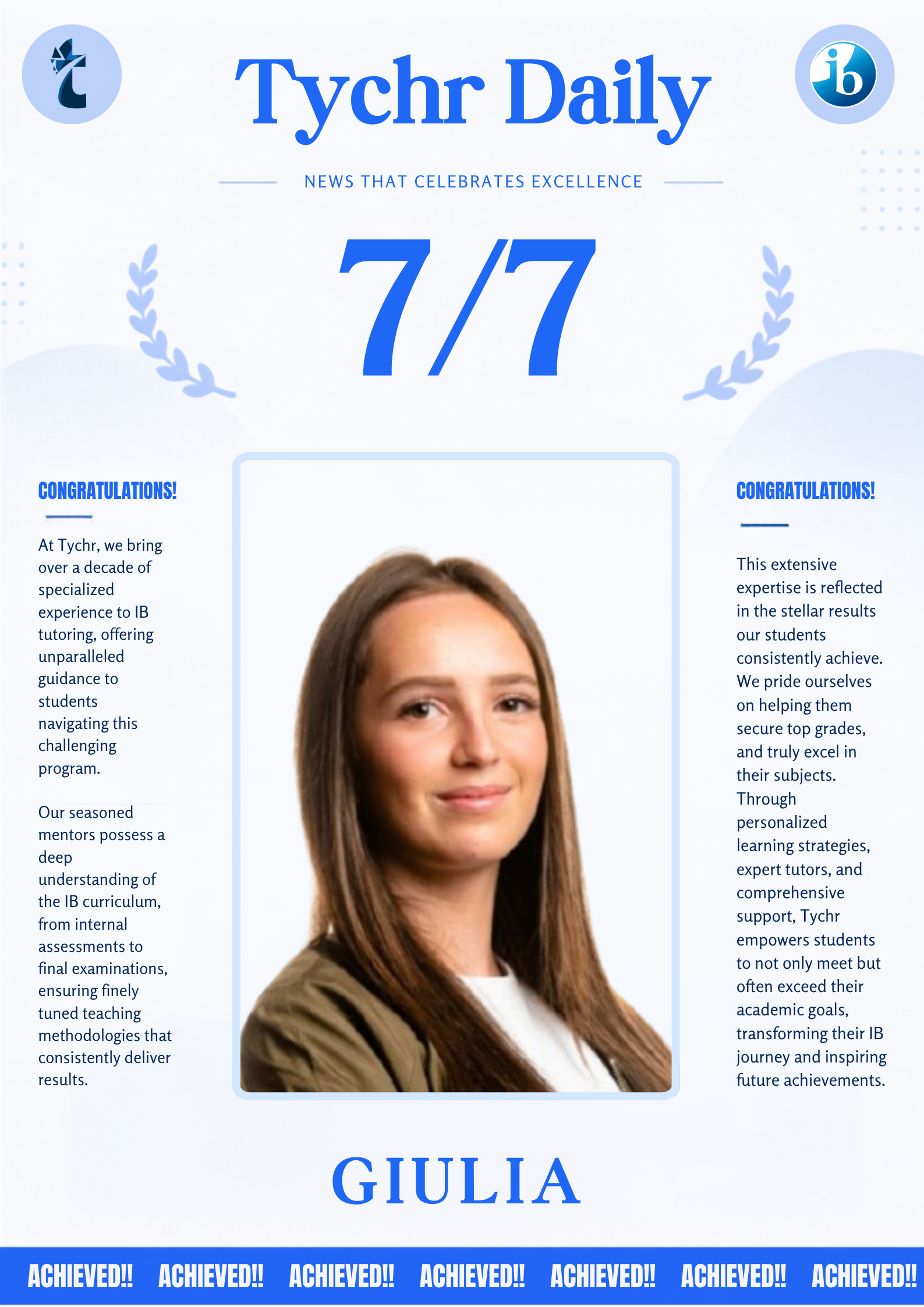
GULIA
43/45
TANISHA
43/45
ADAA
43/45
RUSHIL
45/45
ESHAAN
42/45
VISHAAL
43/45Start your journey with the right guidance.
Your information is kept private and never shared with third parties.
+1.8
Average grade improvement
91%
Students score 6 or 7
600+
Maths AA students tutored
4.9/5
Average tutor rating
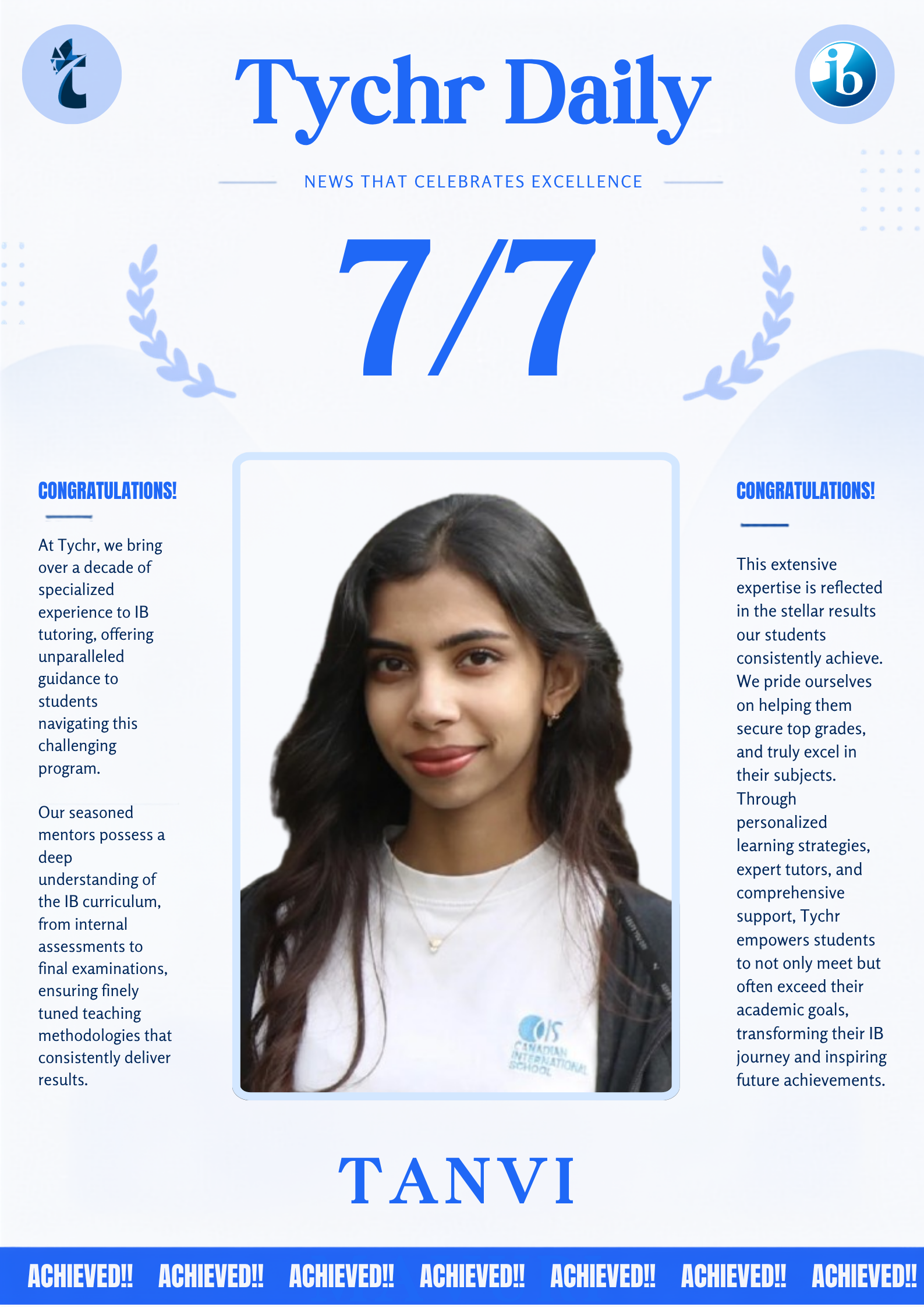
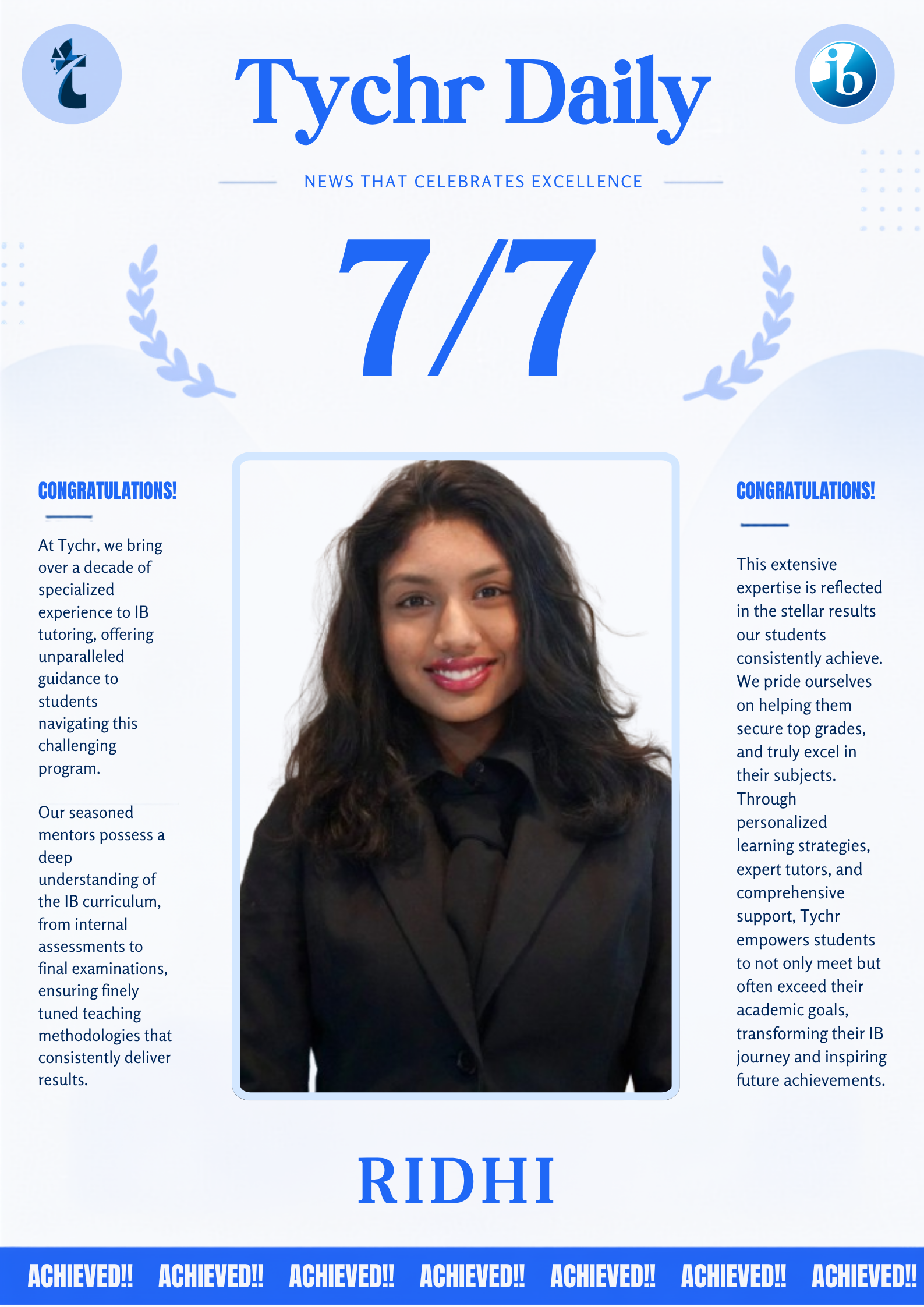
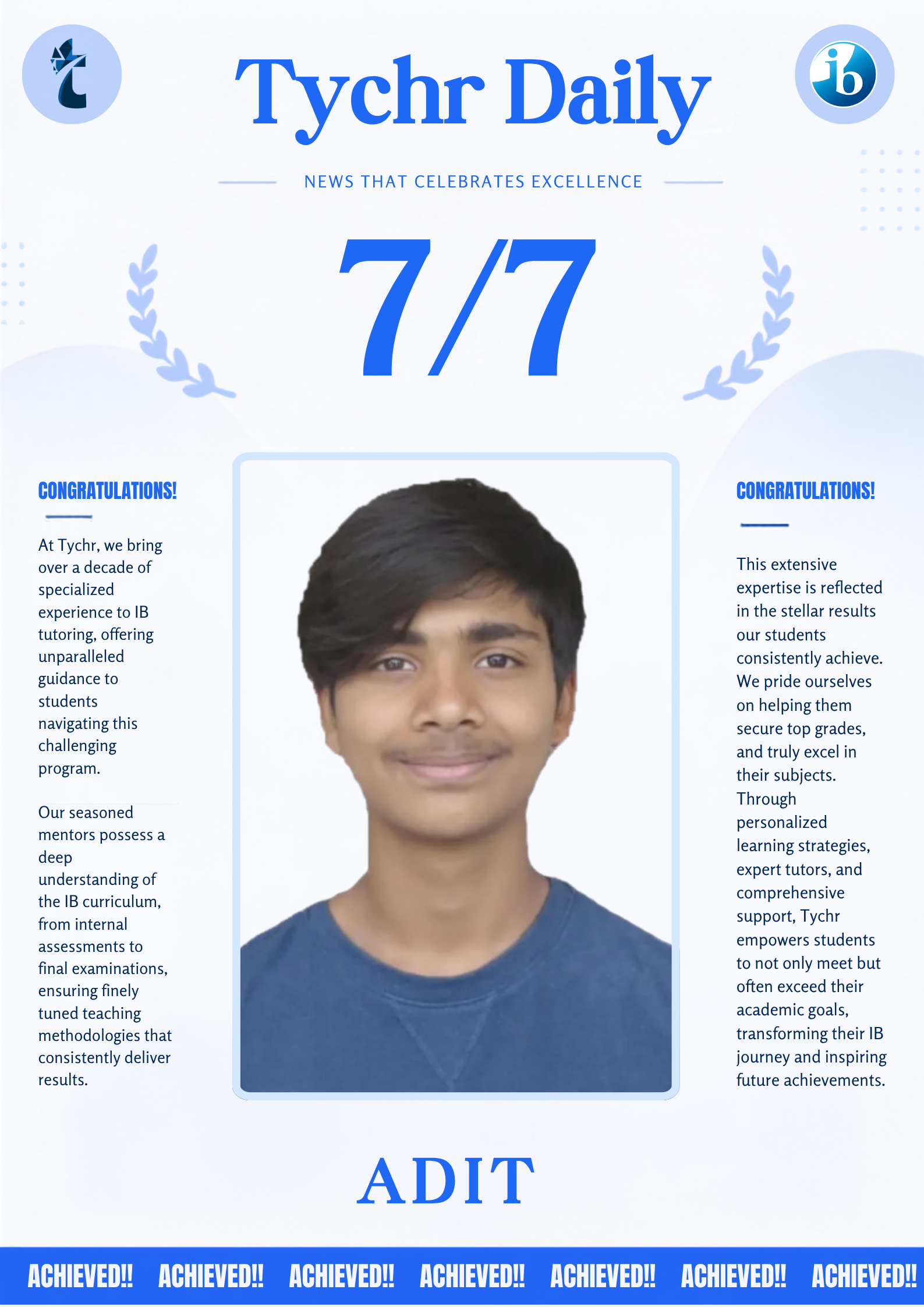
Maths AA HL Results That Speak For Themselves

Start your journey with the right guidance.
Our Placements


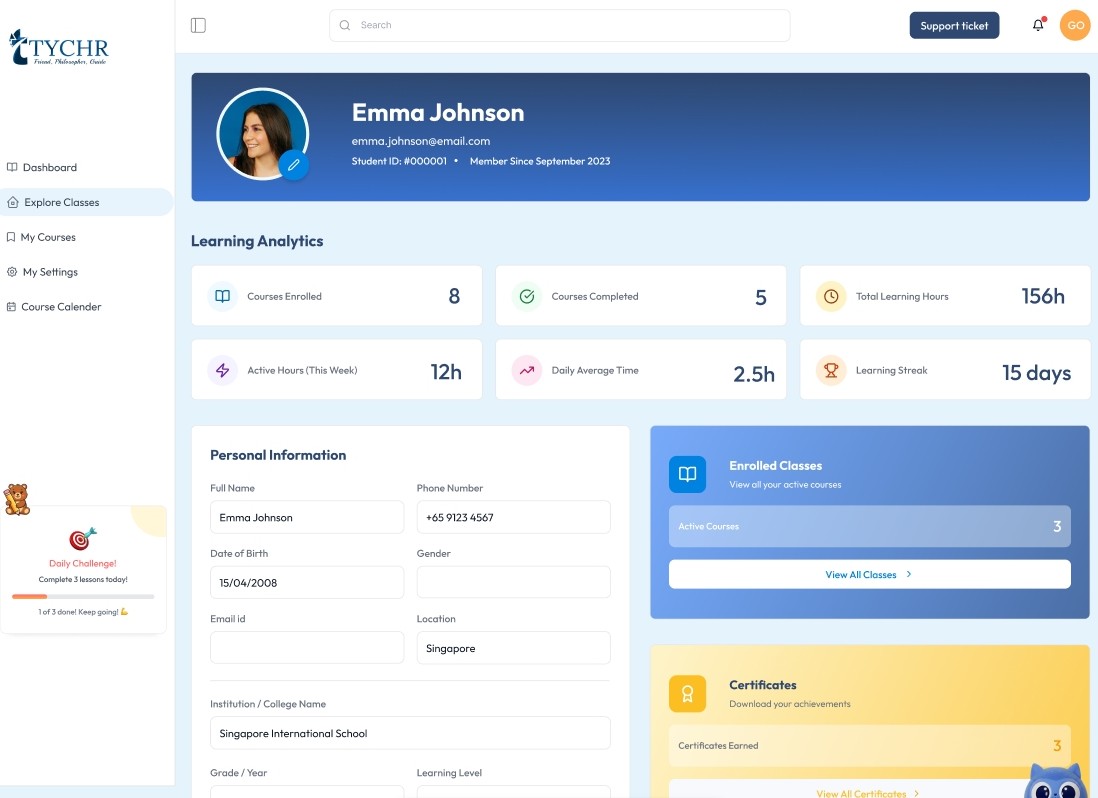
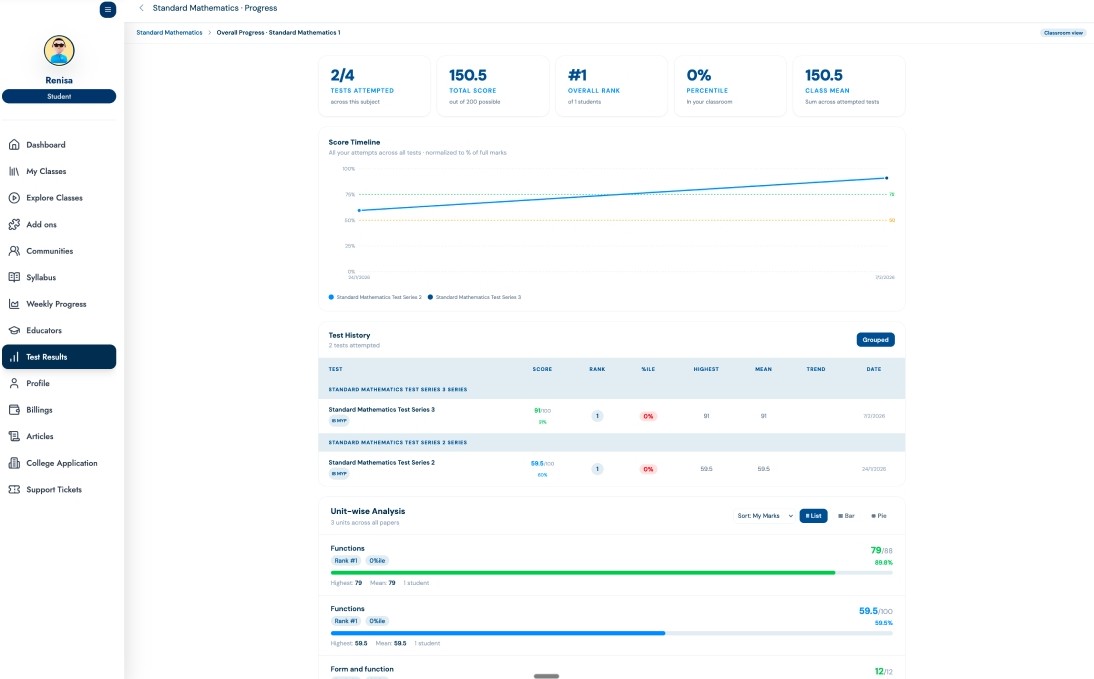
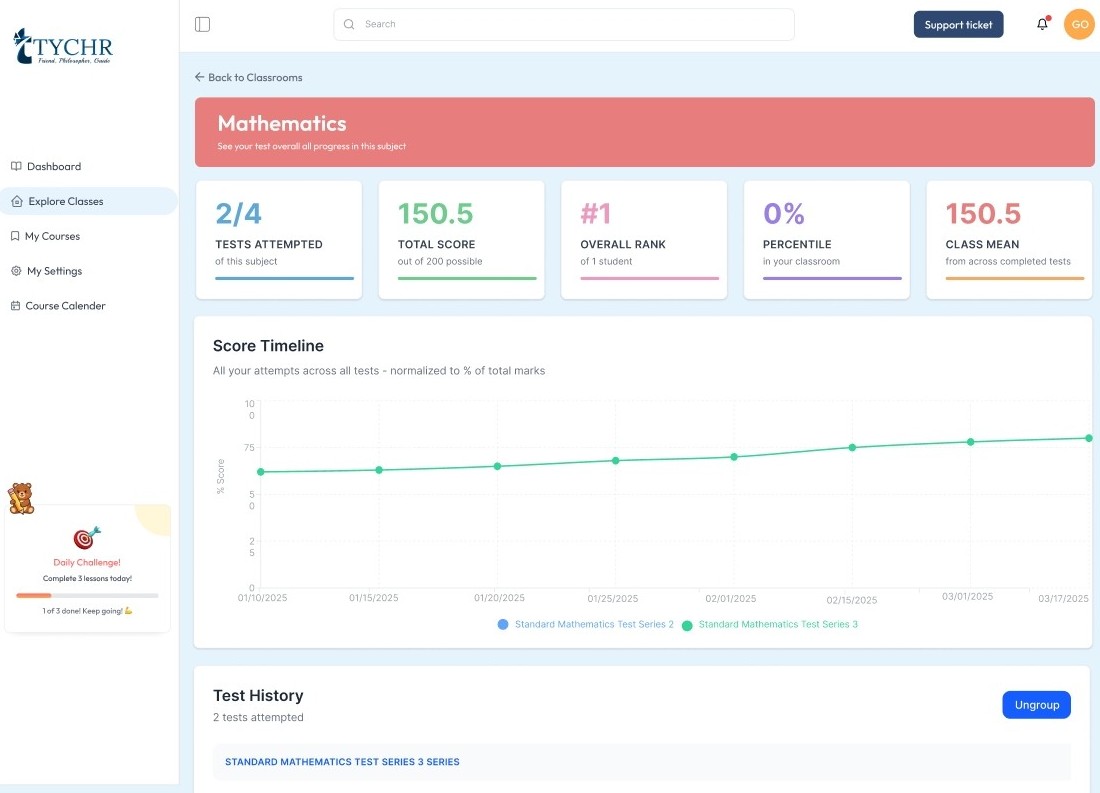
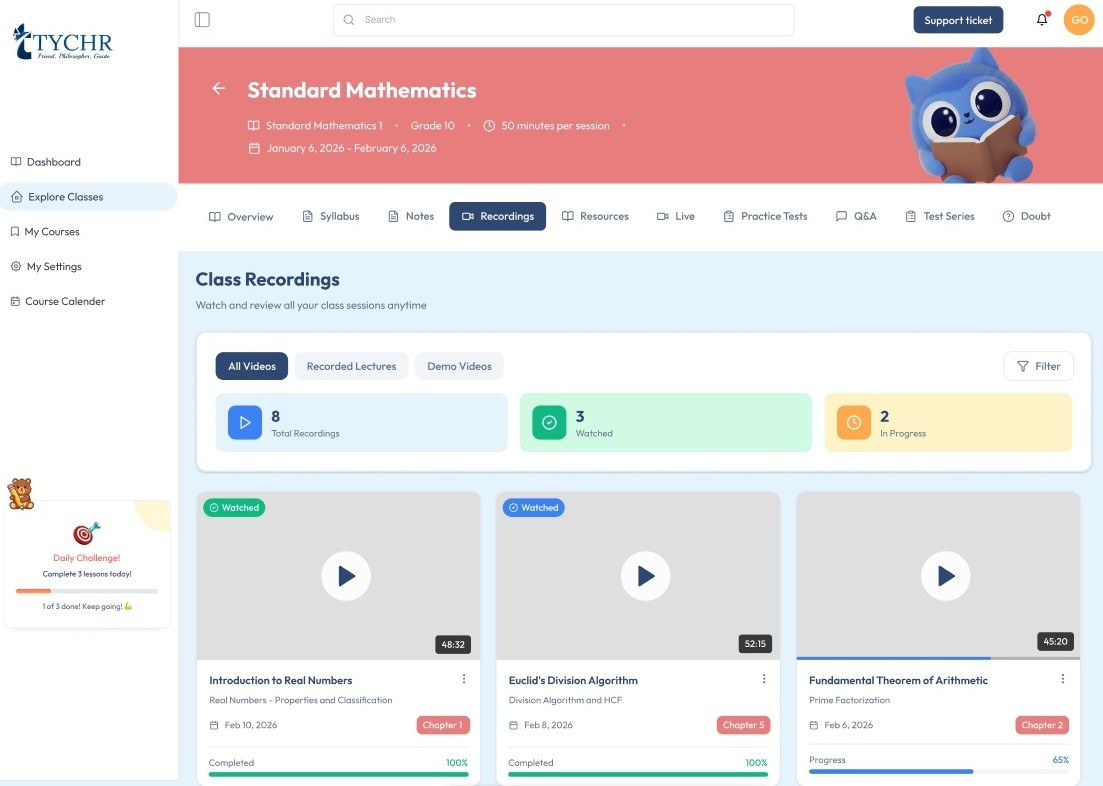
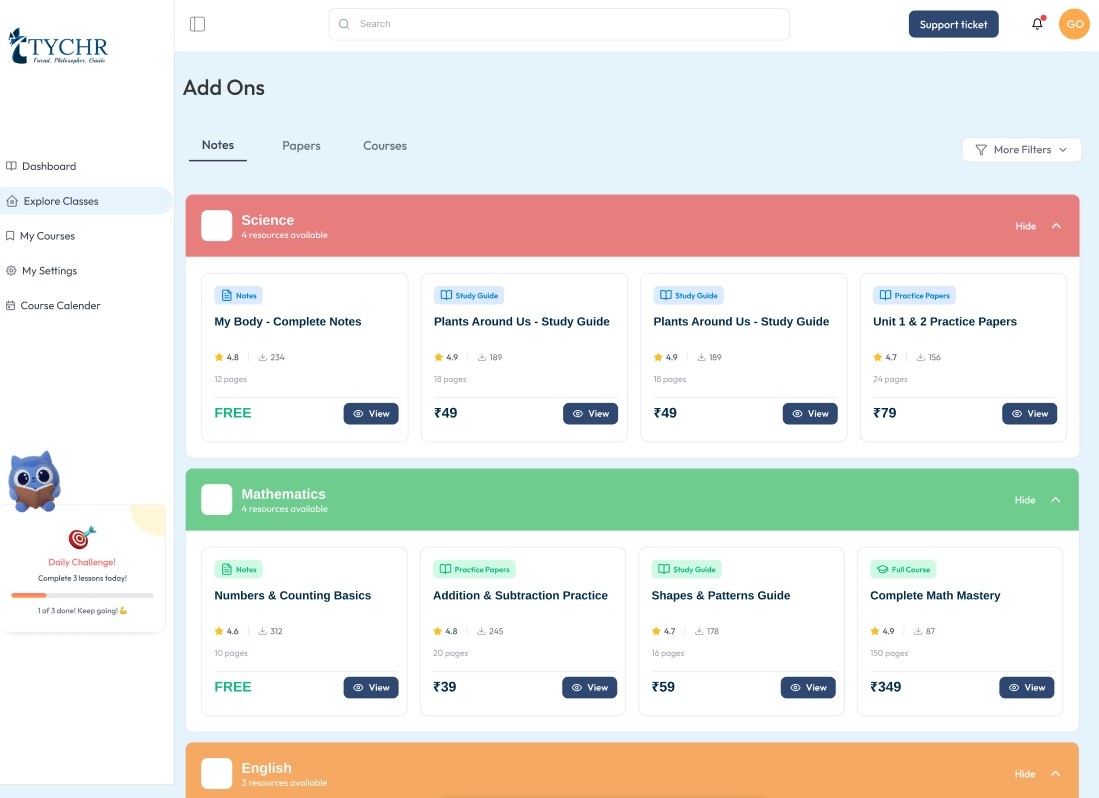
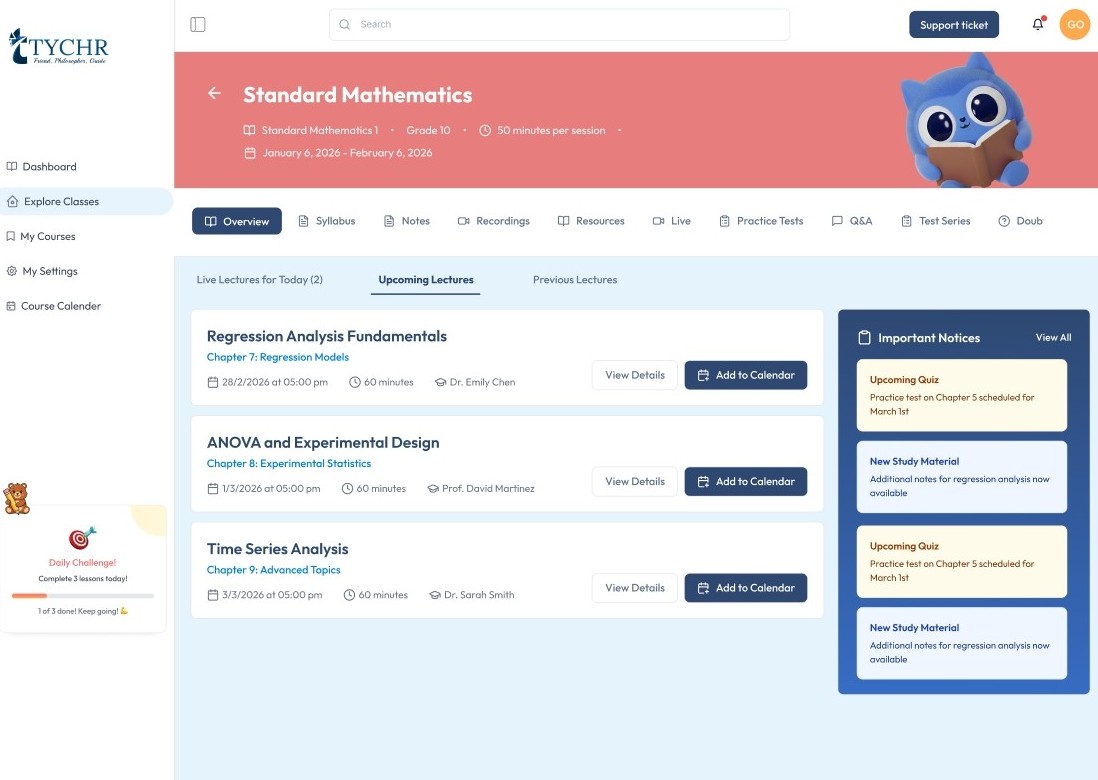
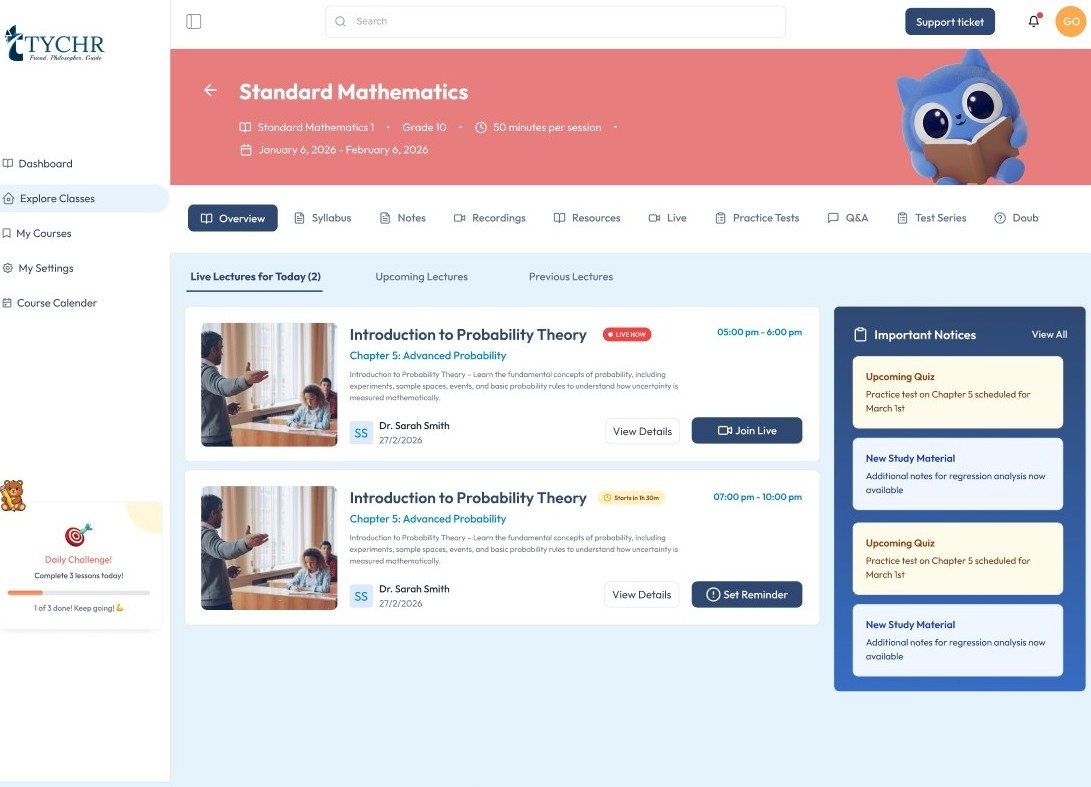
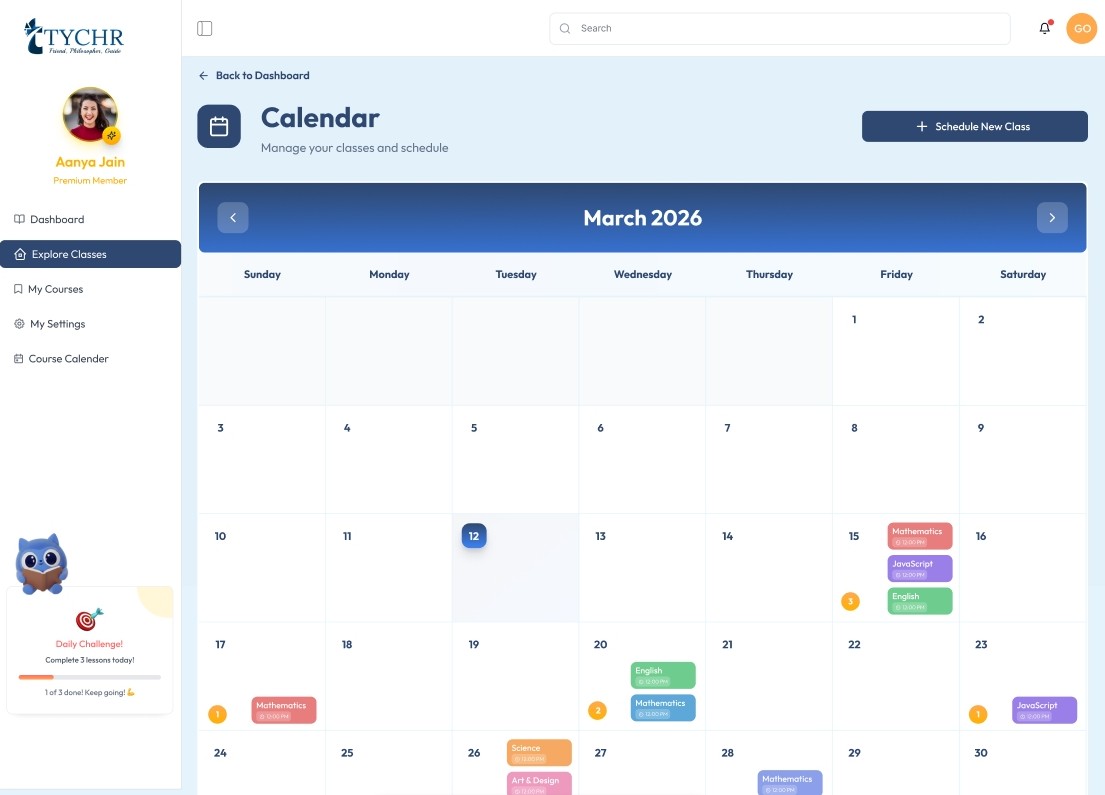
Explore our learning system
A platform designed around how students actually learn — adaptive, intuitive, and always one step ahead.



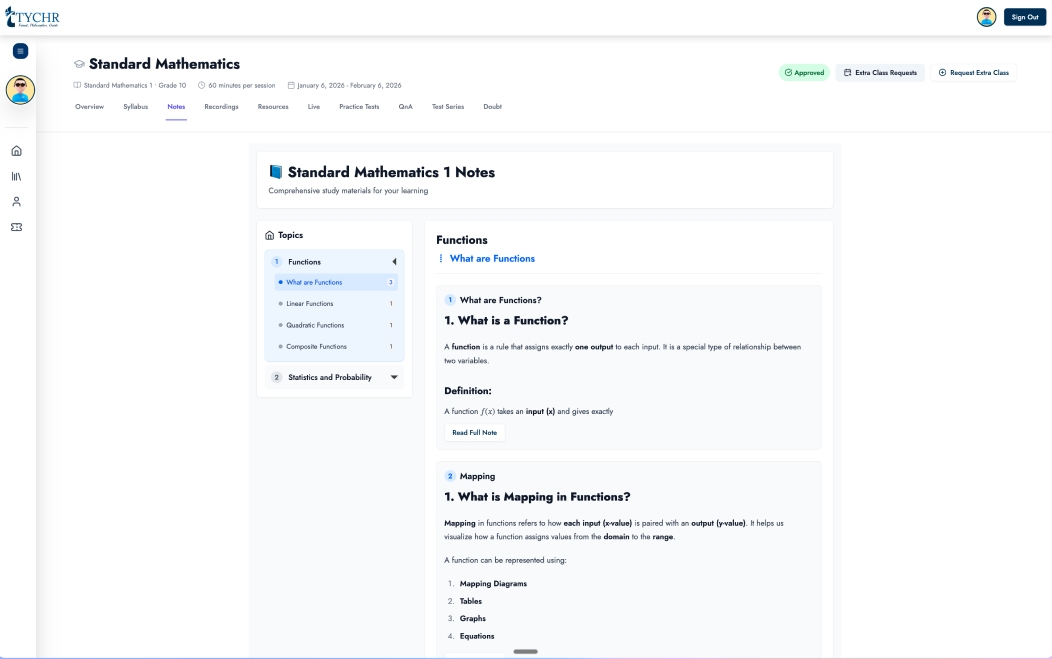
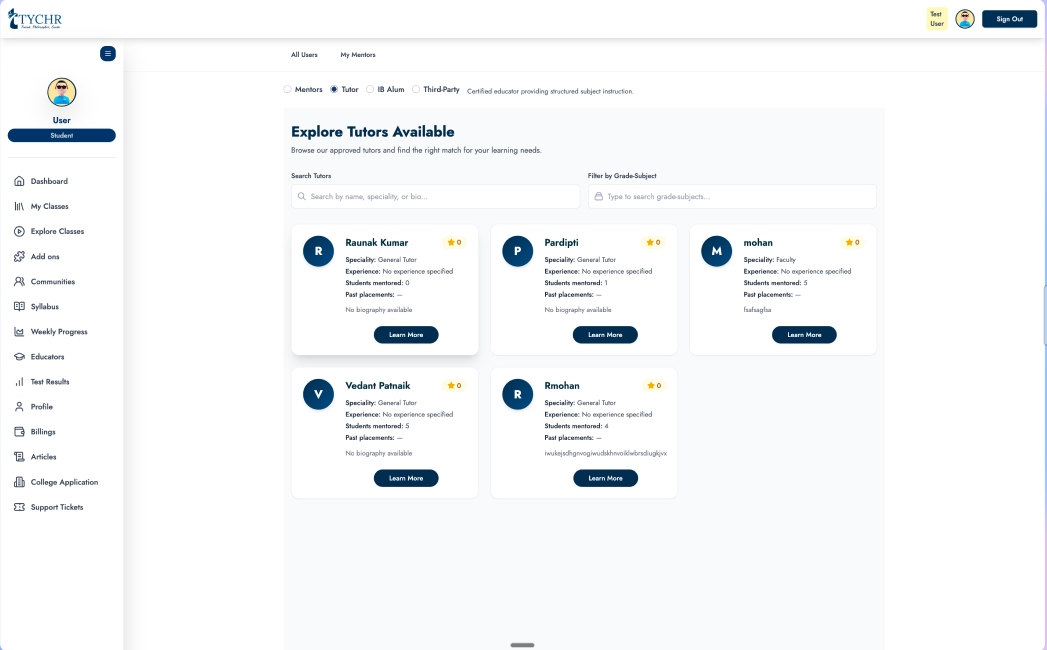
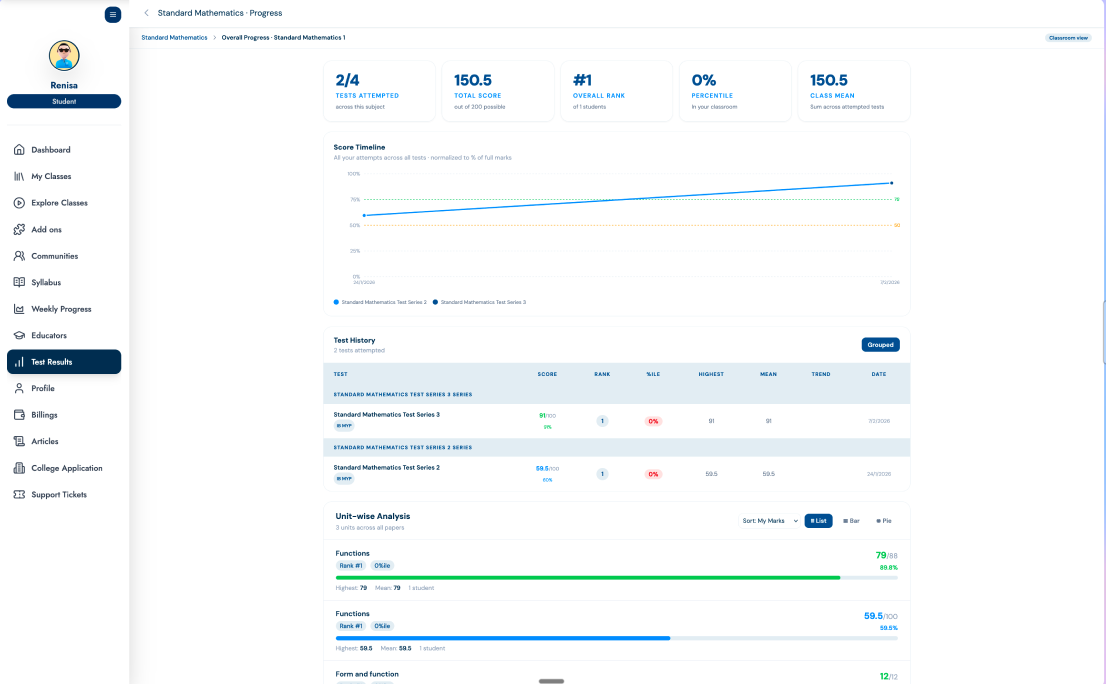
5000+
Students enrolled
100+
Expert tutors
95%
Satisfaction rate
70+
Countries reached
What Is IB Mathematics: Analysis & Approaches HL?
Course Structure & Assessment Overview
Course Framework
IB Mathematics: Analysis and Approaches HL is a rigorous course for students with a strong interest in mathematics. It focuses on analytical methods, calculus, algebraic techniques, proof, and advanced problem solving, helping students develop strong mathematical reasoning and critical-thinking skills.
240 Hours
Total teaching hours for HL
6 Topics
Six syllabus areas: Number, Algebra, Functions, Geometry & Trigonometry, Statistics & Probability, and Calculus
4 Components
Assessment components: Papers 1, 2, 3 and the Internal Assessment
Mathematical Concepts
Key conceptual understandings including mathematical modelling, proof, and problem solving
HL Assessment Breakdown
Paper 1 (30%)
Non-calculator exam covering core syllabus topics
Paper 2 (30%)
Calculator-allowed exam covering core syllabus topics
Paper 3 (20%)
Problem-solving exam focused on abstract, conceptual mathematics
Internal Assessment (20%)
Individual mathematical exploration based on a topic of personal interest
HL vs SL — Key Differences
Understanding What Makes Higher Level More Challenging
| Aspect | Higher Level (HL) | Standard Level (SL) | Impact |
|---|---|---|---|
| Teaching Hours | 240 hours | 150 hours | 90 additional hours for greater syllabus depth, advanced techniques, and complex problem solving |
| Syllabus Depth | Greater depth across all 6 syllabus areas | More focused depth and complexity | HL requires more advanced analytical methods, mathematical reasoning, and problem-solving |
| Paper 1 Duration | 2 hours | 1 hour 30 minutes | HL includes more challenging non-calculator problems and requires greater mathematical fluency |
| Paper 2 Duration | 2 hours | 1 hour 30 minutes | HL requires more advanced calculator-based problem solving, modelling, and interpretation |
| Paper 3 Exam | 1 hour | Not applicable | Additional 20% assessment component focused on problem-solving and unfamiliar mathematical situations |
| Complexity Expected | Advanced conceptual reasoning | Applied mathematical proficiency | HL requires deeper engagement with mathematical reasoning, proof, modelling, and multi-step problems |
Why Choose HL?
- Planning to study mathematics, engineering, physics, or other mathematically intensive subjects at university
- Strong interest in complex problem-solving, mathematical reasoning, and proof
- University programs require or strongly benefit from advanced calculus and algebraic proficiency
- Want to develop advanced mathematical modelling and logical reasoning skills
- Confident with advanced algebraic, trigonometric, and calculus techniques
- Enjoy tackling challenging, multi-step and unfamiliar mathematical problems
HL Challenges We Address
- Managing the significantly greater syllabus depth and mathematical complexity
- Developing rigorous mathematical reasoning and proof strategies
- Planning and writing the individual mathematical exploration independently
- Solving complex and unfamiliar problems in Paper 3 under time pressure
- Connecting concepts across calculus, algebra, vectors, statistics, and probability
- Balancing calculation speed with deep conceptual understanding
IB Maths AA HL Paper 1
Non-Calculator Problem Solving — Strategies & Techniques
Time Management & Structural Strategy
01. Strategic Scan (5 mins)
- 1.Use the first few minutes to scan the paper and identify questions where you can secure marks confidently.
- 2.Note questions that involve familiar concepts and those that may require more time or multi-step reasoning.
- 3.Start with questions where you can establish a clear solution path, while keeping track of more challenging problems to revisit.
02. Logic & Notation (Anchor)
- 1.Use clear and precise mathematical notation throughout your working.
- 2.Show the essential steps needed to demonstrate your method and mathematical reasoning.
- 3.Balance rigor with efficiency: avoid unnecessary working while clearly showing important identities, formulas, substitutions, and reasoning.
03. Consistent Pacing & Review
- 1.Allocate your time strategically according to the mark value and complexity of each question.
- 2.If you become stuck, move on and return later rather than spending too long on a single problem.
- 3.Reserve the final few minutes to check calculations, signs, algebraic manipulation, notation, and unanswered questions.
What Examiners Reward
Assessors reward accurate mathematical methods, clear reasoning, precise notation, and correct final answers. Strong performance requires students to demonstrate a solid understanding of underlying concepts and apply appropriate algebraic, analytical, and problem-solving techniques without calculator support.
Our tutors evaluate student responses against IB marking criteria and provide targeted feedback to improve mathematical reasoning, accuracy, notation, and problem-solving across algebra, functions, calculus, geometry, statistics, and probability.
The Core Higher Level Challenge
The biggest challenge for HL candidates is maintaining accurate, structured mathematical thinking and efficient algebraic manipulation under real-time constraints without the use of a GDC.
Simulated Exam Drills Applied From Session 1IB Maths AA HL Paper 2
Calculator-Active Problem Solving & Execution
Essay Structure & Timing
Initial Scan & Planning (First few minutes)
- Quickly review the paper and identify questions where you can secure marks confidently.
- Read each question carefully and identify the mathematical concepts and information provided.
- Decide when analytical working, graphical methods, or GDC calculations will be most efficient.
- Keep track of questions that require more time so you can return to them later.
Structured Problem Solving (Main working time)
- Read the complete question before starting calculations, especially for multi-part problems.
- Set up equations, formulas, diagrams, or mathematical models before relying on your GDC.
- Use appropriate GDC functions to support calculations while keeping your mathematical reasoning clear.
- Carry forward unrounded values during intermediate calculations to minimise precision errors.
Final Verification (Final few minutes)
- Check final numerical answers for appropriate accuracy and rounding.
- Verify that algebraic, coordinate, matrix, vector, and mathematical notation is clear and correct.
- Check units and interpretation when they are relevant to the context of the question.
- Review unanswered questions and use the remaining time to secure any accessible marks.
Comparative Approaches
Graphical Solving
Represent the relevant functions on your GDC and use intersections, roots, or other graphical features to obtain numerical solutions.
Best for:
Equations that are difficult or impractical to solve analytically
Analytical Setup + GDC Evaluation
Set up the mathematical model or expression yourself, then use the GDC to evaluate the required numerical result accurately.
Best for:
Complex calculus, probability, and numerical problems
Multi-Stage Mathematical Modelling
Use mathematical results obtained in earlier parts to build, interpret, or validate subsequent calculations and conclusions.
Best for:
Extended application and modelling questions
Top Tips from Our HL Tutors
Leverage Your GDC Effectively
Use your Graphical Display Calculator (GDC) efficiently for graphing, solving equations, finding intersections and roots, numerical integration, statistical calculations, and other permitted numerical methods.
Show Essential Method Steps
A calculator does not replace mathematical reasoning. Clearly show the equations, substitutions, formulas, and key steps used to reach your answer so your mathematical method is evident.
Watch the Command Terms
Terms such as 'Find', 'Solve', 'Sketch', 'Show that', and 'Hence' require different responses. Make sure your solution addresses exactly what the question asks.
Check Your GDC Settings
Check settings such as radians versus degrees before starting trigonometry questions. Also verify graphing windows, statistical settings, and other relevant calculator modes before relying on a result.
Use Given Results Strategically
In multi-part questions, use results from earlier parts when appropriate. If you are stuck on one part, continue with information provided later in the question rather than losing time on a single step.
Maintain Appropriate Precision
Unless otherwise stated, give numerical answers to an appropriate level of accuracy, typically 3 significant figures. Keep unrounded values during intermediate calculations to reduce rounding errors.
Internal Assessment (IA)
Internal Assessment Coaching, Mathematical Exploration & Assessment Strategies for IB Maths AA HL
Preparation Timeline
Weeks 1–2
Topic Selection & Planning
- ✓Choose a focused mathematical topic connected to your interests
- ✓Define a clear aim or research question for the exploration
- ✓Ensure the investigation allows for appropriate mathematical depth
- ✓Plan the mathematical methods, data, assumptions, and technology required
Weeks 3–5
Mathematical Development
- ✓Develop the mathematics needed to investigate the chosen question
- ✓Apply relevant algebra, calculus, functions, statistics, probability, or other appropriate concepts
- ✓Use mathematical models, calculations, graphs, or proofs where relevant
- ✓Use technology appropriately to support exploration, calculation, and visualisation
Weeks 6–8
Analysis & Evaluation
- ✓Explain mathematical reasoning clearly throughout the exploration
- ✓Interpret mathematical results in the context of the investigation
- ✓Evaluate assumptions, limitations, and the effectiveness of the chosen approach
- ✓Develop conclusions that are supported by the mathematical work presented
Weeks 9–10
Refinement & Final Submission
- ✓Improve mathematical communication, structure, and clarity
- ✓Check notation, graphs, equations, diagrams, and calculations
- ✓Strengthen the conclusion and reflect on the mathematical investigation
- ✓Review the exploration against the official IB assessment criteria before submission
Presentation Structure
Introduction & Aim
No fixed percentageIntroduce the investigation, explain its purpose, and establish a clear aim or research question.
Mathematical Exploration & Development
No fixed percentageDevelop the mathematics required to investigate the question, showing clear reasoning, appropriate methods, and relevant calculations.
Analysis & Evaluation
No fixed percentageInterpret mathematical results, evaluate the approach and its limitations, and connect findings back to the investigation.
Conclusion & Reflection
No fixed percentageSummarize the mathematical findings, address the investigation aim, and identify relevant insights, limitations, or possible extensions.
How It Works
Topic Brainstorming
Get guidance on selecting a focused, engaging, and mathematically appropriate exploration topic.
Mathematical Modelling Support
Learn how to develop appropriate mathematical models, calculations, proofs, or analytical approaches for your investigation.
Draft Review & Feedback
Receive structured feedback on mathematical reasoning, communication, organization, and alignment with the assessment criteria.
Notation & Presentation Review
Improve the clarity and consistency of mathematical notation, equations, graphs, diagrams, and explanations.
Criterion-Based IA Guidance
Understand and apply the official IB Mathematics assessment criteria throughout the exploration process.
Technology Support
Use graphing calculators, GeoGebra, Desmos, spreadsheets, and other appropriate mathematical tools effectively within the investigation.
Algebraic & Problem-Solving Strategies
Master Both Problem-Solving Approaches for IB Maths AA HL
Core Topic Strategies
For Paper 1, Paper 2, and IA — building deep knowledge of set mathematical principles
Active Notation System
Develop a color-coded annotation method for different mathematical concepts
- Yellow: Key formulas and definitions
- Green: Algebraic techniques and proofs
- Blue: Theorems and corollaries
- Pink: Calculator shortcuts and checks
Formula Bank Creation
Build a database of versatile mathematical tools for each core topic
- Organize by topic, theorem, and method
- Memorize key derivations beyond the booklet
- Practice integrating formulas into complex problem sets
- Link formulas to multiple conceptual questions
Comparative Framework
Identify connecting points across your studied mathematical domains
- Create charts comparing solving methods across topics
- Note algebraic and graphical approaches
- Identify connection points between calculus and vectors
- Practice switching between analytical methods
Unseen Problem Strategies
For Paper 3 & Complex Prompts — analyzing problems you've never encountered before
Rapid Question Type Identification
- 1.Identify topic area (calculus, probability, functions, etc.)
- 2.Determine required method (differentiation, proof by induction, etc.)
- 3.Recognize command terms (show that, find, deduce)
- 4.Note given conditions and domain restrictions
Step-Spotting Technique
- 1.Scan for obvious algebraic patterns and identities
- 2.Identify structural constraints and boundary conditions
- 3.Note sign changes and turning points
- 4.Mark logical dependencies in multi-part proofs
Working-Out-Over-Answer Analysis
- 1.Don't just state answers—show clear logical steps
- 2.Connect algebraic manipulation to conceptual meaning
- 3.Consider calculator verification and error bounds
- 4.Link to broader mathematical theorems
Bridging Core & Unseen Analysis
The mathematical skills you develop with core topics transfer directly to unseen problem analysis. Our tutoring helps you build a flexible analytical framework that works across both.
Weekly Practice Routine
One-to-One vs Group Tutoring
Choose Your Ideal Learning Format for the IB Diploma Programme
One-to-One Tutoring
Tailored, High-Impact Learning
- ✓Personalized curriculum pacing: Focus directly on your specific SL/HL syllabus needs.
- ✓Targeted weak-area remediation: Deep-dive into challenging topics and command terms.
- ✓1-on-1 Internal Assessment (IA) guidance: Tailored mentoring through rubric criteria.
- ✓Customized past paper practice: Detailed, line-by-line mark scheme breakdown.
- ✓Flexible scheduling: Adapt session timings around your school calendar and deadlines.
- ✓Direct mark-scheme feedback: Actionable critiques to push your boundaries toward a Grade 7.
Group Tutoring
Interactive & Collaborative Learning
- ✓Small cohort learning: Learn alongside 3–5 peers studying the same subject and level.
- ✓Collaborative problem-solving: Benefit from diverse perspectives and peer discussions.
- ✓Structured weekly syllabus roadmap: Consistent, steady coverage of core IB topics.
- ✓Shared past paper walkthroughs: Master IB exam techniques and mark schemes together.
- ✓Cost-effective mastery: Premium IB tutoring at a lower per-session rate.
- ✓Peer motivation & accountability: Stay on track alongside fellow IB diploma candidates.
Not sure which format works best? Book a free consultation to discuss your IB tutoring needs
Book Free ConsultationGrade Improvements — Maths AA HL Score Results
From Students

Chili
Math AI HL

Zoe
Math AA HL

Ashwin
Math AI HL

Mazin
Math AA HL
Free IB Maths AA HL Resources
Notes, Formula Guides & Past Papers
IB Maths AA HL Resource Library
Access a comprehensive collection of IB Maths AA HL study resources, including topic guides, practice questions, exam preparation materials, and Internal Assessment support.
900+
Study Resources
10+ Years
Past Paper Resources
2000+
Practice Questions
24/7
Access
Core Topic Masterclasses
Structured resources for mastering calculus, algebra, functions, vectors, and advanced mathematical reasoning
- ✓Step-by-step calculus techniques
- ✓Complex number and vector resources
- ✓Topic-based problem sets
Exam & IA Frameworks
Practical resources to support Paper 1, Paper 2, Paper 3, and Internal Assessment preparation
- ✓IA planning and topic guides
- ✓GDC technique guides
- ✓Step-by-step problem-solving strategies
Past Paper & Practice Resources
Practice resources covering the key skills and question types required for IB Maths AA HL
- ✓Paper 1, Paper 2 & Paper 3 practice
- ✓Specimen and practice questions
- ✓Marking guidance and worked solutions
IA Examples & Guidance
Examples and guidance to help students understand how to structure and develop a strong mathematical exploration
- ✓Exploration topic ideas
- ✓Criterion-focused guidance
- ✓Mathematical modelling strategies
Revision & Formula Hub
Revision resources designed to reinforce key concepts, formulas, and problem-solving techniques
- ✓Formula and concept guides
- ✓Topic-wise question banks
- ✓Mock exam practice
Mathematical Toolkit
A practical collection of mathematical definitions, techniques, calculator guidance, and common problem-solving approaches
- ✓Graphical Display Calculator guides
- ✓Key definitions and theorem references
- ✓Common mistakes and problem-solving tips
Recommended Topic List
Problem-Solving Support Across All Core Areas
Popular HL Mathematical Choices by Domain
Calculus
Fundamental Theorem of Calculus
by Core Theory
Key themes: Integration, Differentiation, Limits
Differential Equations
by Advanced Methods
Key themes: Separation of variables, Euler's method, Modeling
Maclaurin Series
by Series Expansion
Key themes: Approximation, Convergence, Polynomials
Optimization Problems
by Applications
Key themes: Maxima, Minima, Rates of change
Volumes of Revolution
by Integral Calculus
Key themes: Disks, Shells, 3D Geometry
Algebra & Functions
Complex Numbers
by Number Systems
Key themes: De Moivre's theorem, Roots of unity, Argand diagrams
Proof by Mathematical Induction
by Advanced Logic
Key themes: Sequences, Divisibility, Summation
Logarithmic & Exponential Functions
by Function Analysis
Key themes: Inverses, Transformations, Growth models
Polynomial Equations
by Algebraic Structures
Key themes: Roots, Coefficients, Factor theorem
Binomial Theorem
by Expansion Theory
Key themes: Combinatorics, General terms, Pascal's triangle
Vectors & Geometry
3D Vector Equations
by Spatial Mathematics
Key themes: Lines, Planes, Intersections
Scalar & Vector Products
by Vector Calculus
Key themes: Angles, Projections, Cross products
Matrices & Transformations
by Linear Algebra
Key themes: Determinants, Eigenvalues, Linear maps
Statistics & Probability
Discrete Probability Distributions
by Probability Theory
Continuous Random Variables
by Statistics
Hypothesis Testing
by Statistical Analysis
Bivariate Data Analysis
by Regression
Our Mathematical Support
Comprehensive frameworks tailored directly to the IB Maths AA HL curriculum
Topic Selection Guidance
Help choosing IA exploration topics that align with your interests, offer mathematical depth, and meet IB criteria.
Problem-Solving Sessions
Detailed walkthroughs of complex problem types, exploring mathematical techniques, theorems, and logical proofs.
Contextual Understanding
Explore historical, conceptual, and practical contexts to deepen your mathematical interpretation and application.
Comparative Frameworks
Identify connections across core topics for Paper 1, Paper 2, and Paper 3, building sophisticated cross-domain analysis.
Advanced Theory Application
Introduction to advanced mathematical proofs, rigorous notation, and higher-level problem-solving lenses for AA HL.
Formula & Toolkit Mastery
Build formula banks, practice derivation techniques, and learn seamless graphic display calculator integration.
Mock Exam Sessions & Written Feedback
Practice Makes Perfect for All HL Assessments
Mock Assessment Process
Pre-Mock Preparation
- Submit your IA topic and preliminary calculations
- Receive preliminary feedback on mathematical structure
- Finalize data sets and graphs (if using)
- Practice timing your problem-solving approach
Mock Paper Session
- Deliver timed problem solutions under exam conditions
- Respond to 5 minutes of follow-up technical questions
- Recording/notes provided for self-review
- Immediate initial impressions from tutor
Detailed Feedback
- Written report with criterion-by-criterion analysis
- Predicted score with justification
- Specific areas for mathematical improvement
- Recommended changes and practice points
Refinement Session
- Review feedback together
- Practice improved calculation sections
- Prepare better calculator shortcuts and proofs
- Final confidence-building tips
Written Assignment Feedback
Paper 1 Practice
✓ Criterion-based marking (Communication & Notation)
✓ Strengths and weaknesses
✓ Model step-by-step working out
✓ Time management notes
Paper 2 Practice
✓ Calculator technique evaluation
✓ Algebraic rigor assessment
✓ Evidence integration feedback
✓ Mathematical notation precision notes
Paper 3 Drafts
✓ Problem-solving coherence review
✓ Critical analysis depth
✓ Rigorous proof structure
✓ Bibliography and citation formatting
IA Explorations
✓ Exploration topic clarity
✓ Mathematical balance evaluation
✓ Modeling and engagement notes
Why Mock Practice Matters
Reduce Exam Anxiety
Familiarity with exam conditions significantly reduces stress and improves performance on the actual day.
Identify Weak Spots Early
Discover areas needing improvement weeks before finals, giving you time to address them systematically.
Perfect Your Timing
Learn to allocate time effectively across questions, avoiding the common pitfall of incomplete responses.
Build Confidence
Multiple practice sessions create muscle memory for exam performance, boosting your self-assurance.
Expert Feedback
Receive detailed, criterion-based feedback from experienced IB Maths AA HL tutors who understand marking.
What students say
““The flexible scheduling made it easy to fit classes into my routine, and the personalized attention helped me grasp difficult concepts with ease. I'm very pleased with the results I achieved. ” ”

Minami
IBDP Maths AI SL
““I struggled with word problems and algebra for years. Weekly sessions with clear step-by-step methods completely changed how I approach Maths, and my scores have never been better. ” ”

Zorawar
IBDP Math AA SL
““I needed someone who wouldn't rush through topics, and my tutor gave me exactly that. My grades improved steadily and I finally feel confident going into exams. ” ”

Akshaya
IBDP Math AA HL
Frequently Asked Questions
Everything About IB Maths AA HL Tutoring
Our tutors break down mathematical induction, proof by contradiction, and advanced integration by parts into clear, logical steps.
Yes, we drill De Moivre's theorem, vector cross products, line-plane intersections, and eigenvalue problems for Paper 1 and 2 success.
We train students on open-ended investigative reasoning, conjecture formation, and rigorous mathematical justification under timed conditions.
Absolutely. All sessions comprehensively cover algebra, functions, geometry, trigonometry, probability, and calculus extensions.
Yes, we help students select engaging mathematical topics, structure personal explorations, and apply advanced math models correctly.
We teach students how to optimize graphic display calculator (GDC) functions for numerical solvers, root-finding, and statistical regressions.
Is IB Maths AA HL Worth It?
University Goals & Subject Value
Why Universities Value IB Maths AA HL
Advanced Mathematical Rigor
HL demonstrates the ability to tackle challenging mathematical problems, apply advanced techniques, and develop rigorous mathematical reasoning—skills that are valuable across university STEM subjects.
Independent Exploration
The Internal Assessment gives students an opportunity to independently explore a mathematical question, develop their reasoning, and communicate their findings clearly.
Analytical Problem-Solving
Exposure to advanced algebra, calculus, functions, vectors, statistics, and probability helps students build strong quantitative and analytical problem-solving skills.
University Pathways Where Maths AA HL Matters
Engineering & Technology
Builds a strong foundation in calculus, algebra, vectors, modelling, and advanced problem solving
Computer Science
Develops mathematical reasoning, algebraic thinking, problem solving, and quantitative skills relevant to computer science
Physics & Physical Sciences
Calculus, vectors, functions, and mathematical modelling provide a strong foundation for university-level physics
Economics & Finance
Develops quantitative reasoning, calculus, functions, statistics, probability, and mathematical modelling skills
Data Science & Statistics
Builds skills in functions, calculus, probability, statistics, modelling, and mathematical interpretation
Pure & Applied Mathematics
Develops advanced calculus, algebra, functions, vectors, mathematical reasoning, and problem-solving skills
The HL Advantage in Admissions
Beyond meeting specific subject requirements, Maths AA HL can strengthen an application by demonstrating mathematical ability, analytical thinking, and readiness for demanding quantitative study.
- Shows commitment to challenging quantitative coursework
- Demonstrates advanced mathematical reasoning and problem-solving skills
- Provides a strong quantitative foundation for university study
- Prepares students for rigorous university-level mathematical work
- Develops sustained problem-solving and independent investigation skills through the IA
96%
First Choice University
82%
Russell Group / Ivy+
$3.1M
Scholarships Won
100%
University Acceptance
Book Your Maths AA HL Tutor Today
Start Your Journey to Maths AA HL HL Excellence in 3 Simple Steps
Choose Your HL Tutor
Browse our expert Maths AA HL tutor profiles and select one who matches your literary interests and learning goals.
Schedule Free Trial
Book your complimentary 60-minute session to discuss your texts, goals, and current challenges—no commitment.
Start Literary Analysis
Begin your personalized HL journey with close reading, essay coaching, and comprehensive exam preparation.