Expert ESS SL Tutors Online
ESS SL requires a specific analytical execution strategy across internal assessments. Our certified instructors coach students directly on unseen text mapping, complex comparative mechanics.
+1.7
Average grade improvement
93%
Students score 6 or 7
550+
IB students tutored
4.9/5
Average tutor rating
IB-Only Specialists
Every Tychr instructor holds a top-band 6 or 7 in their subject fields.
Examiner Insights
More than 70% of our teaching roster comprises current or former IB examiners.
Start your journey with the right guidance.
Your information is kept private and never shared with third parties.
Start your journey with the right guidance.


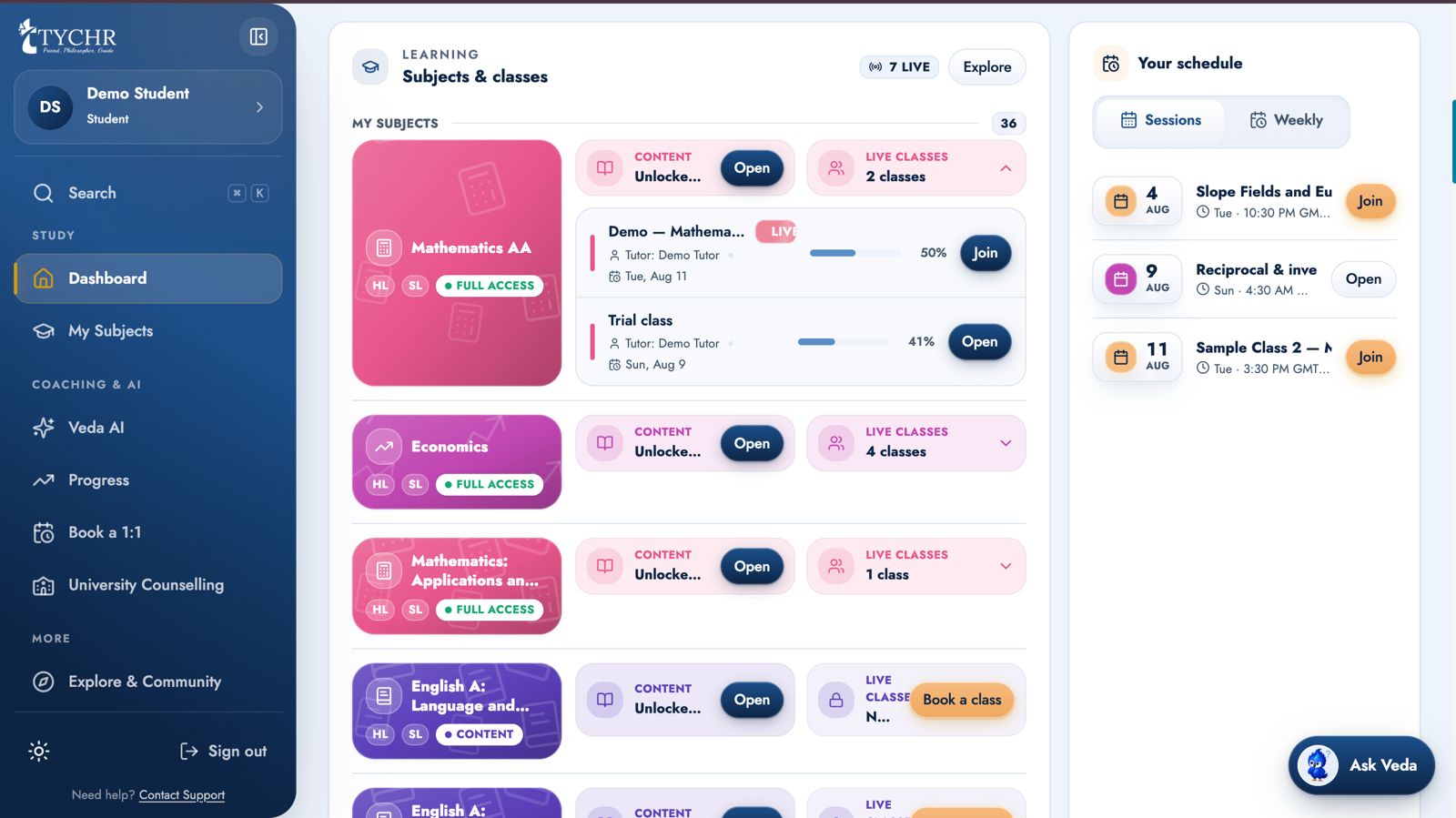
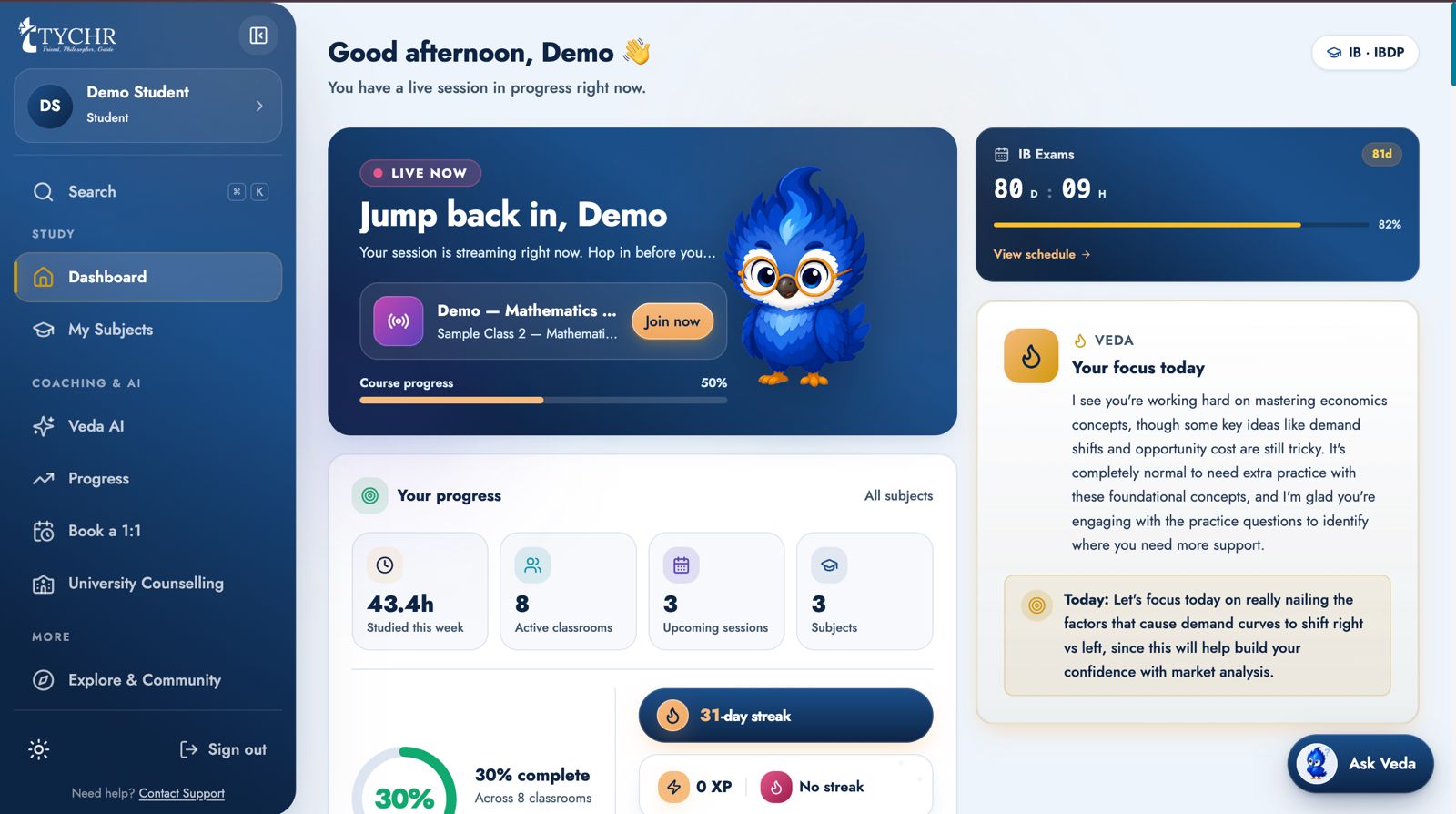
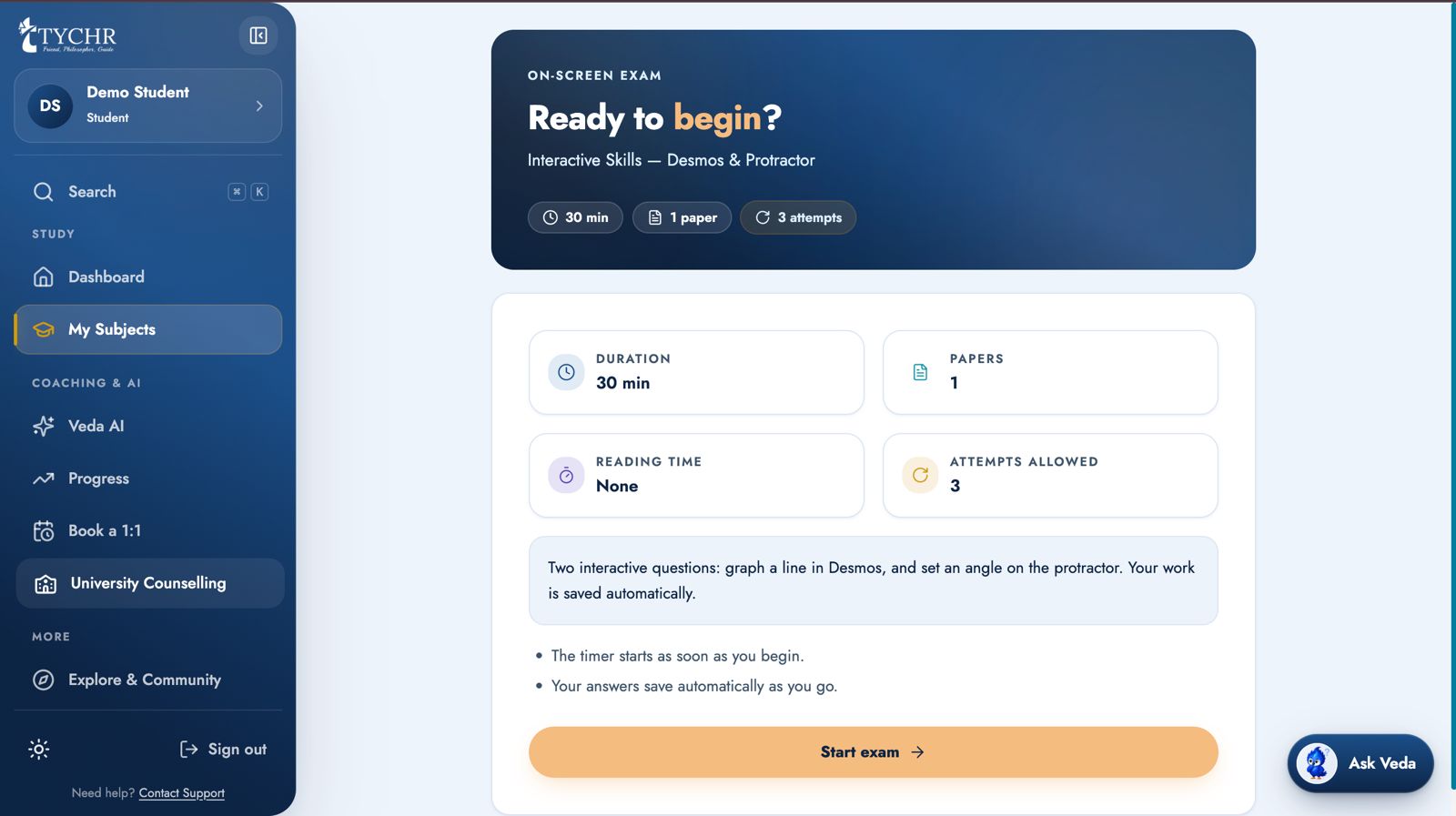
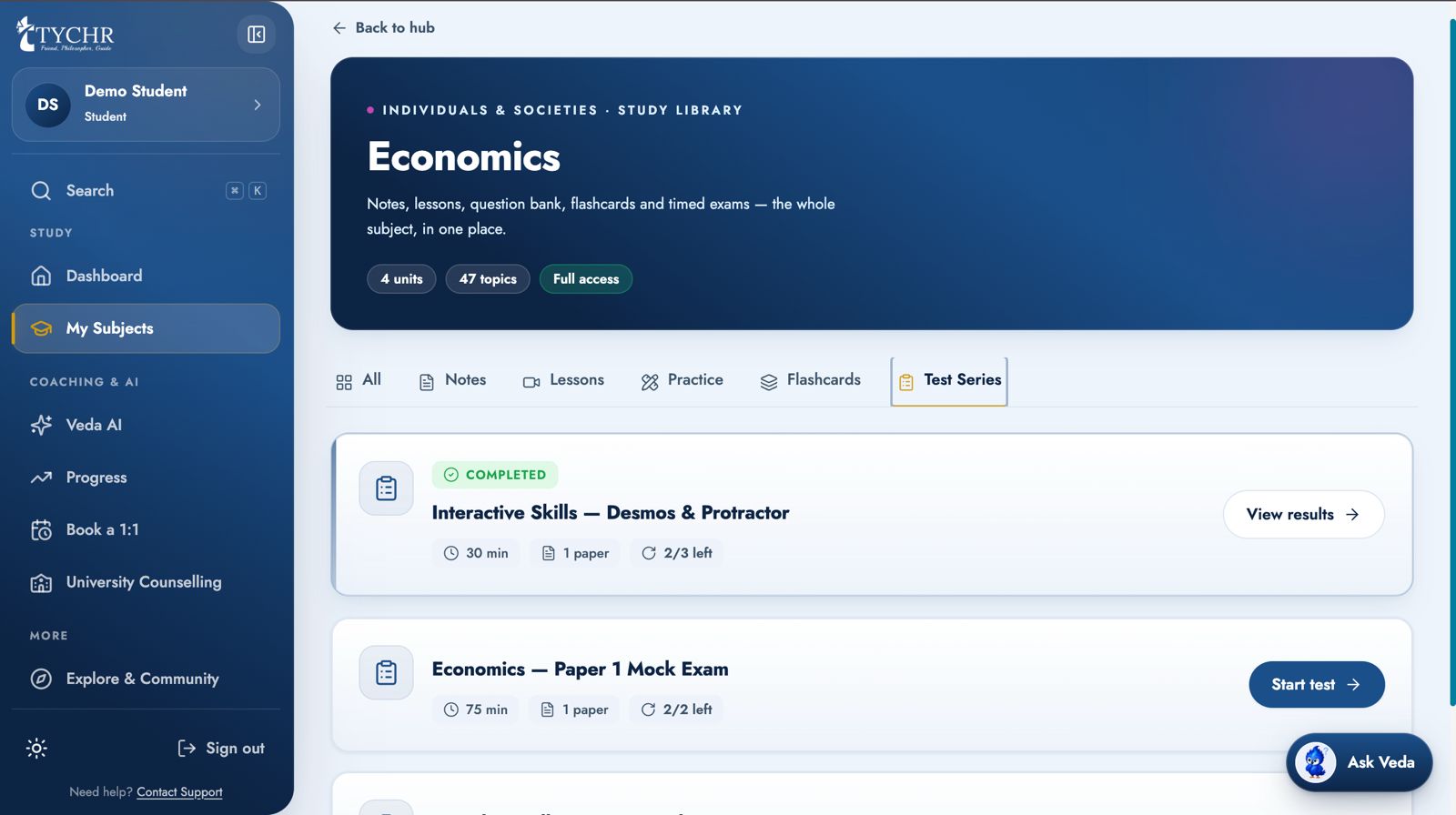
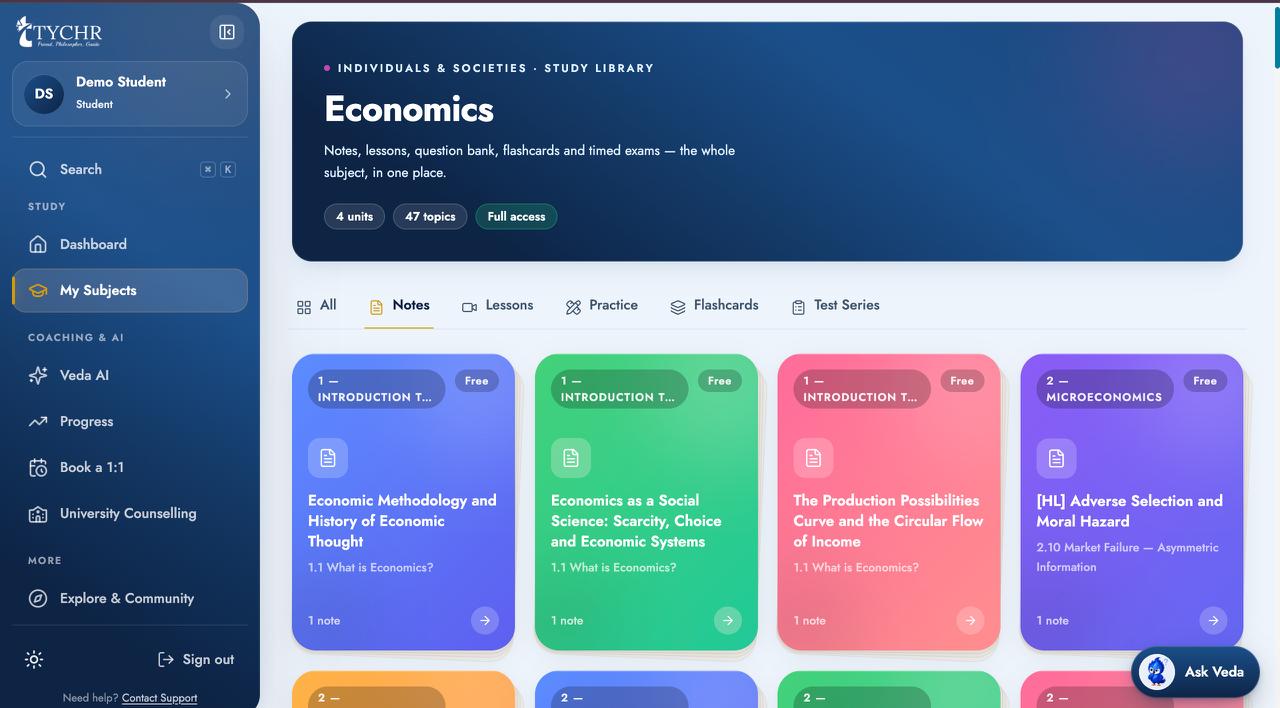
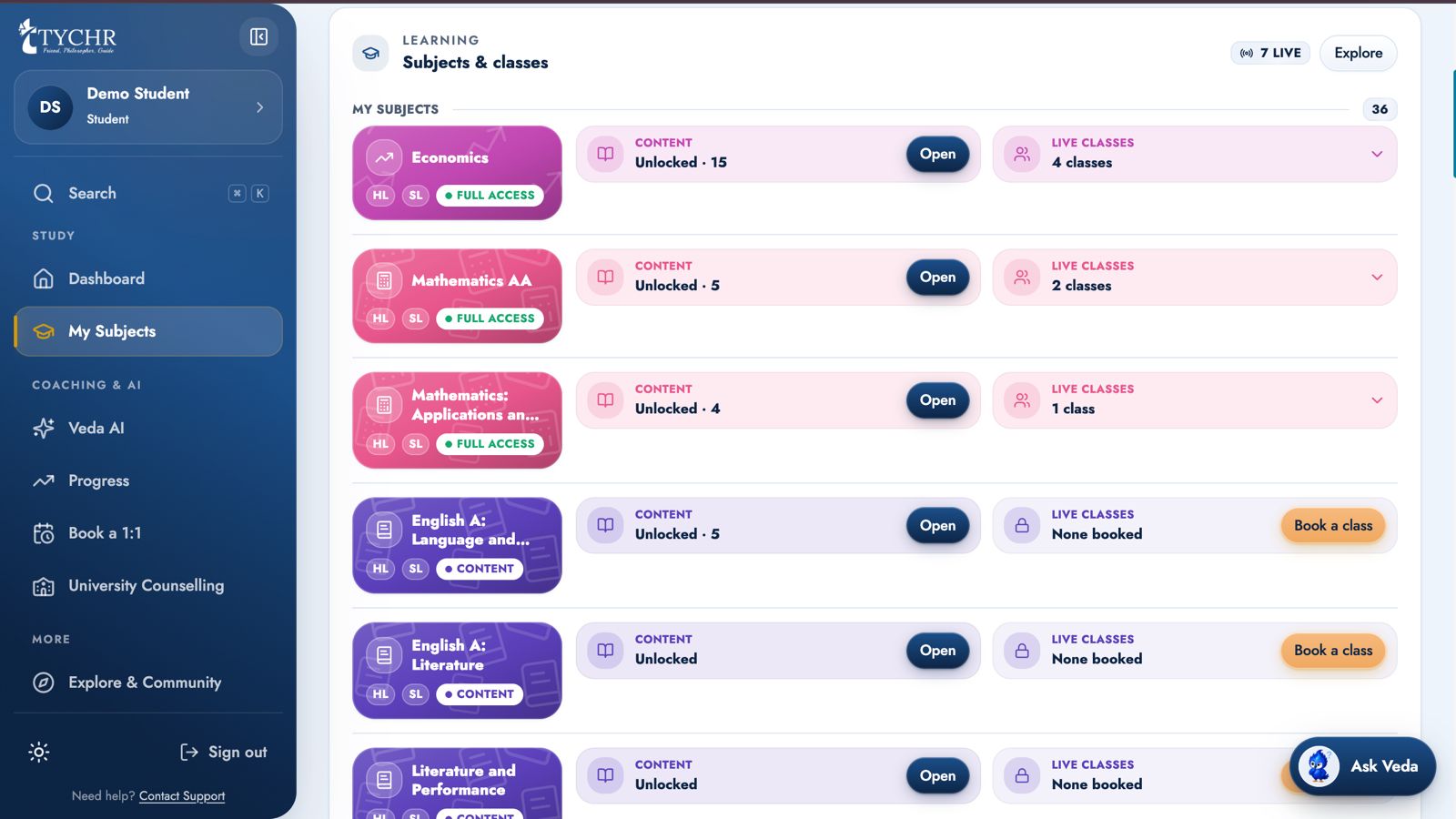
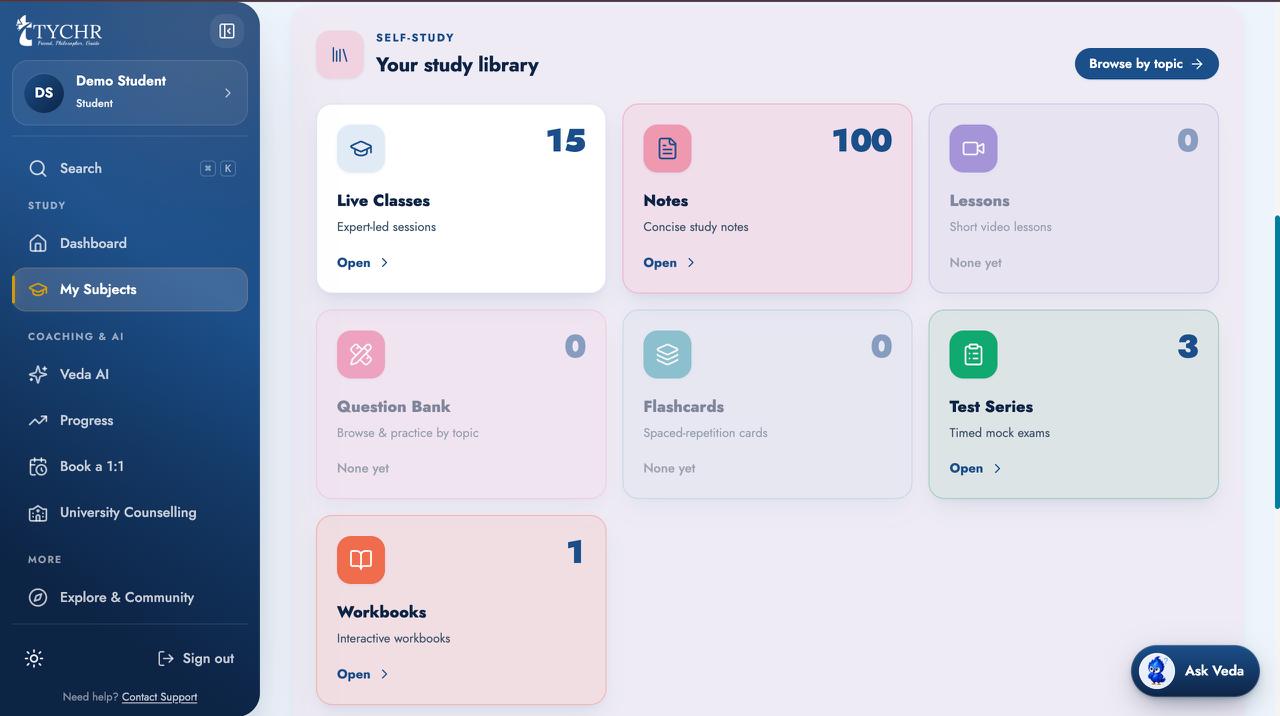
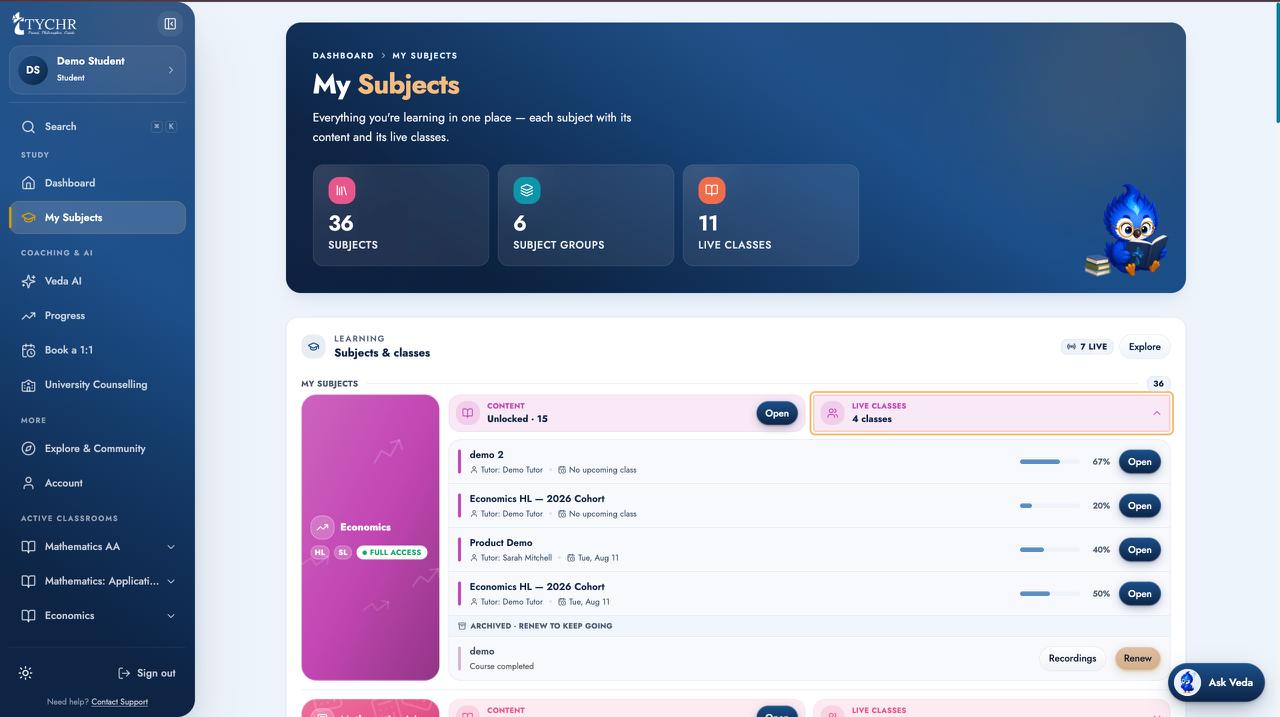
Explore our learning system
A platform designed around how students actually learn — adaptive, intuitive, and always one step ahead.
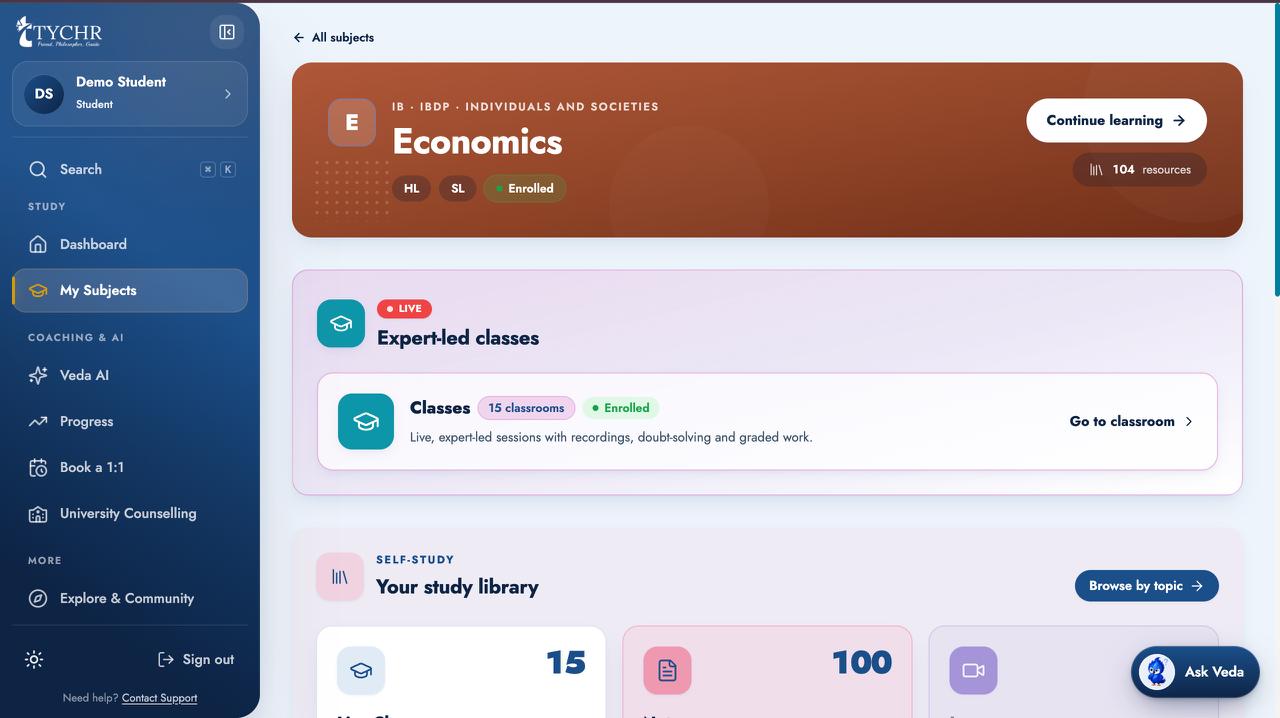
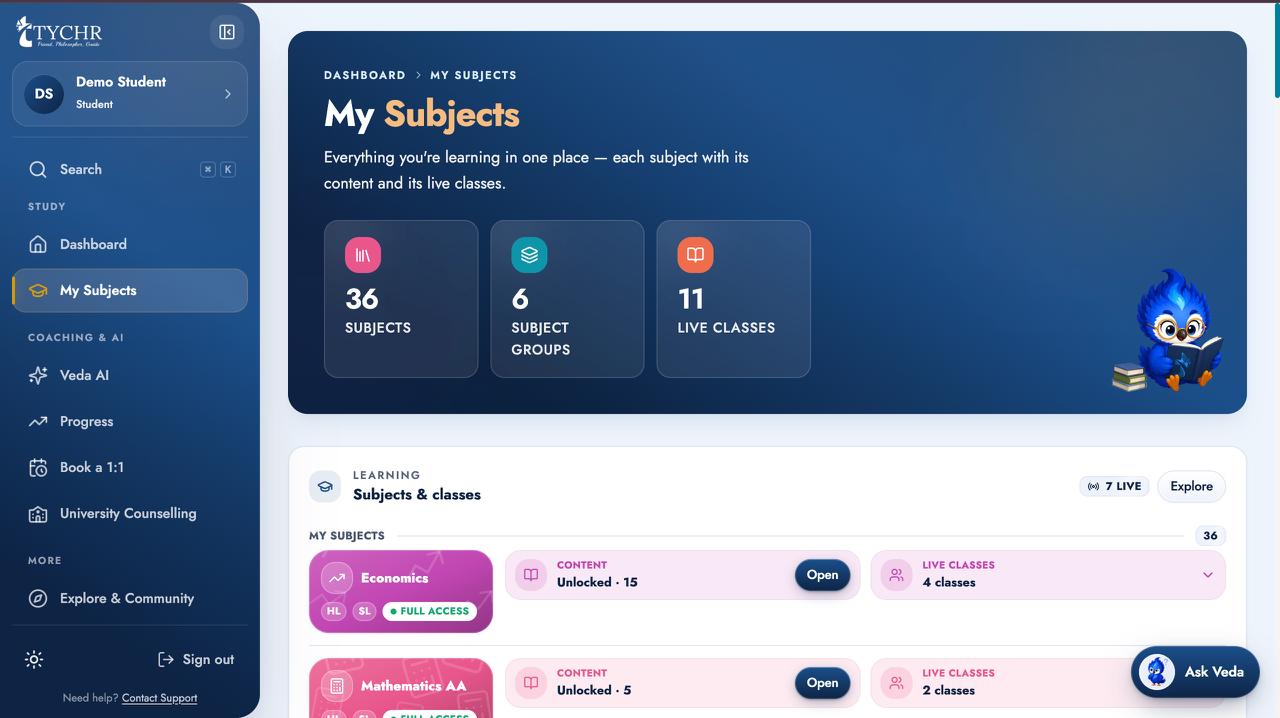
5000+
Students enrolled
100+
Expert tutors
95%
Satisfaction rate
70+
Countries reached
What Is IB ESS SL?
Course Structure & Assessment Overview
SL Course Framework
IB Environmental Systems and Societies (ESS) SL is an interdisciplinary course that combines the scientific study of environmental systems with the cultural, economic, ethical, and political contexts of environmental issues. Students build systems-thinking skills and learn to evaluate sustainability challenges from multiple perspectives.
Total teaching hours for SL
Guiding environmental concepts and perspectives
Paper 1, Paper 2, and Internal Assessment
Individual environmental investigation
SL Assessment Breakdown
Paper 1 (25%)
1hCase study analysis of unseen environmental data and issues
Paper 2 (50%)
2hStructured short-answer questions and structured essay questions across the syllabus
Internal Assessment (25%)
10h lab/fieldIndividual environmental research investigation with a written report
SL vs HL - What Standard Level Means
Understanding the Structural & Rigor Differences

Why Choose SL?
- Environmental science is not your intended university major
- Want to focus more on HL subjects in other areas
- Prefer a focused study of environmental systems and value systems
- Want to maintain a balanced workload across all six subjects
- University does not require HL ESS
- Want a strong grounding in sustainability without additional HL depth
What SL Shares with HL
Both SL and HL students develop systems thinking, interpret environmental data, evaluate case studies, and compare environmental value systems. SL students still apply evidence-based reasoning across their exams and Internal Assessment.
Key SL Structural Differences
SL students study the core environmental systems and societies content without the additional HL extension topics. The reduced scope allows students to build a strong foundation in systems thinking, case study analysis, and evaluation while keeping the overall IB Diploma workload manageable.
Key Differences at a Glance
SL Students Still Excel
Standard Level does not mean a sacrifice in academic rigor. SL students develop strong systems thinking, evaluate environmental evidence, and build high-level analytical skills while maintaining a balanced workload across their IB Diploma.
IB ESS SL Paper 1
Guided Analysis of Environmental Case Studies
1h (Paper 1)
SL Exam Time
Case Study
Format
25% (Paper 1)
Of Final Grade
SL Time Management Strategy
Strategic Planning Under Pressure
- 1.Read each question to identify the command term and mark allocation
- 2.Skim the resource booklet before diving into detail
- 3.Match each question to the part of the data it relies on
- 4.Budget roughly one minute per mark
Outline Before Writing
- 1.Jot down the key data points that answer each question
- 2.Decide which environmental concept or value system applies
- 3.Structure longer responses with a clear claim and supporting evidence
- 4.Keep answers concise and focused on what is asked
Connect Evidence to Evaluation
- 1.Avoid restating the data without explaining its significance
- 2.Explain what a trend demonstrates about the system
- 3.Weigh strengths and limitations of management strategies
- 4.Link conclusions back to the question and relevant perspectives
Core Themes in ESS
Ecosystems & Biodiversity
Climate & Atmosphere
Resources & Human Systems
Value Systems & Evaluation
SL Paper 1 Success Tips
Master Command Terms
ESS exams reward precise answers. Use the command term (e.g., 'describe', 'explain', 'evaluate') to structure your response and match its depth.
Read the Data First
Spend the first minutes annotating graphs, tables, and maps. Identify trends, anomalies, and units before you start writing.
Think in Systems
Link inputs, outputs, stores, flows, and feedback loops when explaining environmental change.
Use Quantitative Evidence
Quote figures from the resource booklet and show simple calculations rather than describing trends vaguely.
Do Not Just Describe
Examiners reward analysis and evaluation of management strategies, not summaries of the case study.
IB ESS SL Paper 2
Short-Answer and Essay Writing Guide
2h (Paper 2)
SL Exam Time
Short Answer + Structured Essays
Format
50%
Of Final Grade
SL Essay Structure & Timing
Introduction
5 mins- ›Define the key environmental concepts in the prompt
- ›Introduce the relevant system, model, or case study
- ›State a clear line of argument that answers the question
- ›Outline the main points you will evaluate
Body Paragraphs (Concepts & Evidence)
35 mins- ›Use topic sentences that directly address the prompt
- ›Present named case studies with accurate data
- ›Explain how the evidence supports or challenges the argument
- ›Evaluate strengths, limitations, and different perspectives
- ›Link each paragraph back to the question
Conclusion
5 mins- ›Synthesize the main arguments and evidence
- ›Reinforce your judgment with a clear evaluative statement
- ›State the wider implication for sustainability
- ›Proofread for accurate terminology
Essential Paper 2 Strategy
Select Your Question Strategically
✓ Choose the questions where you can combine strong content knowledge with specific case studies.
Plan Your Argument
✓ Plan before writing and ensure your evidence addresses the command term, such as 'Discuss' or 'Evaluate'.
Integrate Perspectives
✓ Weave in different environmental value systems throughout the response instead of adding them at the end.
Use Accurate Terminology
✓ Use precise terms such as carrying capacity, feedback loops, and sustainability, and explain what they mean in context.
Sample Environmental Argument Starters
Similarities:
"Both strategies aim to..." "Similarly, the case of X and Y demonstrates..."
Differences:
"Whereas an ecocentric view prioritises..., a technocentric view focuses instead on..."
Analysis:
"The data supports this because..." "This trend indicates that..."
Synthesis:
"Ultimately, these examples show..." "Despite different approaches, both strategies suggest..."
Key to SL Paper 2 Success
The most successful SL students combine strong systems understanding with precise case study evidence, clear evaluation, and a sharp focus on the question.
Internal Assessment (IA)
Step-by-Step Coaching for IB ESS SL Students

SL IA Breakdown
Fieldwork/Lab Time
Recommended time for the individual investigation
Weighting
Of your final IB ESS SL grade
Tasks Required
Independent environmental investigation
Internal Assessment Milestones
Step 1
Research Question & Planning
Select a focused environmental issue and develop a clear, testable research question with measurable variables. Check that data collection is feasible in the available time.
Step 2
Data Collection
Carry out your lab, field, or secondary-data investigation using consistent methods. Control variables, follow ethical practice, and record raw data carefully.
Step 3
Analysis & Evaluation
Process your data with suitable graphs and statistics, interpret trends, evaluate method strengths and limitations, and suggest realistic improvements.
Investigation Report Structure
Sections 1 & 2
- •Introduction: Explain the environmental context, research question, and rationale
- •Methodology: Detail the design, equipment, variables, controls, and procedure
- •Address safety, ethical, and environmental considerations
Sections 3 & 4
- •Results: Present and process data using appropriate tables, graphs, and statistics
- •Discussion: Interpret findings, evaluate method strengths and limitations, and suggest improvements
Pro tip for SL students: The Internal Assessment (IA) is worth 25% of your grade. Choose a focused, feasible investigation that lets you collect reliable data and evaluate your findings clearly.
Studied Texts & Unseen Texts
Key Strategies for IB ESS SL Students
Concept & Evaluation Strategies (Paper 2 & IA)
Active Case Study Management
- Build summary tables for each case study
- Organize by issue, location, and management response
- Record key figures you can quote
- Note which value systems each case supports
Evidence Bank
- Memorize 3-5 versatile case studies with data
- Organize evaluation points by effectiveness, cost, and ethics
- Practice weaving data into explanations
- Keep case study descriptions concise
Systems Synthesis
- Create diagrams linking inputs, outputs, stores, and flows
- Compare contrasting management approaches
- Identify ecological and socioeconomic connections
- Practice applying concepts to unfamiliar scenarios
Case Study & Data Analysis Strategies (Paper 1)
Quick Data Recognition
Analyze within the first minutes
- ›Identify the command term and mark allocation
- ›Spot the type of data: graph, table, map, or text
- ›Note units, scales, and time periods
- ›Identify trends and anomalies
Answer Structural Mapping
Structure as you plan
- ›Select the relevant systems or concepts
- ›Choose the strongest data points as evidence
- ›Map out evaluation points
- ›Ensure a clear logical flow
Evidence-Based Analysis
Always connect evidence to analysis
- ›Explain what the data shows about the system
- ›Evaluate strengths and limitations of strategies
- ›Consider stakeholder and value-system perspectives
- ›Link conclusions directly to the question
Building Your SL Analytical Toolkit
The analytical skills you develop across ecosystems, climate, resources, and human systems transfer directly to Paper 1, Paper 2, and your Internal Assessment. Our tutoring builds a flexible framework for interpreting data, evaluating strategies, and constructing evidence-based environmental arguments.
Weekly Practice Schedule
- 2xTopic reviews and systems diagrams
- 2xCase study summaries (location, issue, response, evaluation)
- 1xTimed Paper 1 or Paper 2 practice
- 10mDaily command term practice
One-to-One vs Group Tutoring
Choose Your Ideal Learning Format for the IB Diploma Programme
One-to-One Tutoring
Tailored, High-Impact Learning
- ✓Personalized curriculum pacing: Focus directly on your specific SL/HL syllabus needs.
- ✓Targeted weak-area remediation: Deep-dive into challenging topics and command terms.
- ✓1-on-1 Internal Assessment (IA) guidance: Tailored mentoring through rubric criteria.
- ✓Customized past paper practice: Detailed, line-by-line mark scheme breakdown.
- ✓Flexible scheduling: Adapt session timings around your school calendar and deadlines.
- ✓Direct mark-scheme feedback: Actionable critiques to push your boundaries toward a Grade 7.
Group Tutoring
Interactive & Collaborative Learning
- ✓Small cohort learning: Learn alongside 3–5 peers studying the same subject and level.
- ✓Collaborative problem-solving: Benefit from diverse perspectives and peer discussions.
- ✓Structured weekly syllabus roadmap: Consistent, steady coverage of core IB topics.
- ✓Shared past paper walkthroughs: Master IB exam techniques and mark schemes together.
- ✓Cost-effective mastery: Premium IB tutoring at a lower per-session rate.
- ✓Peer motivation & accountability: Stay on track alongside fellow IB diploma candidates.
Not sure which format works best? Book a free consultation to discuss your IB tutoring needs
Book Free ConsultationFree IB ESS SL Resources
Past Papers, Notes & Essay Plans
360+ Free SL Resources
Available to all registered students - no tutoring purchase required
Past Papers & Mark Schemes
- Paper 1 SL past papers with mark schemes
- Paper 2 SL past papers with mark schemes
- Sample IA investigation reports
- Annotated student responses (Grades 4-7)
Study Notes & Guides
- Environmental terminology glossary
- Topic notes on ecosystems, climate, and resources
- Value systems evaluation guides
- Command term definition bank
Essay Plans & Outlines
- Paper 2 essay plans by topic
- IA report structure templates
- Case study summary cards
- Evaluation paragraph frameworks
Practice Materials
- Topic-specific practice questions
- Timed data-analysis drills
- IA research question ideas
- Self-assessment rubrics
Video Tutorials
- Systems diagram walkthroughs
- Case study analysis techniques
- IA investigation guidance
- Common SL ESS mistakes to avoid
Interactive Tools
- Exam timer with section prompts
- Key concept flashcards
- Systems mapping templates
- Progress tracking worksheets
How to Access Free Resources
Premium Resources for Tutoring Students
How We Personalise IB ESS SL Tutoring
Customized to Your Syllabus
Why Personalization Matters
IB ESS SL requires mastery of environmental systems, case studies, and evaluation across value systems. Generic tutoring cannot address your specific topics, case study selection, or IA investigation design effectively.
Core Syllabus Areas
Essential Research Skills

"My tutor focused on my specific case studies and helped me master the evaluation required for Paper 2. It turned my biggest weakness into a 7."
- Arjun, Final Score: 42/45
"I was struggling with the IA, but the one-on-one coaching helped me refine my research question and data analysis immensely."
- Sarah, Final Score: 40/45
Syllabus Inventory
Tell us your specific topics
- Core topics covered so far in class
- Case studies you have studied
- Note which systems and concepts you find most challenging
- Identify a feasible IA investigation idea
Learning Assessment
We evaluate your current level
- Review recent IA drafts or practice responses
- Identify evaluation gaps
- Assess command term readiness
- Determine confidence with data analysis
Custom Study Plan
Tailored to your exact curriculum
- Topic-specific evaluation frameworks
- Case study banks for your topics
- Command term mastery strategy
- IA investigation plan aligned to your interests
Adaptive Sessions
Evolves with your progress
- Deep dives into complex systems and models
- Exam technique for your weak command terms
- Practice with your actual syllabus topics
- Ongoing IA feedback and progress tracking
Frequently Asked Questions
Everything About IB ESS SL Tutoring
IB ESS SL combines the scientific study of environmental systems with the cultural, economic, and political contexts of environmental issues. It is assessed through Paper 1 (case study), Paper 2 (short-answer and structured essays), and an individual Internal Assessment investigation.
Our tutors break down systems diagrams, feedback loops, and transfers of matter and energy, then practice applying them to unfamiliar scenarios.
Yes. We teach students to interpret graphs, tables, maps, and demographic or pollution datasets quickly and accurately for Paper 1.
We train students on exact rubric requirements, structured answers, and balanced evaluation that weighs ecocentric and technocentric viewpoints.
Absolutely. We guide students through choosing a research question, designing the method, analyzing data, and evaluating results.
Yes. Tychr offers flexible scheduling across global time zones, including weekends and evening slots.
ESS SL vs HL
Should You Switch Levels?
Practical Comparison
Reasons to Stay in SL
You are aiming for 6-7 in SL
A Grade 7 in SL is highly respected and demonstrates strong analytical and communication skills.
The subject is not required for your university program
If you are pursuing STEM, Business, or other non-humanities fields, SL is often perfectly adequate.
Your other subjects are already HL
If you are taking 3 challenging HLs, adding another HL could overload your schedule.
You are currently scoring 5+ in SL
Focus on perfecting SL rather than switching to HL and potentially scoring lower.
You prefer focused depth over breadth
SL allows deeper engagement with fewer texts, which many students find more manageable and effective.
Reasons to Consider HL
You are finding SL too easy
If you are achieving top marks without much effort, HL may provide the right level of challenge.
You are applying for Literature/Humanities degrees
Top programs in Literature, Law, Philosophy, History, and related fields may prefer or recommend HL.
You genuinely love reading and analysis
HL offers 13 works plus a 1200-1500 word essay, providing greater academic depth.
Your school strongly recommends it
If your teachers are encouraging HL, they likely see your potential to succeed at the higher level.
Need Help Deciding?
Book a free consultation with one of our IB ESS SL specialists. We will review your current performance, university goals, and overall IB workload.
Book Your ESS SL Tutor Today
Start with a Free Trial Session
Complete Quick Form
Share your 9 texts, current grade, and main challenges
Free Consultation Call
Discuss your goals and get matched with ideal SL tutor
First Session
Start learning with text-specific materials and clear plan
Why Book Now?
- Limited tutor availability, especially 3+ months before exams
- Earlier start means more time for IO preparation
- Best results come from 6-8 months of consistent work
- Free trial session means zero risk to try our approach
What You'll Get
- •Free Trial: 1 hour session (no payment required)
- •Tutor Match: Specialist in your specific texts
- •Study Plan: Personalized roadmap to Grade 6-7
- •Resources: Immediate access to 400+ materials
No credit card required - Cancel anytime - 100% satisfaction guarantee
550+
SL Students Taught
6.5
Average Final Grade
93%
Success Rate
4.9/5
Student Rating