Expert AP Physics C Mechanics Tutors Online score 5/5 with Tychr
AP Physics C Mechanics is one of the most intellectually demanding AP courses. Mastering its core methodologies and executing precise FRQ arguments require deliberate, expert-led structure practice.

GULIA
5/5

TANISHA
5/5

ADAA
5/5

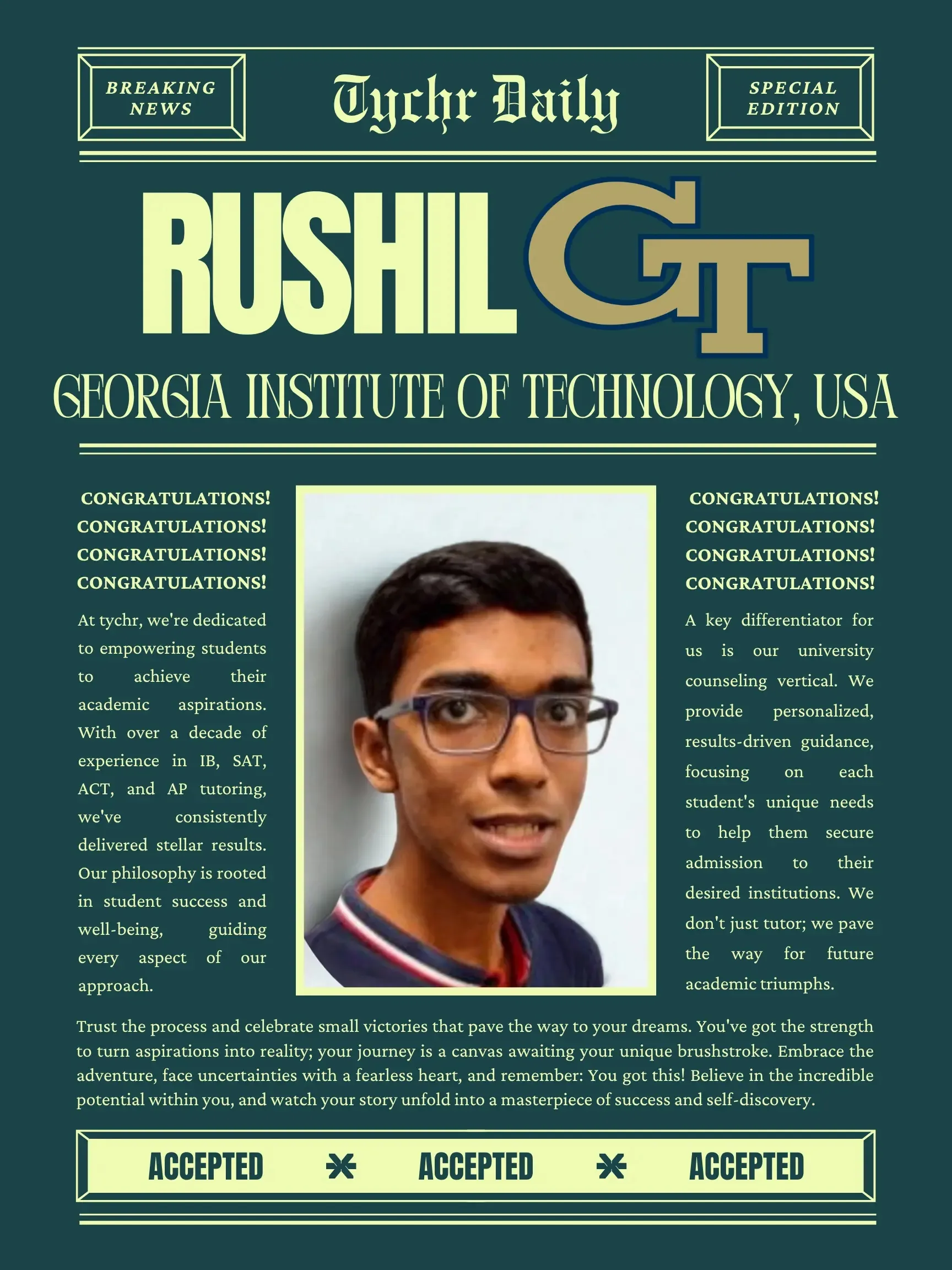
RUSHIL
5/5

ESHAAN
5/5

VISHAAL
5/5
Start your journey with the right guidance.
Your information is kept private and never shared with third parties.
92%
Students score a 5/5
+1.8
Average score improvement
22+
AP subjects covered
4.9★
Average tutor rating
94% of Graduates Secure Admissions into the Top 50 Global Universities
Meet the brilliant minds who transformed their testing potential into world-class AP scores and elite Ivy League academic portfolios.
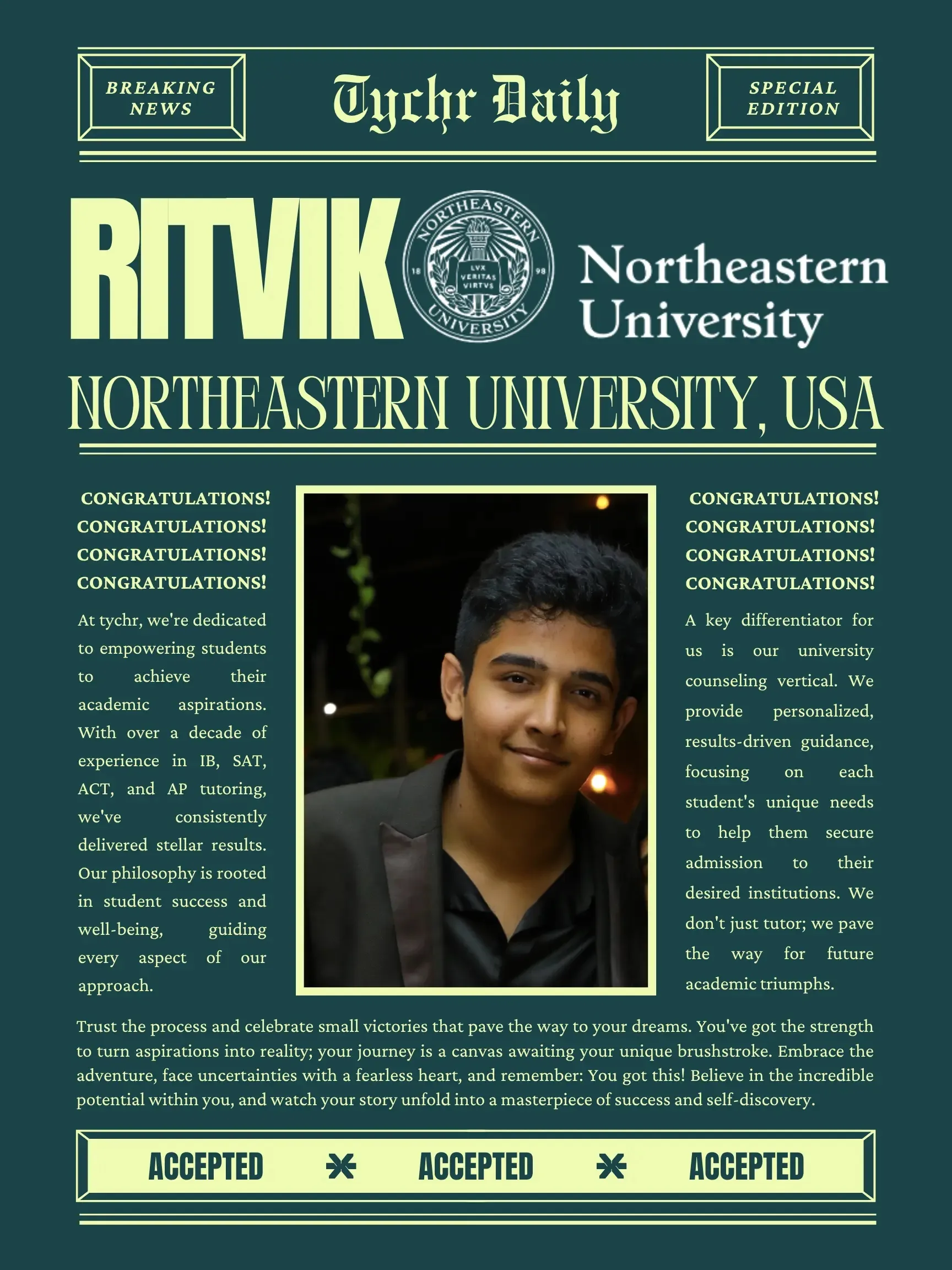

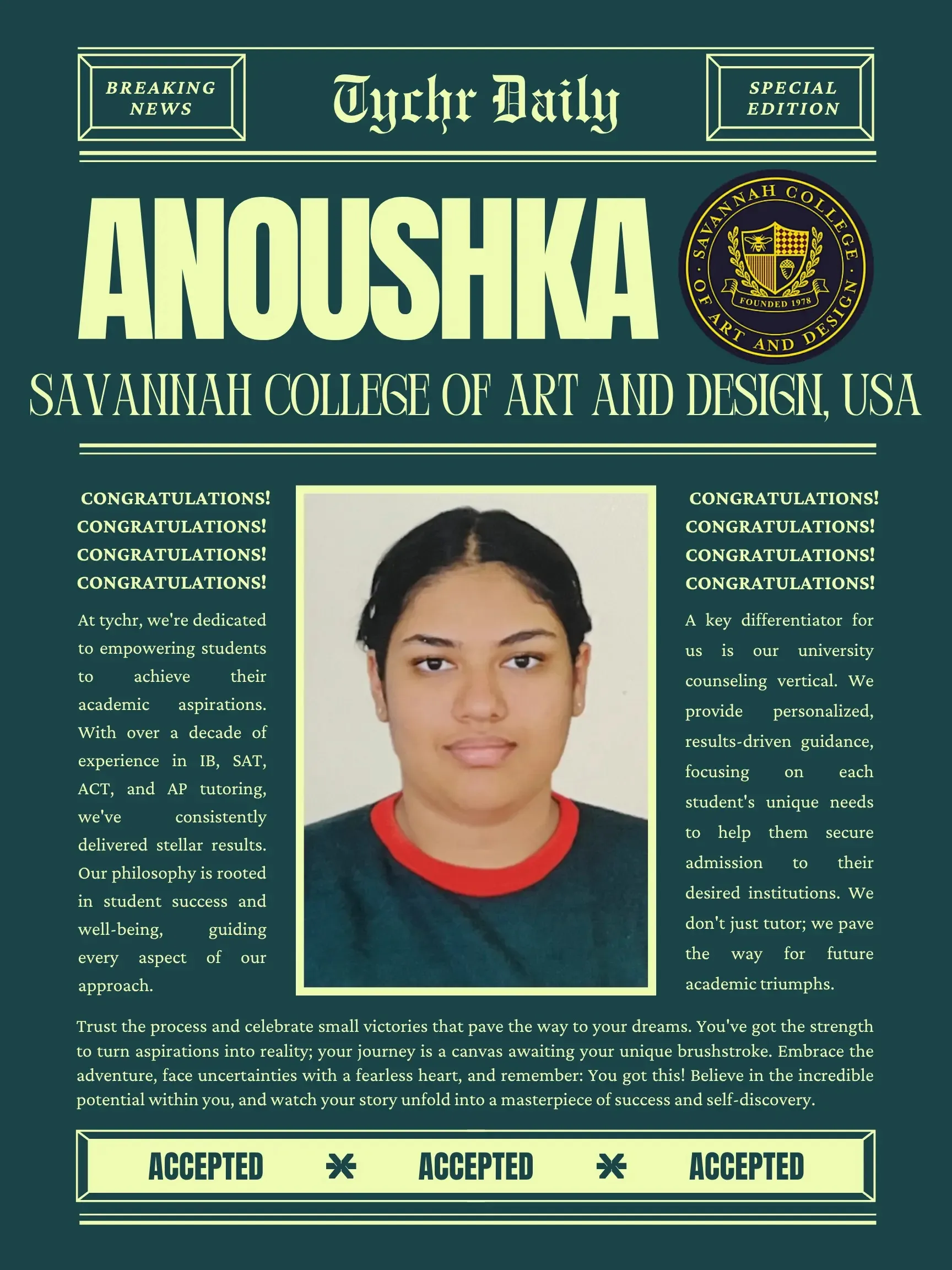
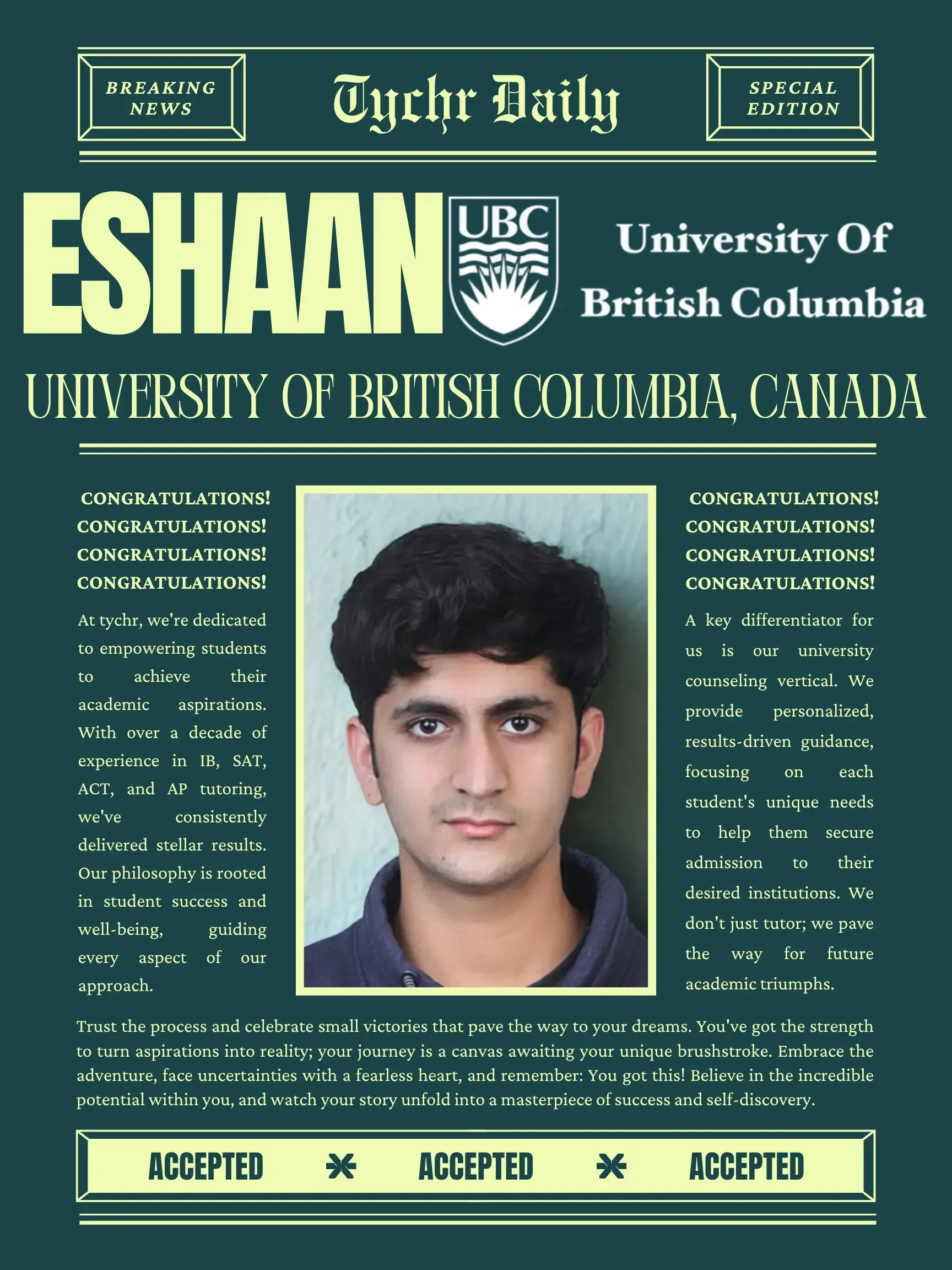
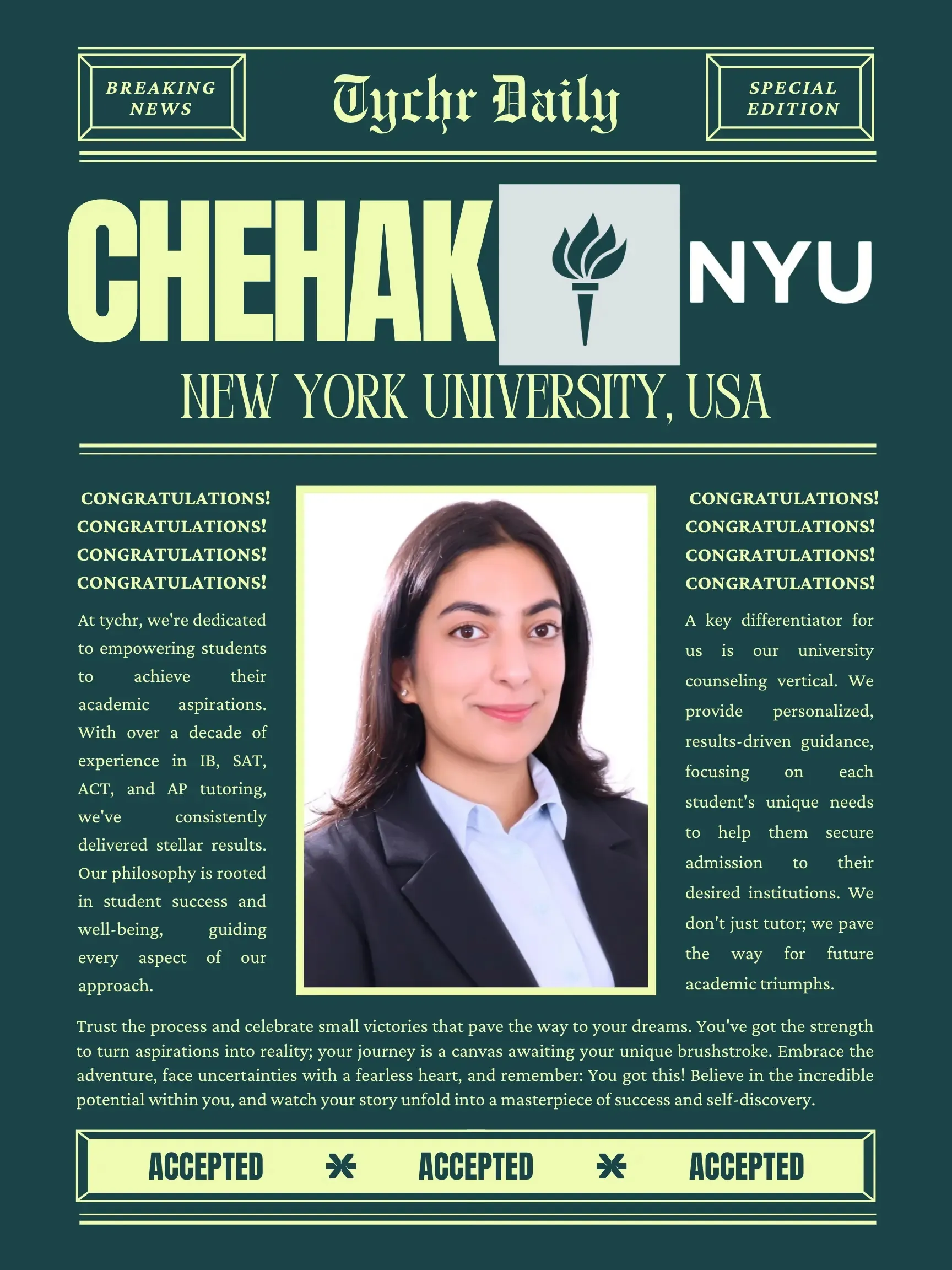
Start your journey with the right guidance.
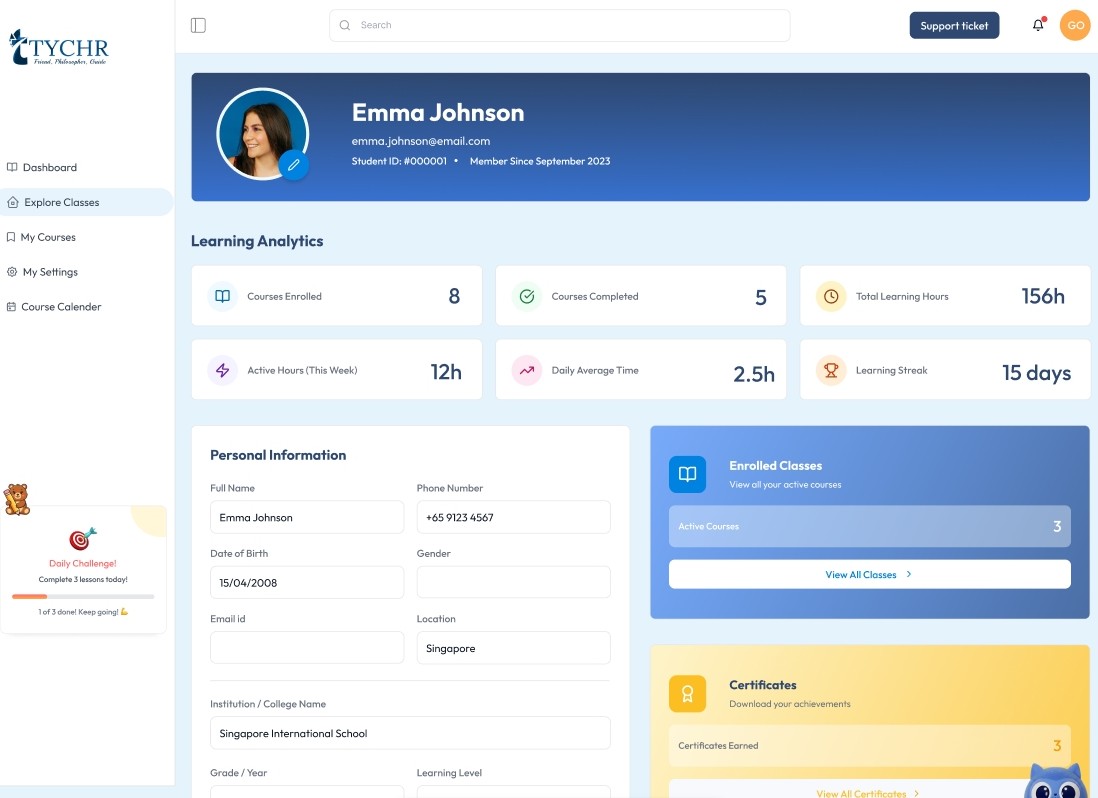
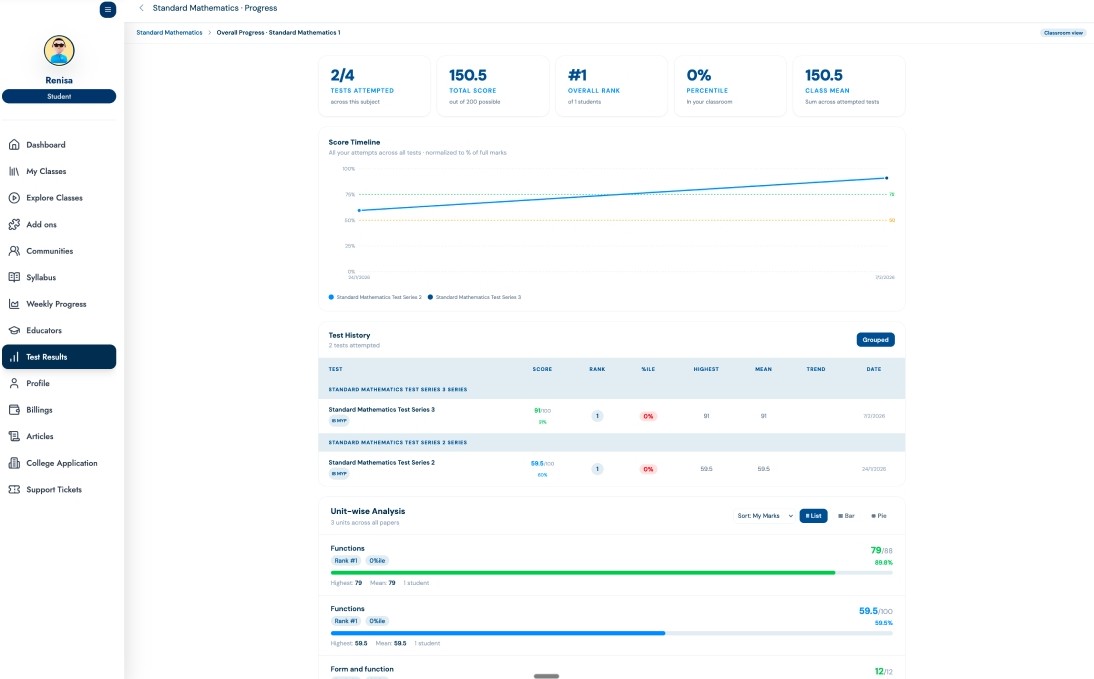
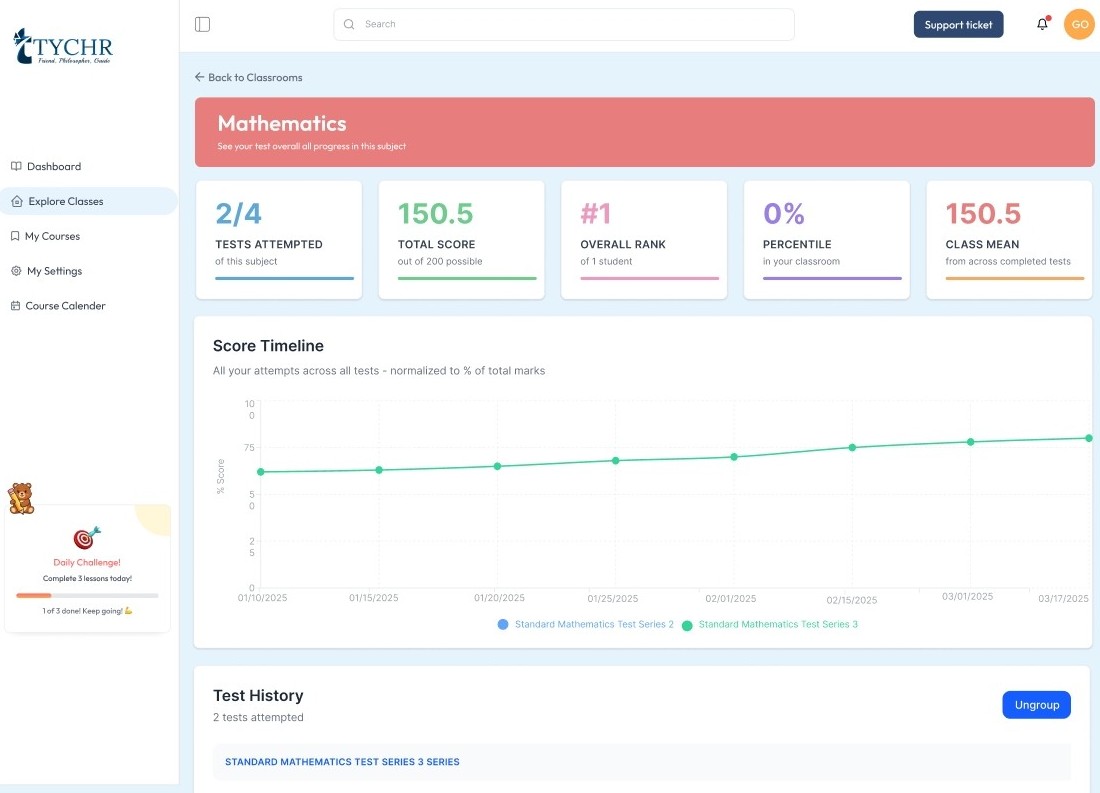
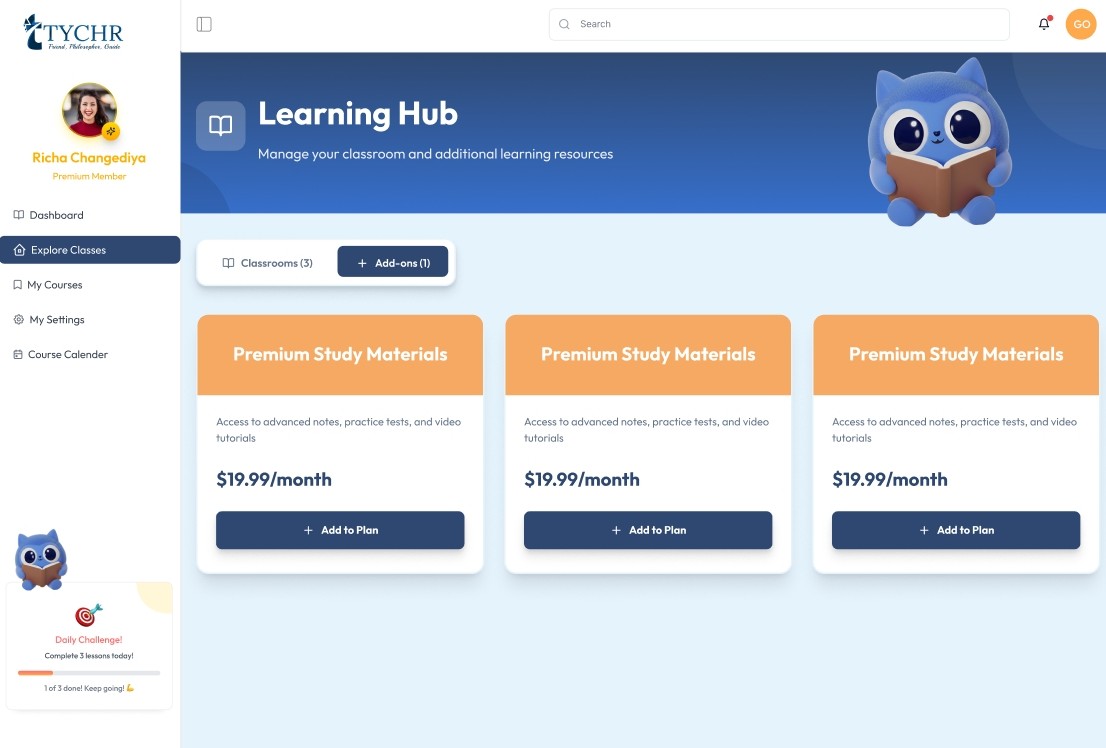
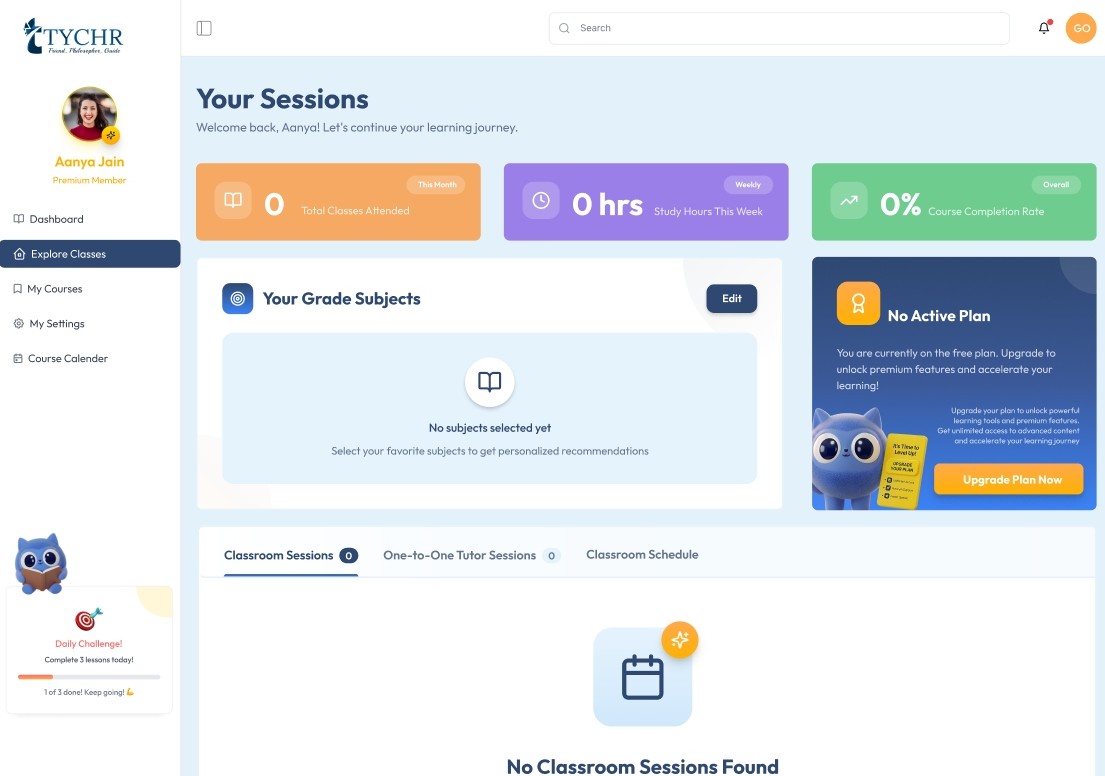
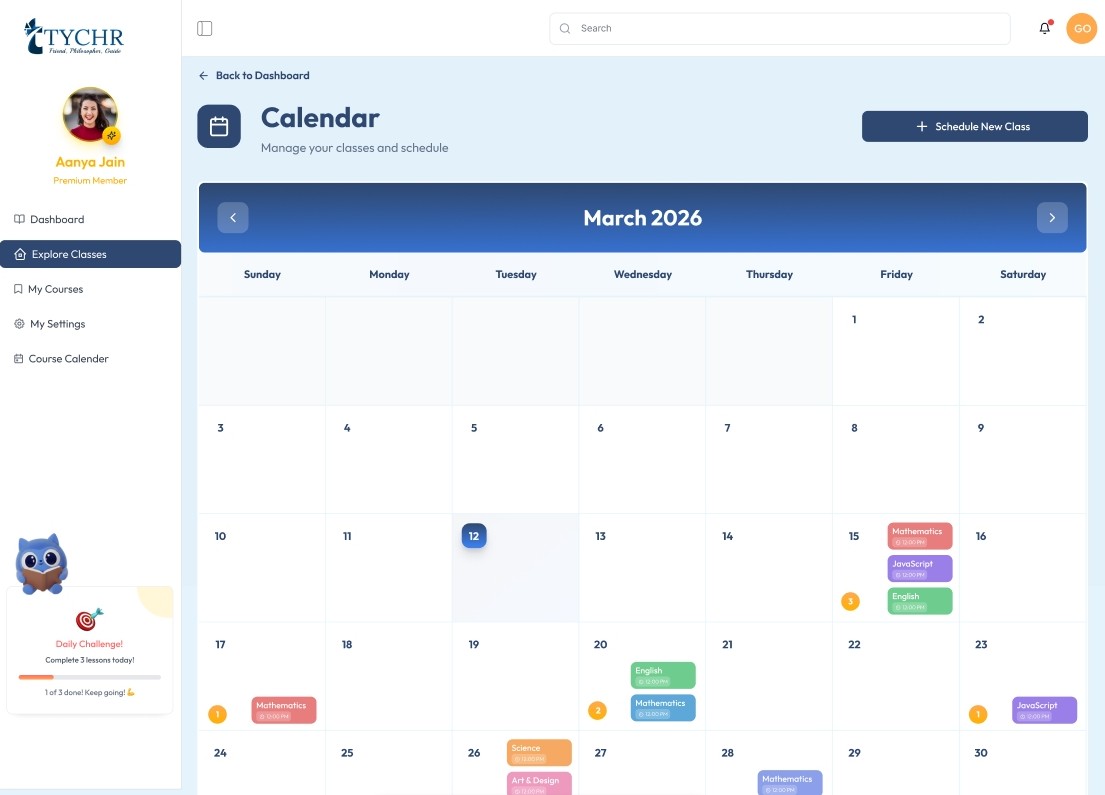
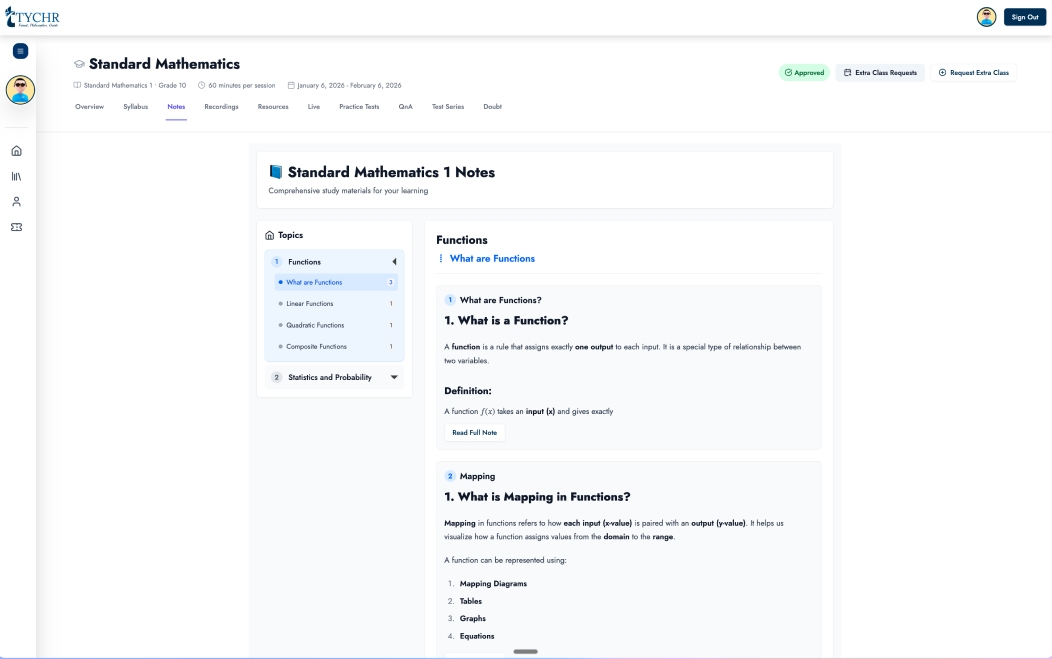
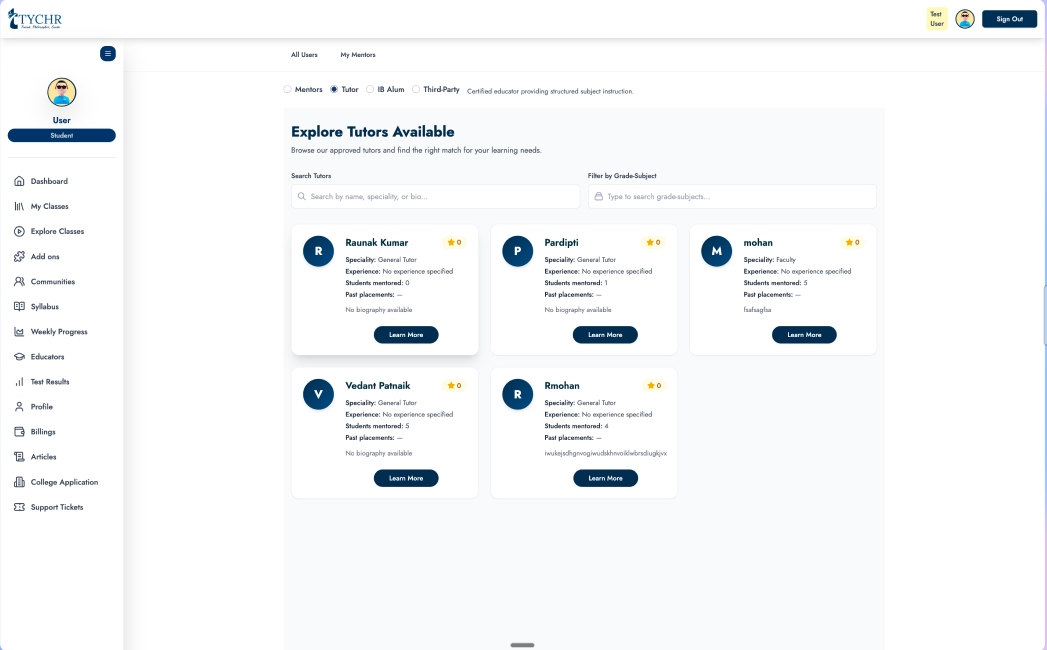
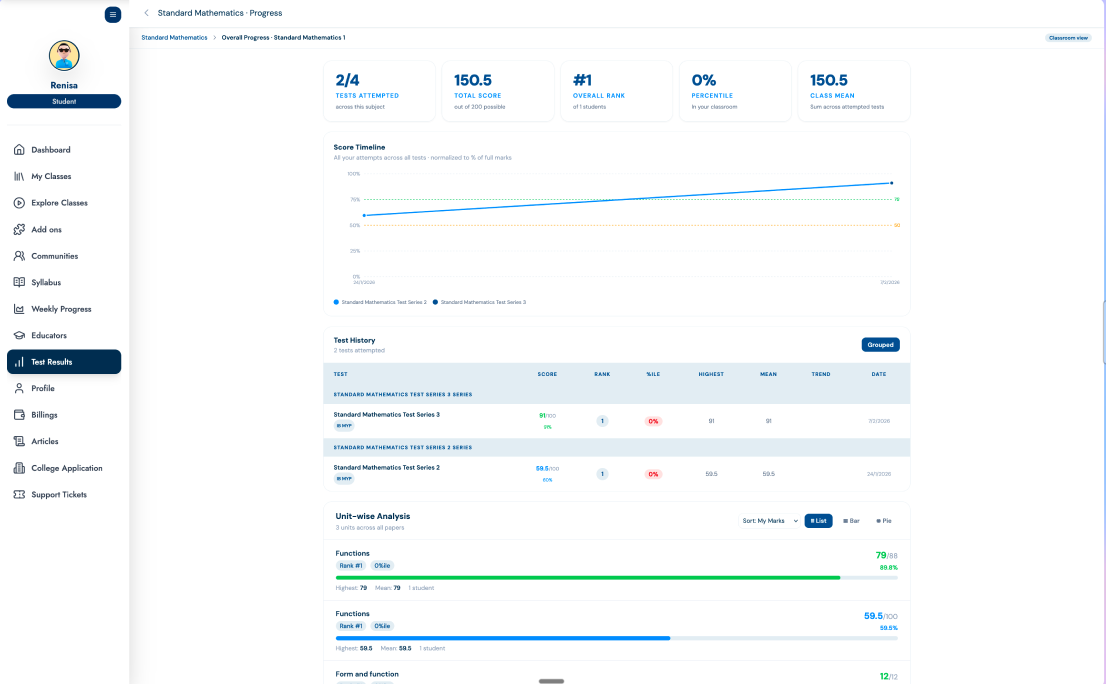
Explore our learning system
A platform designed around how students actually learn — adaptive, intuitive, and always one step ahead.
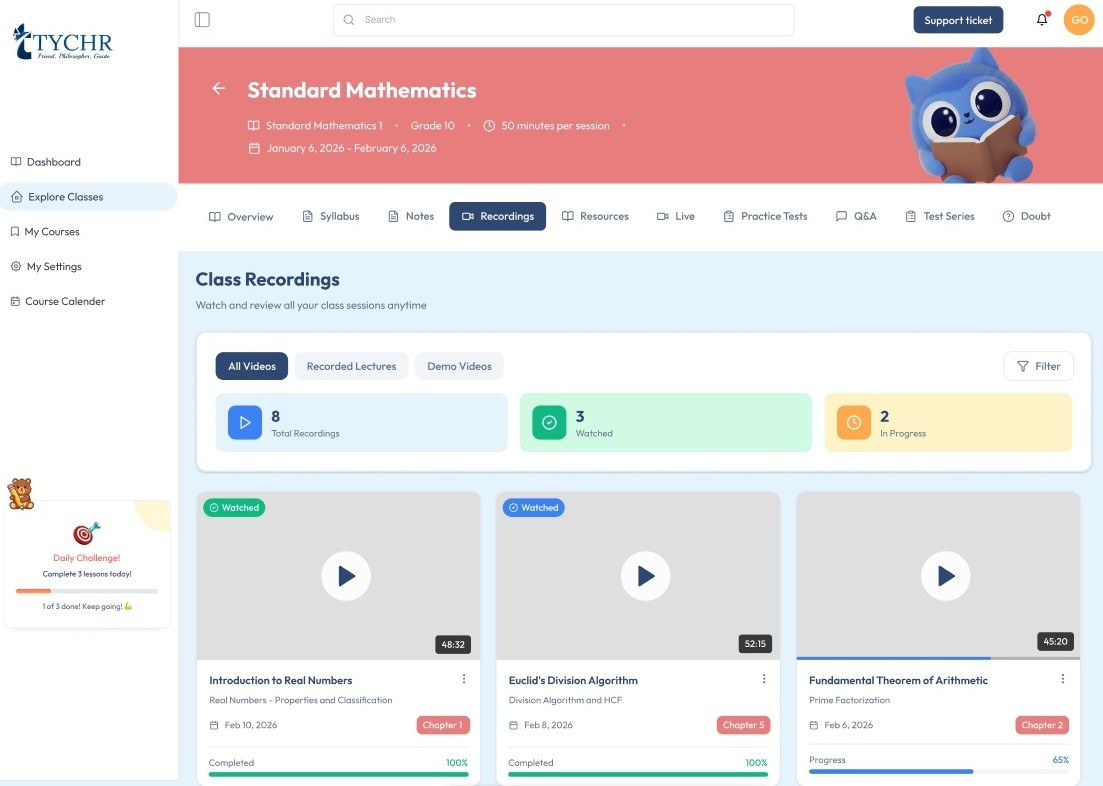

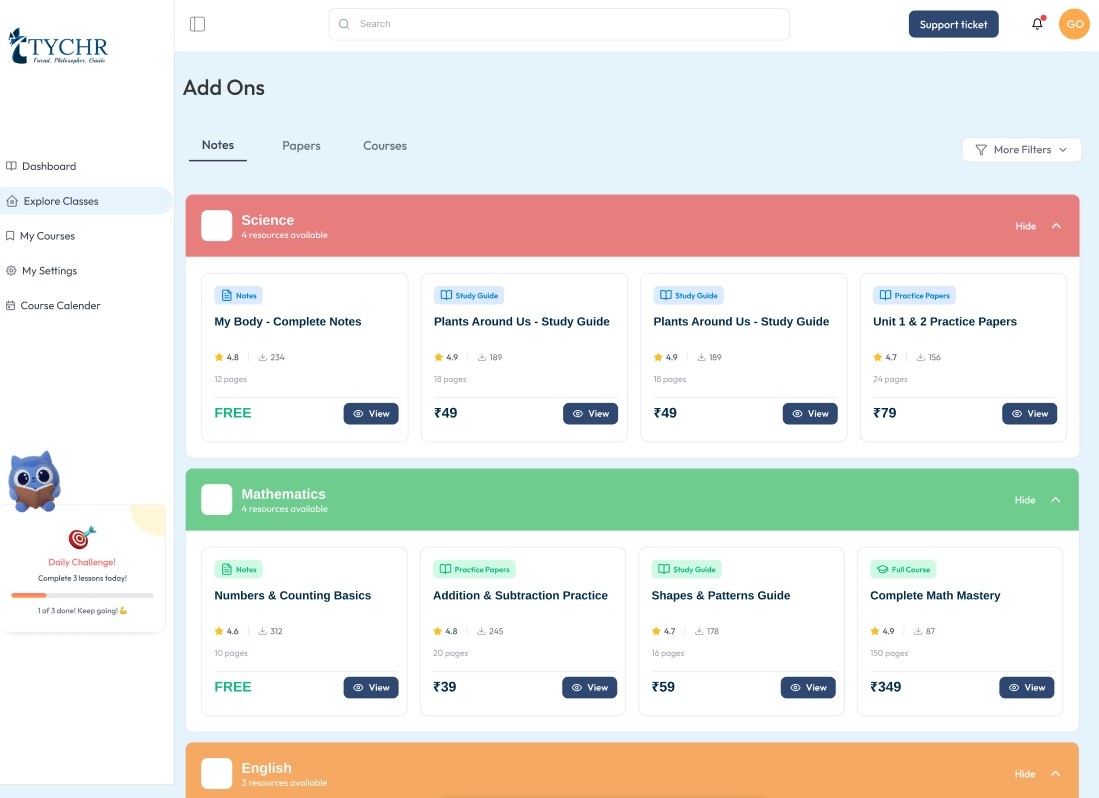
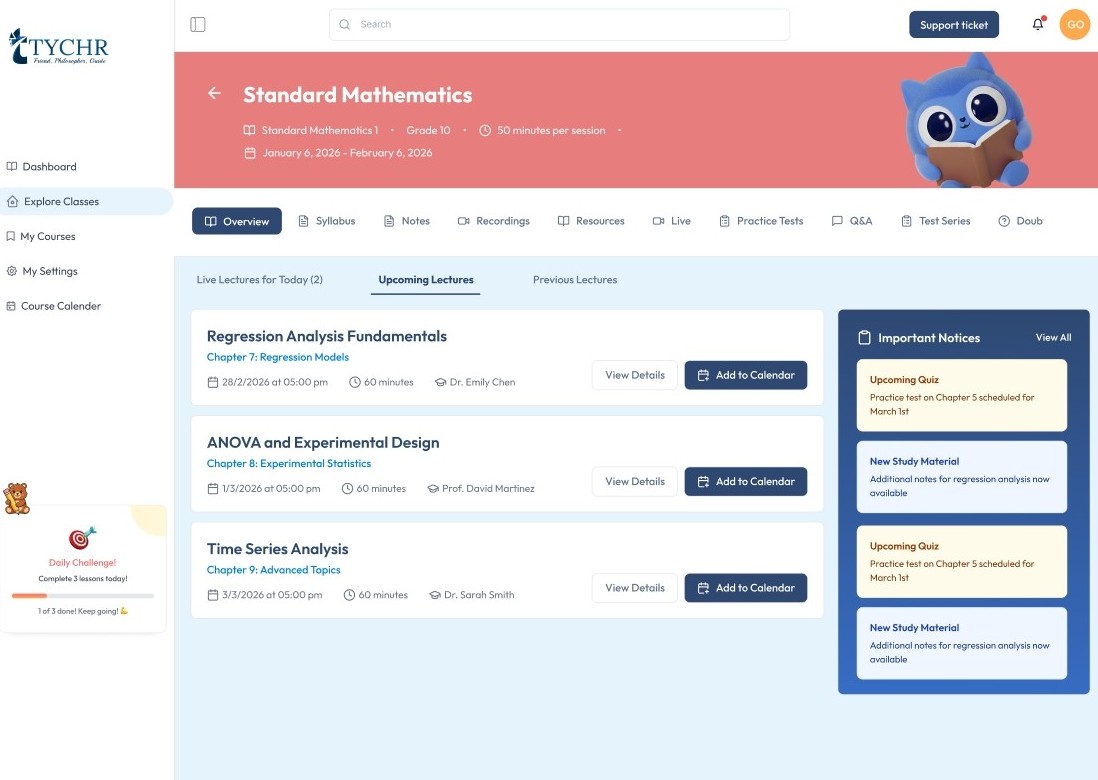
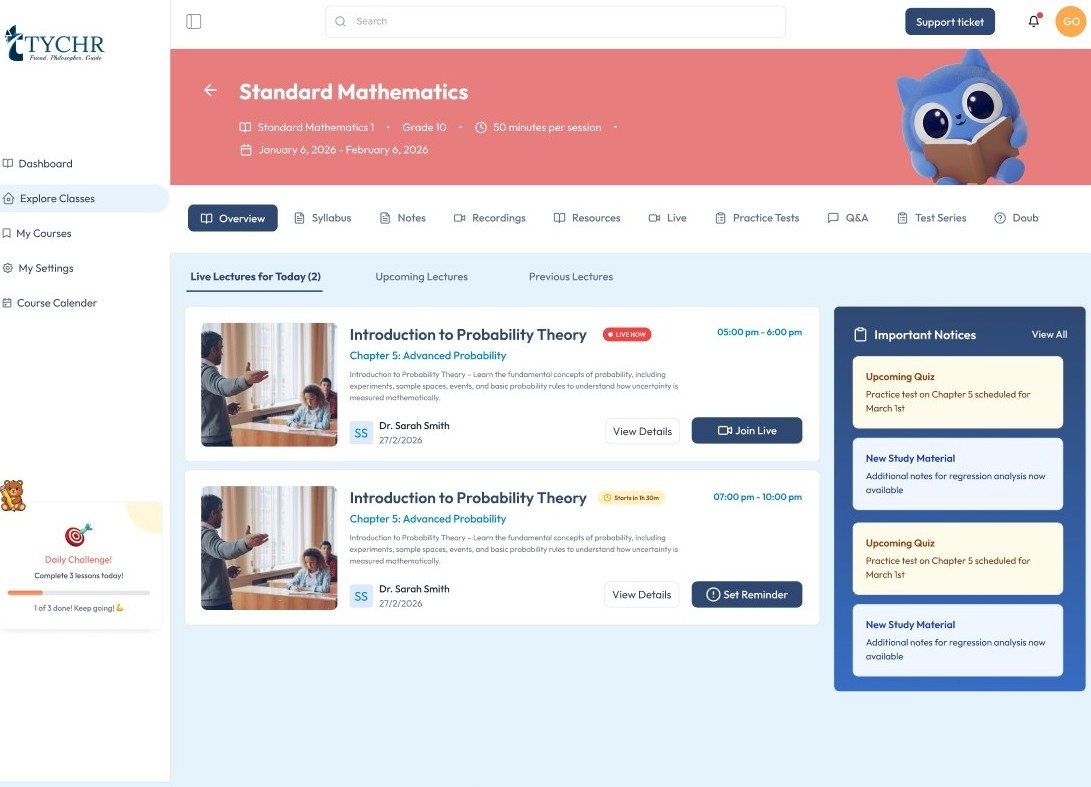
5000+
Students enrolled
100+
Expert tutors
95%
Satisfaction rate
70+
Countries reached
What Is AP Physics C Mechanics?

Course Length
Full academic year
September – May
Exam Date
Early May
Annually
Exam Duration
3 Hours
Total exam time
Exam Structure
Two Sections, Equal Weight
Section I
35 Multiple Choice Questions
90 min · 50% of score
Section II
3 Free Response Questions
90 min · 50% of score
Multiple Choice (MCQ)
35 questions in 90 minutes, worth 50% of the total score. This section tests your ability to apply calculus-based physics principles to diverse physical scenarios. Time management is critical, as you must solve problems accurately under pressure.
Free Response (FRQ)
3 questions in 90 minutes, worth 50% of the total score. These multi-part problems require you to derive expressions, interpret graphs, and perform complex calculations. One question is typically a laboratory-based scenario.
Tools & Formula Sheets
A table of information and a table of equations are provided. A four-function, scientific, or graphing calculator is permitted on the entire exam. Mastery of calculus-based derivation and graphical analysis is essential.
AP Physics C: Mechanics Syllabus
Unit-by-Unit Breakdown
Kinematics
- Motion in one dimension
- Motion in two dimensions
- Calculus-based vectors
Newton's Laws of Motion
- Static equilibrium
- Dynamics of particles
- Friction and drag
Work, Energy, and Power
- Work-energy theorem
- Conservative forces
- Conservation of energy
Systems of Particles & Linear Momentum
- Center of mass
- Impulse and momentum
- Conservation of momentum
Rotation
- Torque and angular acceleration
- Rotational dynamics
- Angular momentum
Oscillations and Gravitation
- Simple harmonic motion
- Newton's law of universal gravitation
- Orbits of planets and satellites
Core Mechanics (Units 1–3)
Calculus-Based Motion & Dynamics
The 'Principle-First' Framework
We drill students to identify the fundamental conservation law (Energy, Momentum, or Angular Momentum) or dynamical law (Newton's Second Law) before writing any equations, ensuring every derivation is grounded in physical reality.
Calculus Integration Strategy
For Mechanics, we master the transition between differentiation (position to velocity to acceleration) and integration (acceleration to velocity to position). We focus on setting up correct integral bounds, a common point-loss area on FRQs.
Kinematics
Newton's Laws
Work, Energy & Power

Rotation & Oscillations (Units 4-5)
Coaching for Flawless Rotational & Periodic Analysis

Rotational Dynamics
Torque, moment of inertia, and angular acceleration. We teach students how to set up $\tau_{net} = I\alpha$ and account for parallel-axis theorem shifts.
Angular Momentum
Conservation of angular momentum in collision scenarios. Mastering the distinction between point particles and extended rigid bodies is a frequent FRQ differentiator.
Oscillatory Motion
Simple Harmonic Motion (SHM) for springs and pendulums. We emphasize energy transformation between kinetic and potential, and correctly identifying the period $T$.
Torque
Angular Momentum
Simple Harmonic Motion
Moment of Inertia
Mastering the Core Distinctions
The conceptual gaps between linear and rotational kinematics, and the energy storage in oscillating systems (springs/pendulums) dictate your ability to model complex motion. These subtle nuances in torque and angular momentum are heavily targeted in both MCQ and FRQ sections. We drill students using scenario-based practice profiles until they can confidently classify physical systems, isolate force interactions, and justify any rotational model in under 60 seconds.
Energy, Momentum & Rotation
Concepts & Practice
Work & Energy
Systems & Momentum
Rotational Motion

Master Dynamics for FRQs
Complex mechanics problems appear across all FRQs. Our tutors focus on showing clear derivation steps and using standard physics notation to secure full points.
Advanced Mechanics Dynamics
Conservation Laws & Rotational Dynamics
Energy & Work
Problem Solving Strategy

Newton's Second Law
FBDs and translational dynamics
Linear Momentum
Collisions and center of mass
Rotational Kinematics
Angular velocity and acceleration
Rotational Dynamics
Torque and moment of inertia
Angular Momentum
Rotation conservation scenarios
Simple Harmonic Motion
Springs, pendulums, and period
AP Physics C: Mechanics Free Response Questions
FRQ Strategies for Maximizing Rubric Points
6 Questions in 90 Minutes (50% of Score)
FRQs are where the exam is won or lost. Precise vocabulary is mandatory.
Rubric Maximization Rules
State Fundamental Principles First
Many points are awarded for stating the relevant physics principle (e.g., 'By Conservation of Mechanical Energy, K_i + U_i = K_f + U_f'). Never start with a complex equation without justifying which law you are applying.
Utilize Calculus Explicitly
AP Physics C is calculus-based. If a force is non-constant or a variable changes over time/distance, you must set up the integral rather than using simple algebraic formulas. Show the integral setup explicitly.
Draw Clear Free-Body Diagrams
A free-body diagram (FBD) is often worth rubric points. Ensure all vectors are clearly labeled, the coordinate system is defined, and the diagram is large enough to be easily readable by the grader.
Show All Derivation Steps
Derivations are a staple of the FRQ section. Do not skip steps; show the algebraic manipulation clearly. If you are asked to show that an expression is true, start from a known physical law and work toward the final result.
Master Experimental/Graphical Analysis
For lab-based FRQs, always identify which variables are being plotted to create a linear graph. Explain that the slope or y-intercept corresponds to the physical constant being measured.
Why Precise FRQ Language Matters
College Board rubrics heavily favor symbolic manipulation over raw numeric calculation. If you plug in numbers at the start and make a calculation error, you lose access to most of the points for the derivation. We drill students to carry variables (e.g., 'm', 'g', 'h') through the entire process and only substitute values at the very final step.
Writing "plugging in numbers too early" instead of "derive symbolic expressions first".
Calculator Skills for AP Physics C: Mechanics
Calculus-Based Tools
Essential Physics Principles & Methods
Integration (∫)
Used for work, center of mass, and non-constant force calculations.
Differentiation (d/dx)
Used to find velocity/acceleration from position and forces from potential energy.
Vector Decomposition
Breaking forces into components (sin/cos) for FBD analysis.
Kinematic Equations
Standard tools for constant acceleration scenarios.
Rotational Inertia Formulas
Specific formulas for discs, spheres, rods, etc.
Conservation Laws
Energy, Linear Momentum, and Angular Momentum templates.
Torque Equation
τ = r × F and τ = Iα for rotational problems.
SHM Equations
T = 2π√(m/k) or T = 2π√(L/g) for oscillating systems.
Derive Symbolically
Never plug in numbers until the final step. Symbolic manipulation is essential for earning full credit.
Practice Calculus
Be prepared to set up integrals for non-constant forces, work, or moments of inertia.
Units and Constants
Always keep track of units (SI) and use the provided constant table to avoid minor precision errors.
AP Physics C: Mechanics Multiple Choice
Tips & Timed Practice
35 Questions • 90 Minutes
Average 2.57 minutes per question • Worth 50% of exam score
Analyze Units
Use dimensional analysis to eliminate physically impossible answer choices
Visualize Forces
Sketch a quick free-body diagram for any motion or force question
Check Limiting Cases
Test if the formula works when variables like angle or velocity approach zero
Identify Principles
Determine if Energy, Momentum, or Newton’s Laws apply before calculating
Manage Time
You have approx. 2.5 minutes per question—do not get bogged down in algebra
Skip & Return
Mark complex derivation-based questions and return after solving easier ones
Common Topics
- •Newtonian dynamics and FBDs
- •Calculus-based work and energy integration
- •Conservation of linear and angular momentum
- •Rotational kinematics and torque
- •Simple harmonic motion and gravitation
Practice Approach
Weeks 1-4
Untimed practice focused on derivation and concepts
Weeks 5-8
Mixed practice including calculus-based problem sets
Weeks 9-12
Full 35-question timed simulation tests
Our tutors provide official College Board practice materials and teach time-tested strategies
One-to-One vs Group Tutoring
AP Physics C Mechanics Sessions
One-to-One
- ✓Personalized pacing through all 9 units
- ✓Focus on your weak areas (probability, inference, etc.)
- ✓Flexible scheduling around your calendar
- ✓Individual FRQ review and feedback
- ✓Custom practice problem sets
Group Sessions
- ✓Learn with 3-4 students at similar level
- ✓Cost-effective exam preparation
- ✓Collaborative problem-solving
- ✓Structured curriculum coverage
- ✓Group practice test reviews
Tutor Profiles Subject Experts
Meet our highly qualified tutors with proven track records of student success.

Sreevidya KG
MSc in Chemistry with a Bachelor’s in Education, IB training, and Google certification.
20 Years
Experience
1500+
Students
5
Rating
Over 20 years of experience teaching Chemistry across IBDP, IGCSE, and AS/A Level curricula, including extensive international online tutoring.
Personalized IB tutoring with concept-focused learning approach.

Sandeep Nehra
IB Physics – Category 2 Certified | IBDP • IGCSE • AS/A Level • AP • AQA Physics
10+ Years
Experience
1200+
Students
4.9
Rating
An experienced IBDP and international Physics educator with over 10 years of multi-curriculum teaching experience across IBDP, IGCSE, AS/A Level, AP, and AQA.
Personalized IB tutoring with concept-focused learning approach.

Anjali Nayan Mistry
BA (Psychology), DELF B1 (French), B2.2 Alliance Française
11+ Years
Experience
1000+
Students
5
Rating
Have 11 years of experience teaching international curricula, including IB French B (SL & HL), French Ab Initio, AP Psychology, and IGCSE French, across leading IB and Cambridge schools.
Personalized IB tutoring with concept-focused learning approach.

Anish Chauhan
IB DP Physics • IGCSE Physics • Cambridge AS/A Level Physics | Former Academic Head
15 Years
Experience
1100+
Students
5
Rating
15+ years teaching IB DP, IGCSE, and Cambridge AS/A Level Physics
Achievements
Personalized IB tutoring with concept-focused learning approach.

Prem Raj Kumar
B.Sc. Computer Science | IB Educator Certificates | Google Certified Trainer
8+ Years
Experience
700+
Students
5
Rating
An experienced IB Computer Science educator specializing in Mathematics, ICT, and Computer Science across IB MYP, IBDP, IGCSE, AP, and A Level.
Personalized IB tutoring with concept-focused learning approach.
Grade Improvements — AP Score Results
From Students
ett
ett
Practice Tests & Past Exam Resources
Physics C Mechanics Materials
Official Practice Tests
15+- ✓ Released College Board exams
- ✓ Scored answer keys
- ✓ Topic breakdowns
FRQ Bank
200+- ✓ Organized by unit
- ✓ Scoring rubrics
- ✓ Sample responses
Multiple Choice
500+- ✓ Unit quizzes
- ✓ Mixed practice
- ✓ Timed tests
Calculator Guides
25+- ✓ TI-84 tutorials
- ✓ Function walkthroughs
- ✓ Quick reference

All Resources Included Free
Every tutoring student gets unlimited access to our complete Physics C Mechanics resource library
What students say
“I was scoring a 2 on AP Chemistry practice tests in January. By May I had a 5. Pooja ma'am focus on the FRQ rubric was the thing that made the biggest difference, I'd never understood how strictly it was marked.”

Amasha
Chemistry
“Prannoy sir helped me go from a 3 to a 5 in AP Calculus BC. The sessions were intense but the way he broke down FRQ justification was completely different from what my school taught. I finally understood what 'show your work' actually means for College Board”

Jiya
Calculus BC
Frequently Asked Questions
Everything About IB Physics C Mechanics Tutoring
Our tutors bridge advanced mathematics and classical physics by teaching students how to set up and solve differential equations for kinematics, variable force systems, and non-constant acceleration scenarios.
Yes, we provide specialized coaching on rotational analogs to linear motion, parallel-axis theorems, rolling without slipping, and angular momentum conservation principles.
We run intensive drills on past exam FRQs, training students on how to write clear physical justifications, derive complex algebraic expressions, and interpret experimental lab data.
Absolutely. Every lesson strictly follows the official curriculum framework, covering everything from kinematics and Newton's laws to work, energy, power, and simple harmonic motion.
Yes, we walk students through standard mechanics investigations—such as air-track collisions, pendulum dynamics, and rotational systems—focusing on graphical analysis and experimental uncertainty.
We use step-by-step vector analysis and energy conservation approaches to help students understand satellite orbits, gravitational potential energy wells, and Kepler's laws intuitively.
Book Your AP Physics C Mechanics Tutor Today
Start with a Free Trial Session
Book Free Trial
Choose your preferred time slot
Meet Your Tutor
Get matched with Physics C Mechanics expert
Start Improving
Begin your personalized prep plan
No credit card required • No commitment • 100% satisfaction guarantee
1000+
Students Taught
4.8
Average Score
89%
Score 4 or 5
200+
Expert Tutors