Expert AP Microeconomics Tutors Online score 5/5 with Tychr
AP Microeconomics is one of the most intellectually demanding AP courses. Mastering its core methodologies and executing precise FRQ arguments require deliberate, expert-led structure practice.

GULIA
5/5

TANISHA
5/5

ADAA
5/5

RUSHIL
5/5

ESHAAN
5/5

VISHAAL
5/5
Start your journey with the right guidance.
Your information is kept private and never shared with third parties.
92%
Students score a 5/5
+1.8
Average score improvement
22+
AP subjects covered
4.9★
Average tutor rating
94% of Graduates Secure Admissions into the Top 50 Global Universities
Meet the brilliant minds who transformed their testing potential into world-class AP scores and elite Ivy League academic portfolios.






Start your journey with the right guidance.
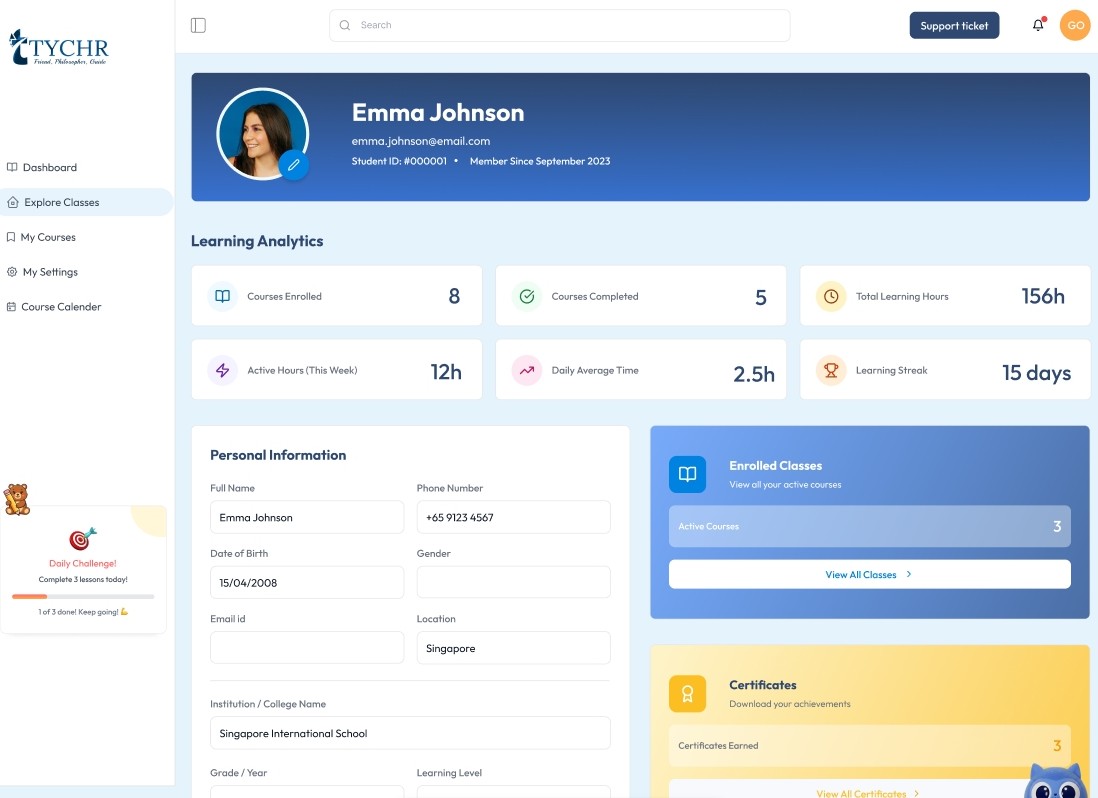
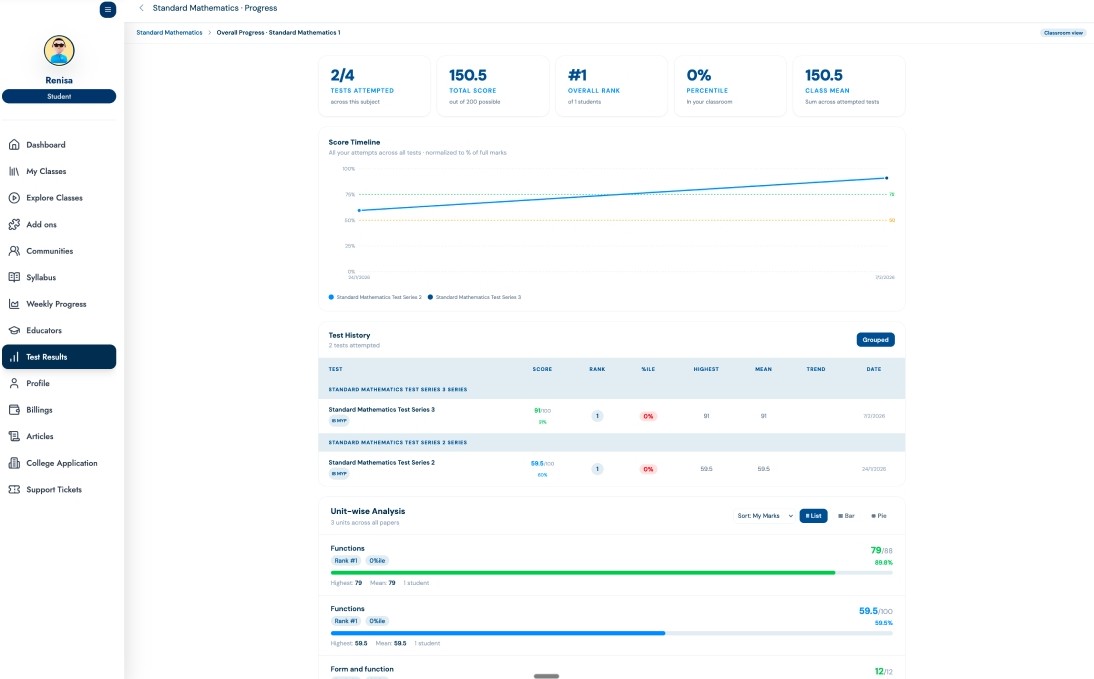
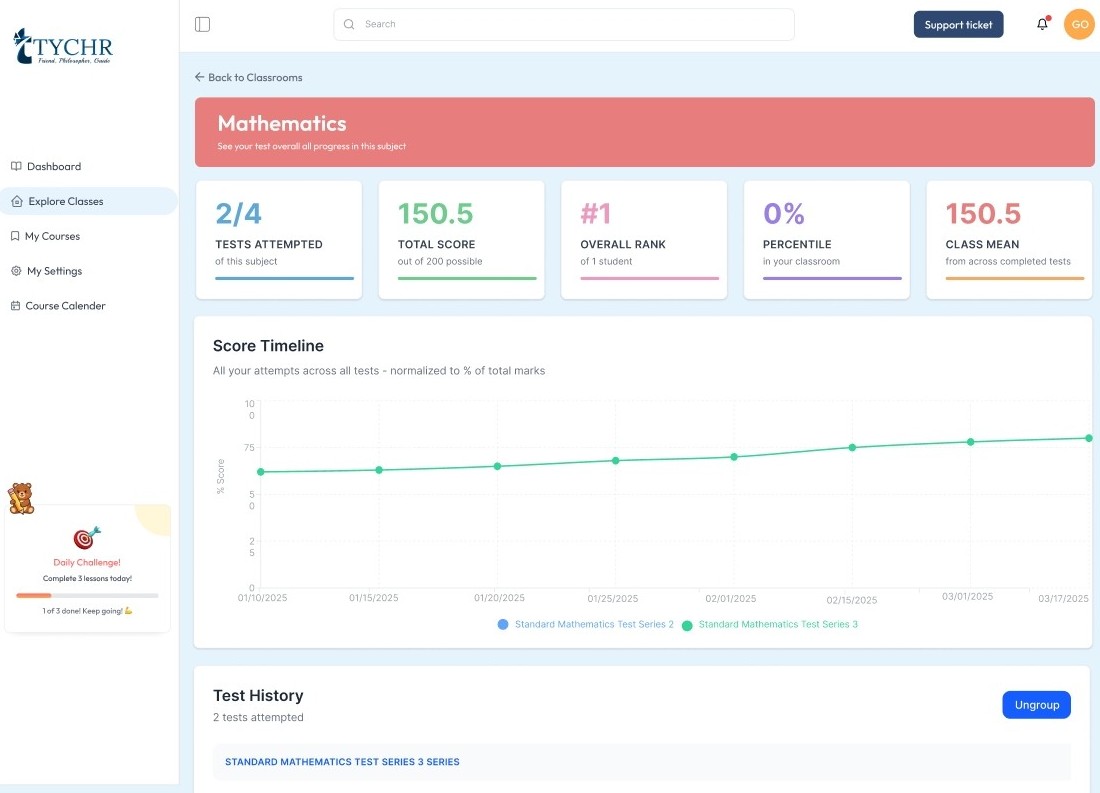
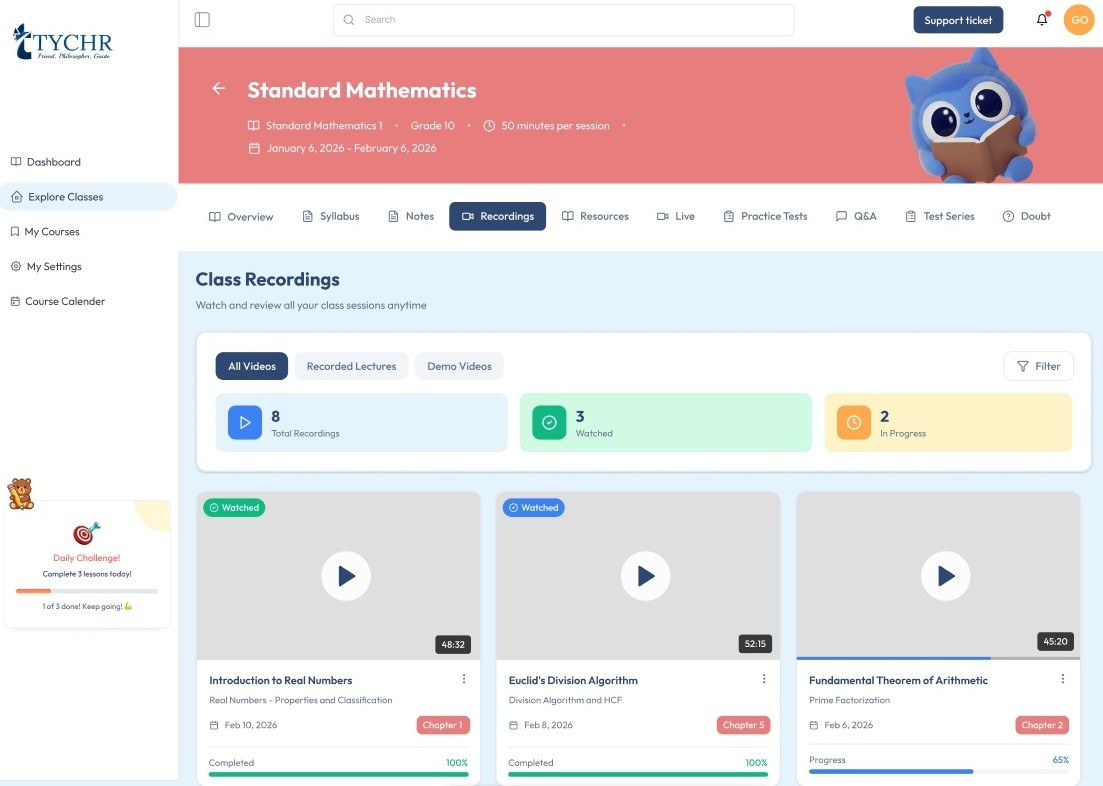
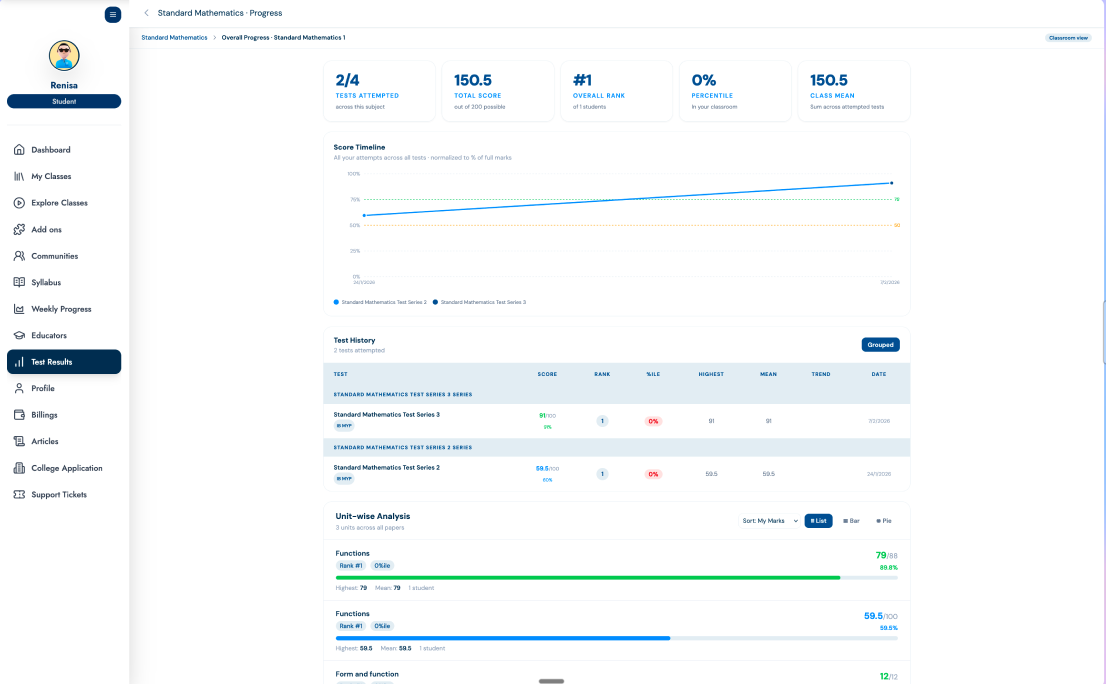
Explore our learning system
A platform designed around how students actually learn — adaptive, intuitive, and always one step ahead.

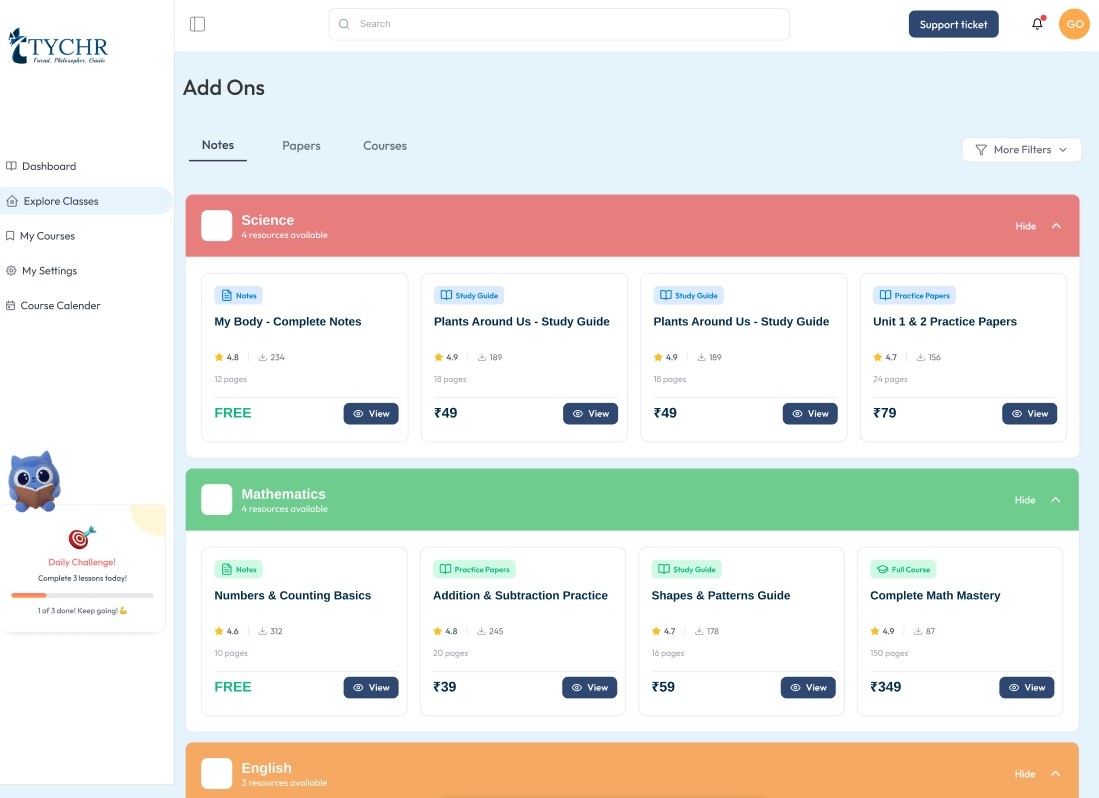
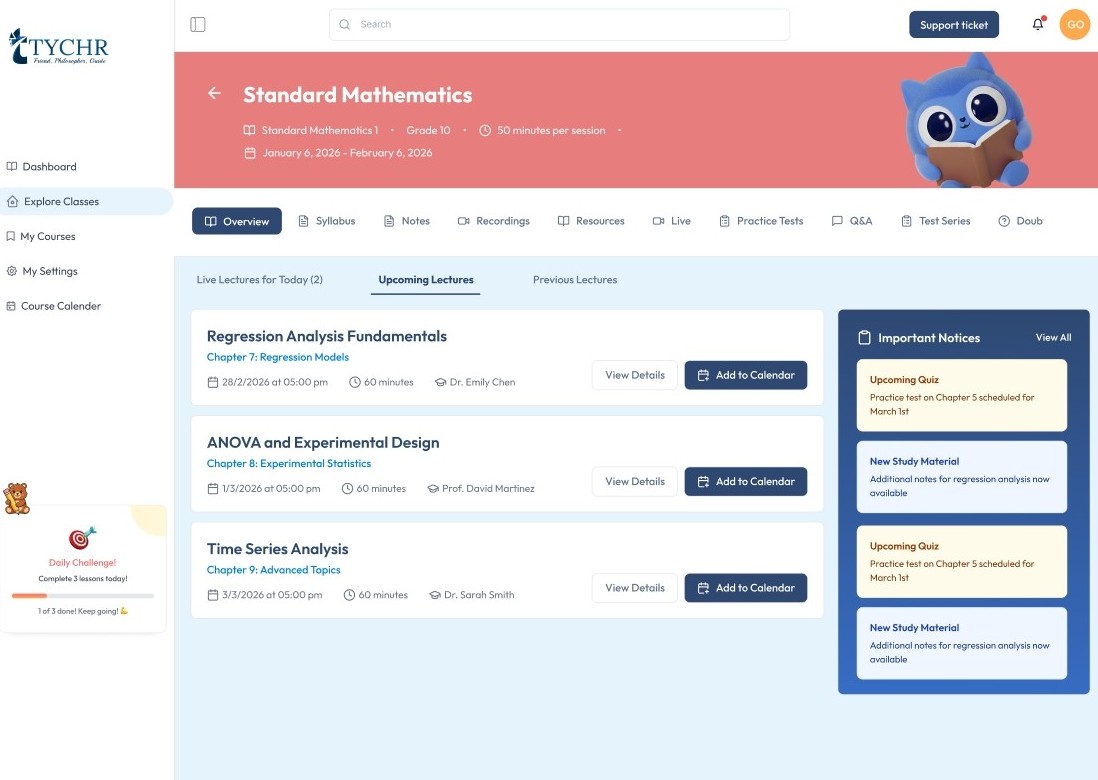




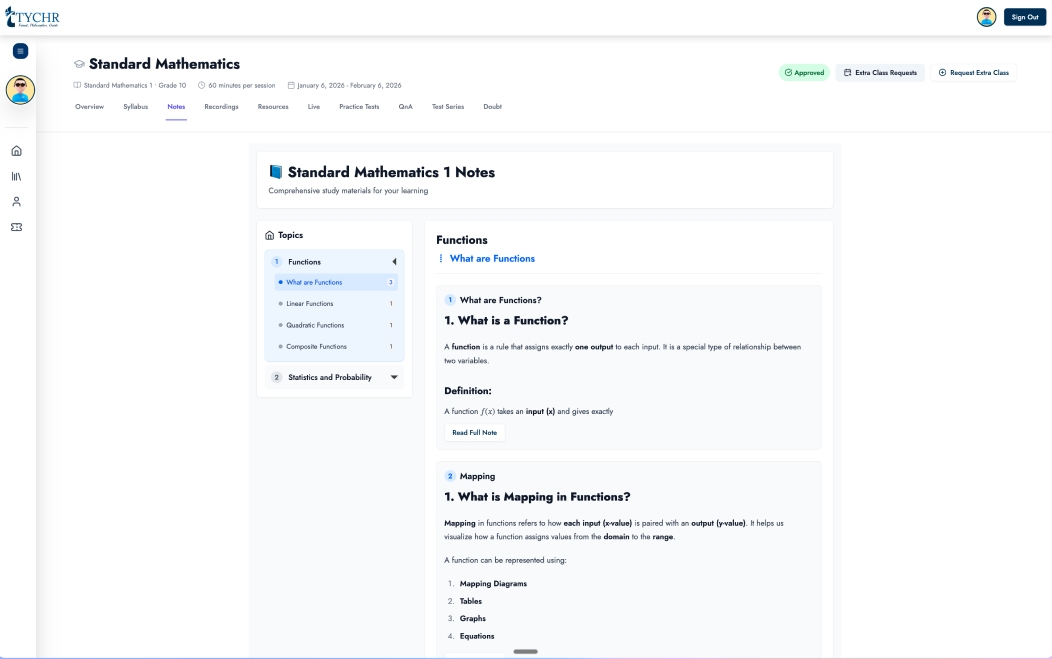
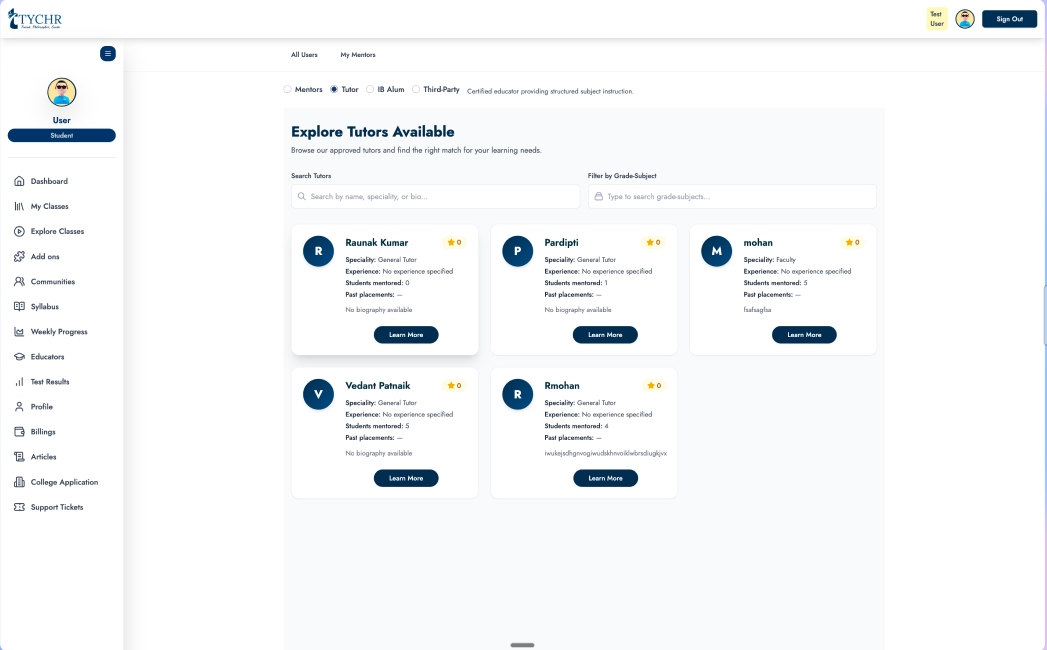
5000+
Students enrolled
100+
Expert tutors
95%
Satisfaction rate
70+
Countries reached
What Is AP Microeconomics?

Course Length
Full academic year
September – May
Exam Date
Early May
Annually
Exam Duration
2 Hours 10 Minutes
Total exam time
Exam Structure
Two Sections, Weighted Scoring
Section I
60 Multiple Choice Questions
70 min · 66.7% of score
Section II
3 Free Response Questions
60 min · 33.3% of score
Multiple Choice (MCQ)
60 questions in 70 minutes, worth roughly 67% of the total score. Focuses on graphical analysis, basic economic principles, and market structures. Pacing is essential due to the high volume of questions.
Free Response (FRQ)
3 questions in 60 minutes, worth roughly 33% of the total score. Includes one long-answer question (often involving multiple parts/graphs) and two short-answer questions. Requires precise diagram labeling and economic reasoning.
Tools & Strategy
Calculators are permitted for the entire exam. Mastery of graphing tools—specifically supply/demand curves, cost curves, and market model equilibria—is the key to securing full points on FRQs.
AP Microeconomics Syllabus
Unit-by-Unit Breakdown
Basic Economic Concepts
- Scarcity
- Opportunity cost
- Production possibilities curve
- Comparative advantage
Supply and Demand
- Demand and supply determinants
- Market equilibrium
- Elasticity
- Consumer and producer surplus
Production, Cost, and Perfect Competition
- Production function
- Cost curves
- Perfect competition
- Profit maximization
Imperfect Competition
- Monopoly
- Price discrimination
- Monopolistic competition
- Oligopoly and game theory
Factor Markets
- Marginal revenue product
- Labor demand and supply
- Monopsony
- Factor market equilibrium
Market Failure and the Role of Government
- Externalities
- Public goods
- Tax incidence
- Public policy and efficiency
Economic Foundations (Units 1–2)
Market Structures & Price Analysis
The MR=MC Framework
We rigorously drill the profit-maximization rule (Marginal Revenue = Marginal Cost) so students can accurately identify firm output levels in any market structure, from perfect competition to monopoly, to capture full marks.
Graphical Analysis Strategy
For market models, we zero in on precise graphical construction—correctly shifting curves, labeling price/quantity axes, and calculating deadweight loss—the exact zones where points on FRQs are most frequently dropped.
Basic Economic Concepts
Supply & Demand Markets
Production & Competition

Market Failures & Government Policy (Unit 3)
Coaching for Flawless Welfare Analysis

Externality Analysis
Identifying MSB vs. MPB and MSC vs. MPC. We teach students how to shift curves to show the socially optimal quantity versus the market quantity.
Policy Intervention
Per-unit taxes, subsidies, and price controls. Mastering the impact on consumer and producer surplus is a frequent FRQ differentiator.
Public Goods
Understanding non-excludability and non-rivalry. We emphasize why private markets under-provide these goods and how the government fills the gap.
Externalities
Deadweight Loss
Public Goods
Tax Incidence
Mastering the Core Distinctions
The conceptual gaps between negative and positive externalities, and the difference between corrective taxes and subsidies, dictate your ability to model market efficiency. These subtle nuances regarding deadweight loss and social welfare are heavily targeted in both MCQ and FRQ sections. We drill students using scenario-based practice profiles until they can confidently identify market failures, calculate welfare impacts, and justify any government intervention in under 60 seconds.
Market Structures & Welfare
Concepts & Practice
Imperfect Competition
Factor Markets
Market Failure & Government

Master Market Models for FRQs
Analysis of market structures and policy impacts are essential for FRQs. Our tutors focus on precise graph construction and clear economic justification.
Economic Efficiency & Policy
Market Failures & Government Intervention
Market Failures
Policy Analysis

Negative Externality
Overproduction in free market
Positive Externality
Underproduction in free market
Per-Unit Taxes
Impact on price and deadweight loss
Per-Unit Subsidies
Impact on production and welfare
Price Floors/Ceilings
Shortages, surpluses, and efficiency
Public Goods
Non-excludability and free-rider problem
AP Microeconomics Free Response Questions
FRQ Strategies for Maximizing Rubric Points
6 Questions in 90 Minutes (50% of Score)
FRQs are where the exam is won or lost. Precise vocabulary is mandatory.
Rubric Maximization Rules
State the Market Structure Explicitly
Name the exact market structure at the start of every product or resource market question (e.g., 'Assuming a perfectly competitive product market in long-run equilibrium'). College Board readers search for this context explicitly. Omitting it can cost structural rubric points even if your subsequent graph is mathematically flawless.
Explain Shifting Dynamics in Full Sentences
Shifts in curves and changes in price/quantity must be checked with written justification—never just a labeled graph. Show how a determinant (like consumer income or input costs) is satisfied using explicit facts from the problem statement to secure full credit.
Expose All Calculation Steps
Write the general economic formula, show your exact value substitutions (e.g., for Elasticity, Marginal Revenue Product, or Deadweight Loss), and then compute. Correct formulas with standard substitutions qualify for partial credit if a minor arithmetic slip occurs. Raw final values alone score a zero.
Conclude Profit Decisions in Context
Every profit-maximizing decision requires a clear marginal comparison, a direct relationship (like MR greater than or equal to MC), a formal decision (produce/shut down), and an explicit sentence linked to the firm's output. Generic phrasing will instantly drop analytical points.
Master the Q1 Multi-Market Graph Task
Question 1 on the FRQ is a multi-part market modeling task worth 50% of the total FRQ weight. We teach students to read all subsections first to uncover the domino-effect narrative thread (e.g., tax -> marginal cost -> price/quantity -> firm profits), then draw and work systematically.
Why Precise FRQ Language Matters
College Board rubric criteria target weak vocabulary choices. Conceptually sound answers like 'the firm will make more stuff because costs went down' get graded zero. Trained answers require definitive phrasing: 'the decrease in the lump-sum tax reduces fixed costs, which leaves marginal cost unaffected; therefore, the profit-maximizing quantity remains unchanged in the short run, though economic profits will increase.' We explicitly drill these exact linguistic scripts until they become instinctual.
Writing "the graph shifts" instead of "demand shifts rightward / supply shifts leftward".
Calculator Skills for AP Microeconomics
Core Analysis & Terms
Essential Economic Concepts
Marginal Revenue
Change in total revenue from selling one more unit
Marginal Cost
Change in total cost from producing one more unit
Profit Maximization
The rule where MR = MC to determine optimal quantity
Price Elasticity
Responsiveness of quantity to price changes
Marginal Revenue Product
Additional revenue generated by one additional unit of labor
Average Total Cost
Total cost divided by quantity produced
Deadweight Loss
Measure of market inefficiency from distortions
Comparative Advantage
Ability to produce at a lower opportunity cost
Label Every Graph
Axes, curves (D, S, MR, MC, ATC), and equilibrium points must be clearly labeled to earn full marks.
Practice Pacing
The MCQ section is high-volume; solve simple problems quickly to save time for complex graph FRQs.
Use Economic Logic
Always justify your answers using core principles like 'Profit-Maximizing Rule (MR=MC)' rather than intuition.
AP Microeconomics Multiple Choice
Tips & Timed Practice
60 Questions • 70 Minutes
Average 1.16 minutes per question • Worth 66.7% of exam score
Analyze Graphs First
Identify labels, axis shifts, and intercepts before reading the question.
Eliminate Distractors
Cross out options that violate fundamental principles like MR=MC.
Think Marginally
Focus on the change in total values, not the total values themselves.
Check Constraints
Verify market type (e.g., Perfect Competition vs. Monopoly) to apply correct rules.
Manage Time
Don't spend more than 70 seconds per question given the high volume.
Skip & Return
Flag complex multi-step problems and return to them at the end.
Common Topics
- •Shifting supply and demand curves
- •Profit maximization (MR=MC)
- •Calculating elasticities
- •Market structure characteristics
- •Public goods and externalities
Practice Approach
Weeks 1-4
Untimed graph-drawing and principle drills
Weeks 5-8
Mixed untimed practice by market structure
Weeks 9-12
Full 60-question timed practice exams
Our tutors provide official College Board practice materials and teach time-tested strategies
One-to-One vs Group Tutoring
AP Microeconomics Sessions
One-to-One
- ✓Personalized pacing through all 9 units
- ✓Focus on your weak areas (probability, inference, etc.)
- ✓Flexible scheduling around your calendar
- ✓Individual FRQ review and feedback
- ✓Custom practice problem sets
Group Sessions
- ✓Learn with 3-4 students at similar level
- ✓Cost-effective exam preparation
- ✓Collaborative problem-solving
- ✓Structured curriculum coverage
- ✓Group practice test reviews
Tutor Profiles Subject Experts
Meet our highly qualified tutors with proven track records of student success.

Sreevidya KG
MSc in Chemistry with a Bachelor’s in Education, IB training, and Google certification.
20 Years
Experience
1500+
Students
5
Rating
Over 20 years of experience teaching Chemistry across IBDP, IGCSE, and AS/A Level curricula, including extensive international online tutoring.
Personalized IB tutoring with concept-focused learning approach.

Sandeep Nehra
IB Physics – Category 2 Certified | IBDP • IGCSE • AS/A Level • AP • AQA Physics
10+ Years
Experience
1200+
Students
4.9
Rating
An experienced IBDP and international Physics educator with over 10 years of multi-curriculum teaching experience across IBDP, IGCSE, AS/A Level, AP, and AQA.
Personalized IB tutoring with concept-focused learning approach.

Anjali Nayan Mistry
BA (Psychology), DELF B1 (French), B2.2 Alliance Française
11+ Years
Experience
1000+
Students
5
Rating
Have 11 years of experience teaching international curricula, including IB French B (SL & HL), French Ab Initio, AP Psychology, and IGCSE French, across leading IB and Cambridge schools.
Personalized IB tutoring with concept-focused learning approach.

Anish Chauhan
IB DP Physics • IGCSE Physics • Cambridge AS/A Level Physics | Former Academic Head
15 Years
Experience
1100+
Students
5
Rating
15+ years teaching IB DP, IGCSE, and Cambridge AS/A Level Physics
Achievements
Personalized IB tutoring with concept-focused learning approach.

Prem Raj Kumar
B.Sc. Computer Science | IB Educator Certificates | Google Certified Trainer
8+ Years
Experience
700+
Students
5
Rating
An experienced IB Computer Science educator specializing in Mathematics, ICT, and Computer Science across IB MYP, IBDP, IGCSE, AP, and A Level.
Personalized IB tutoring with concept-focused learning approach.
Grade Improvements — AP Score Results
From Students
ett
ett
Practice Tests & Past Exam Resources
Microeconomics Materials
Official Practice Tests
15+- ✓ Released College Board exams
- ✓ Scored answer keys
- ✓ Topic breakdowns
FRQ Bank
200+- ✓ Organized by unit
- ✓ Scoring rubrics
- ✓ Sample responses
Multiple Choice
500+- ✓ Unit quizzes
- ✓ Mixed practice
- ✓ Timed tests
Calculator Guides
25+- ✓ TI-84 tutorials
- ✓ Function walkthroughs
- ✓ Quick reference

All Resources Included Free
Every tutoring student gets unlimited access to our complete Microeconomics resource library
What students say
“I was scoring a 2 on AP Chemistry practice tests in January. By May I had a 5. Pooja ma'am focus on the FRQ rubric was the thing that made the biggest difference, I'd never understood how strictly it was marked.”

Amasha
Chemistry
“Prannoy sir helped me go from a 3 to a 5 in AP Calculus BC. The sessions were intense but the way he broke down FRQ justification was completely different from what my school taught. I finally understood what 'show your work' actually means for College Board”

Jiya
Calculus BC
Frequently Asked Questions
Everything About IB Microeconomics Tutoring
Our tutors guide students through step-by-step graphical construction and interpretation—covering cost curves, shifts in supply and demand, and market equilibria—ensuring economic curves become intuitive.
Yes, we provide focused mathematical drills on price elasticity formulas, deadweight loss triangles, and consumer/producer surplus areas so students can solve quantitative AP problems accurately.
We run targeted practice on multi-part FRQs, training students on how to accurately draw, label, and manipulate graphs to explain changes in market structures and firm behavior.
Absolutely. We provide deep-dive sessions into profit maximization rules, game theory payoff matrices, monopolistic competition, and regulatory policies for natural monopolies.
Yes, we break down derived demand, marginal revenue product (MRP), and labor market equilibria under both perfectly competitive and imperfectly competitive conditions.
Using real-world policy examples, we teach students how negative and positive externalities create deadweight loss and how government interventions like per-unit taxes or subsidies restore efficiency.
Book Your AP Microeconomics Tutor Today
Start with a Free Trial Session
Book Free Trial
Choose your preferred time slot
Meet Your Tutor
Get matched with Microeconomics expert
Start Improving
Begin your personalized prep plan
No credit card required • No commitment • 100% satisfaction guarantee
1000+
Students Taught
4.8
Average Score
89%
Score 4 or 5
200+
Expert Tutors