Expert AP Computer Science A Tutors Online score 5/5 with Tychr
AP Computer Science A is one of the most intellectually demanding AP courses. Mastering its core methodologies and executing precise FRQ arguments require deliberate, expert-led structure practice.

GULIA
5/5

TANISHA
5/5

ADAA
5/5

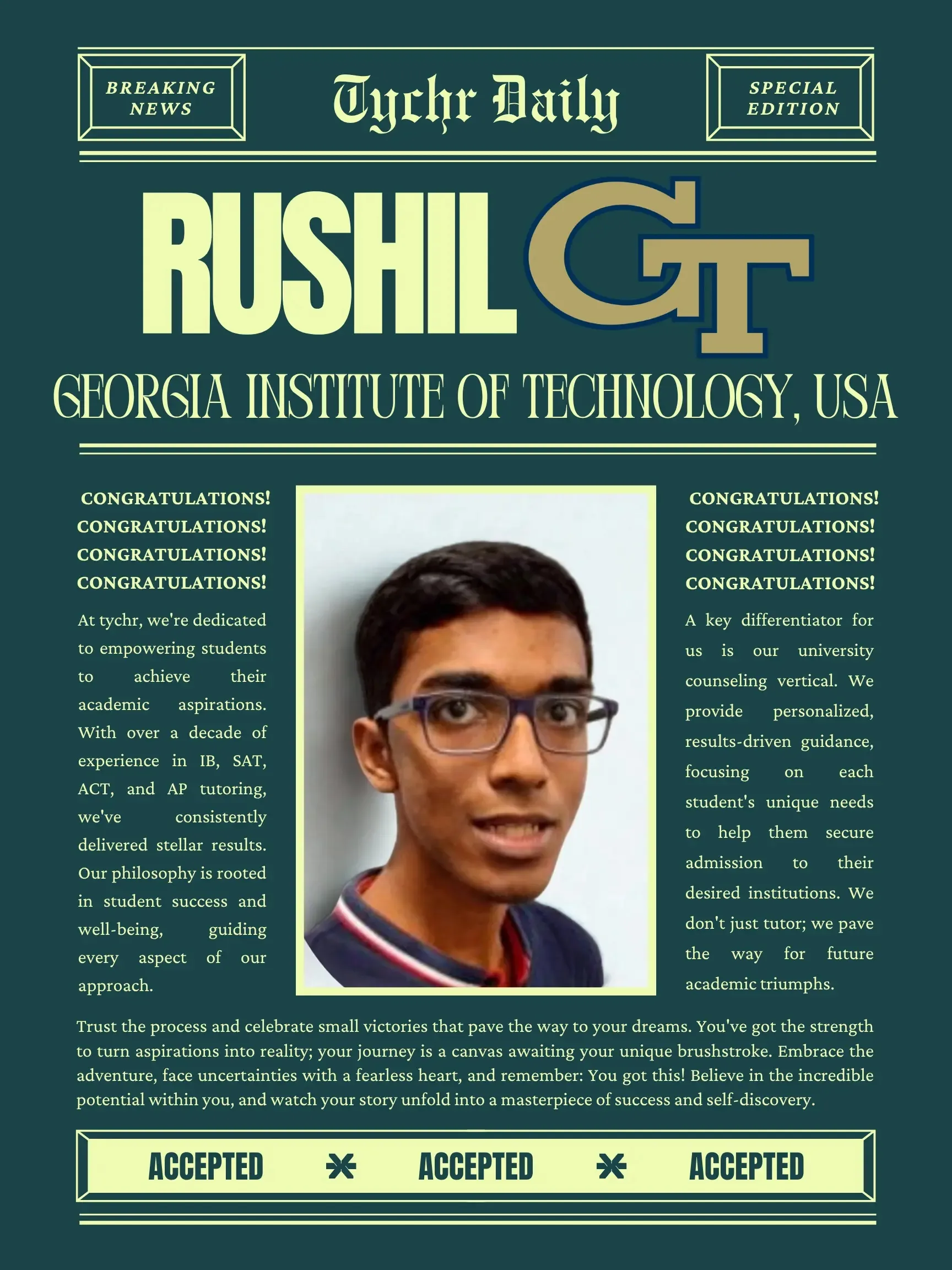
RUSHIL
5/5

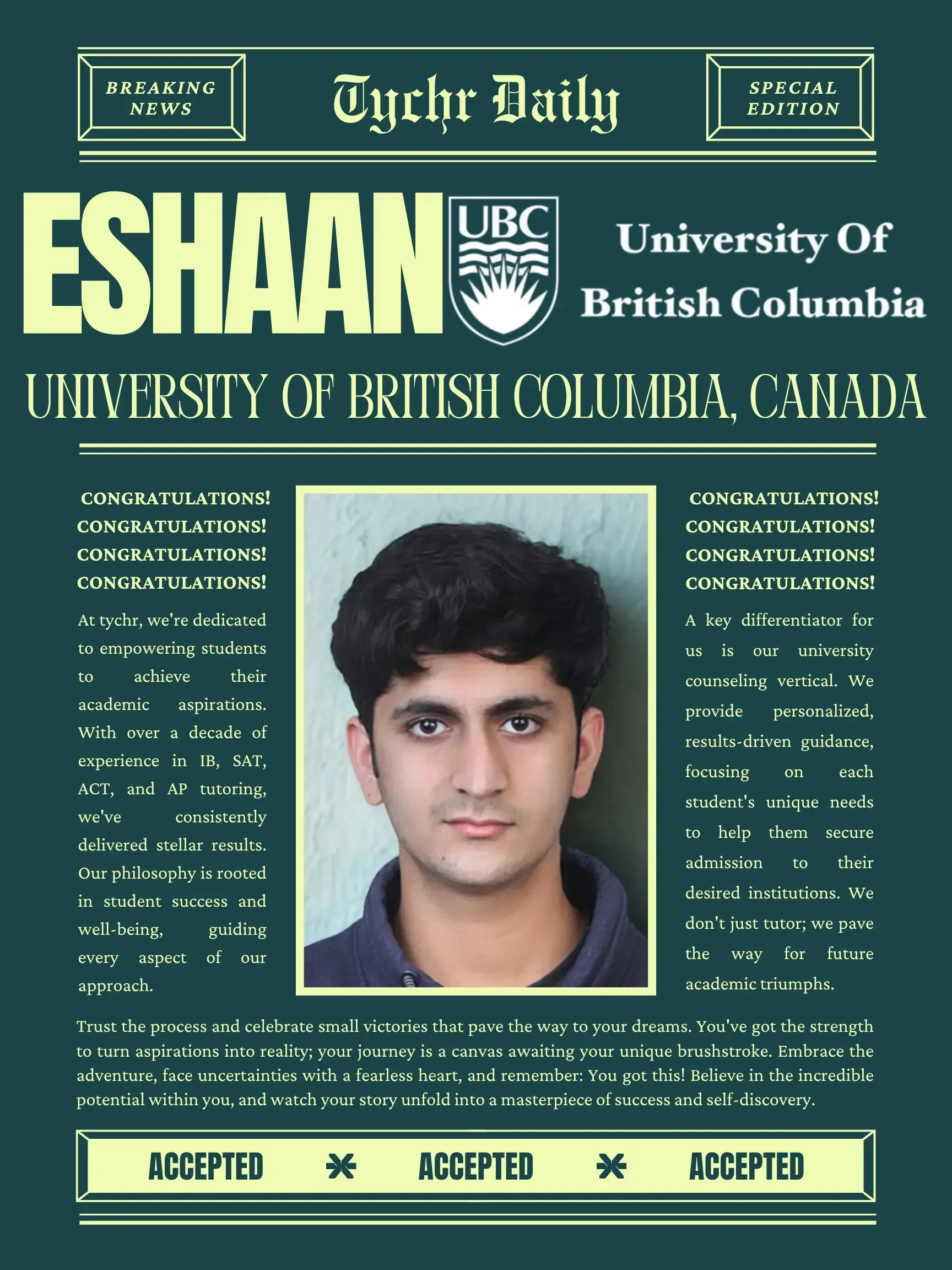
ESHAAN
5/5

VISHAAL
5/5
Start your journey with the right guidance.
Your information is kept private and never shared with third parties.
92%
Students score a 5/5
+1.8
Average score improvement
22+
AP subjects covered
4.9★
Average tutor rating
94% of Graduates Secure Admissions into the Top 50 Global Universities
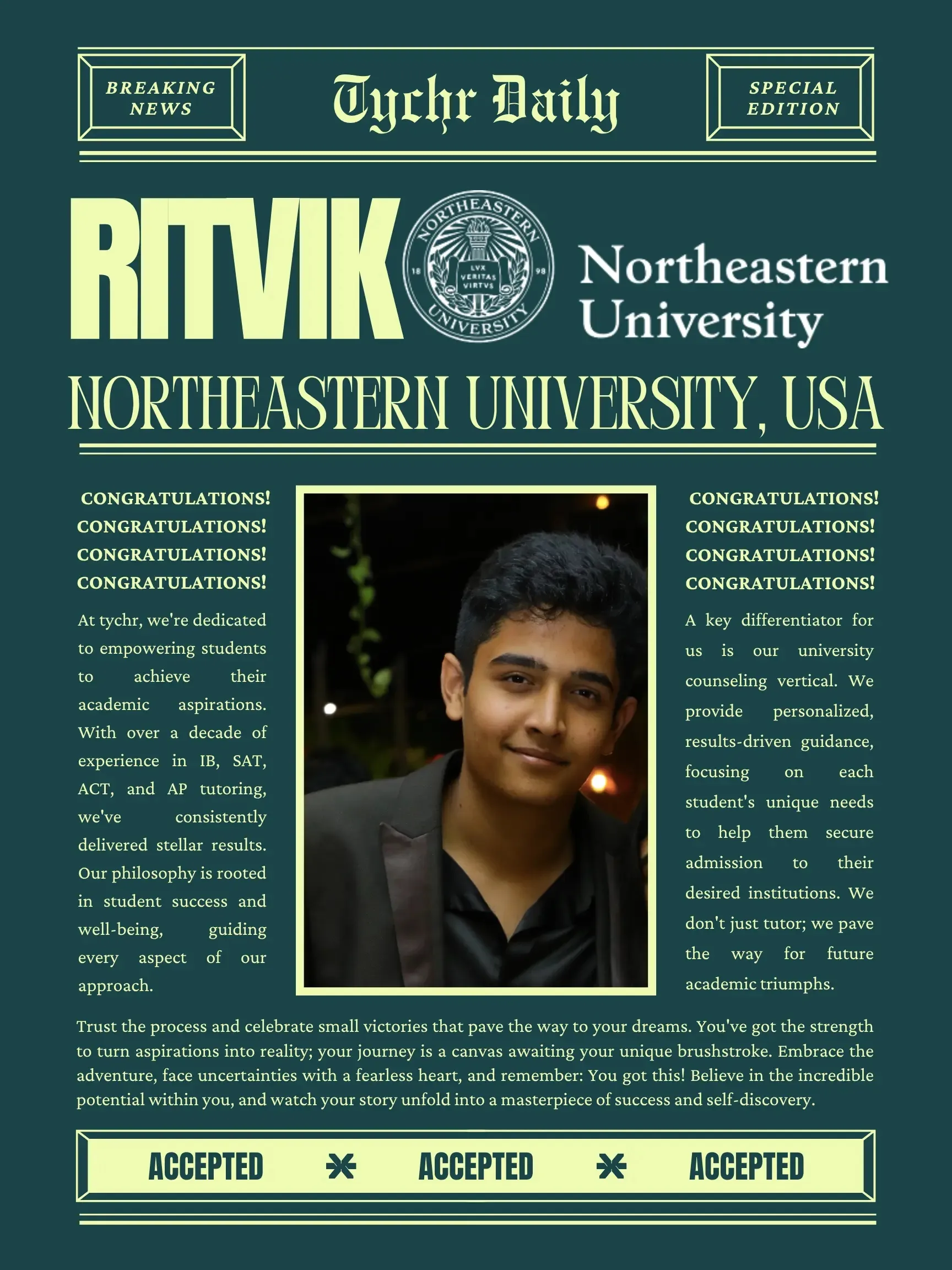
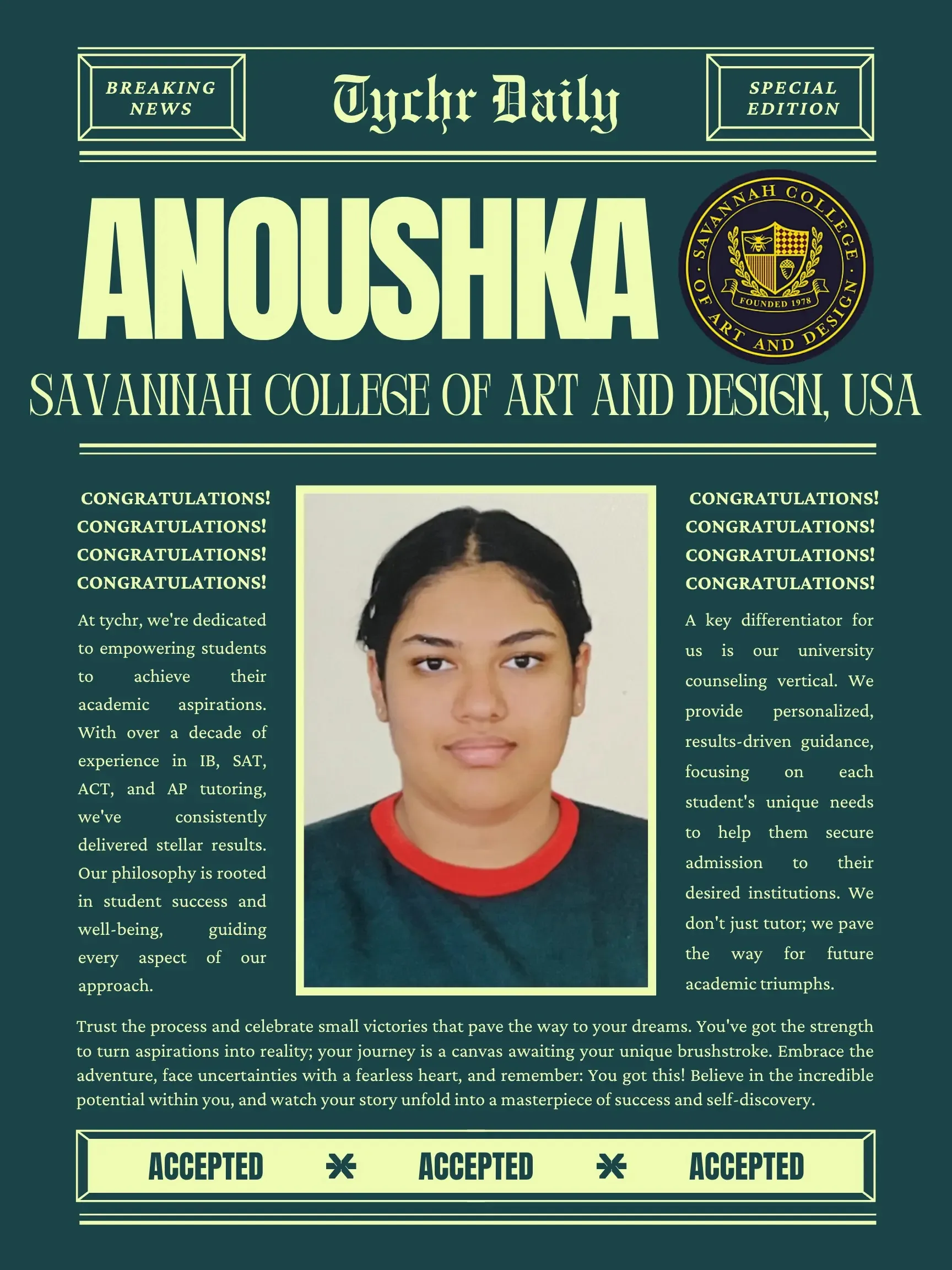
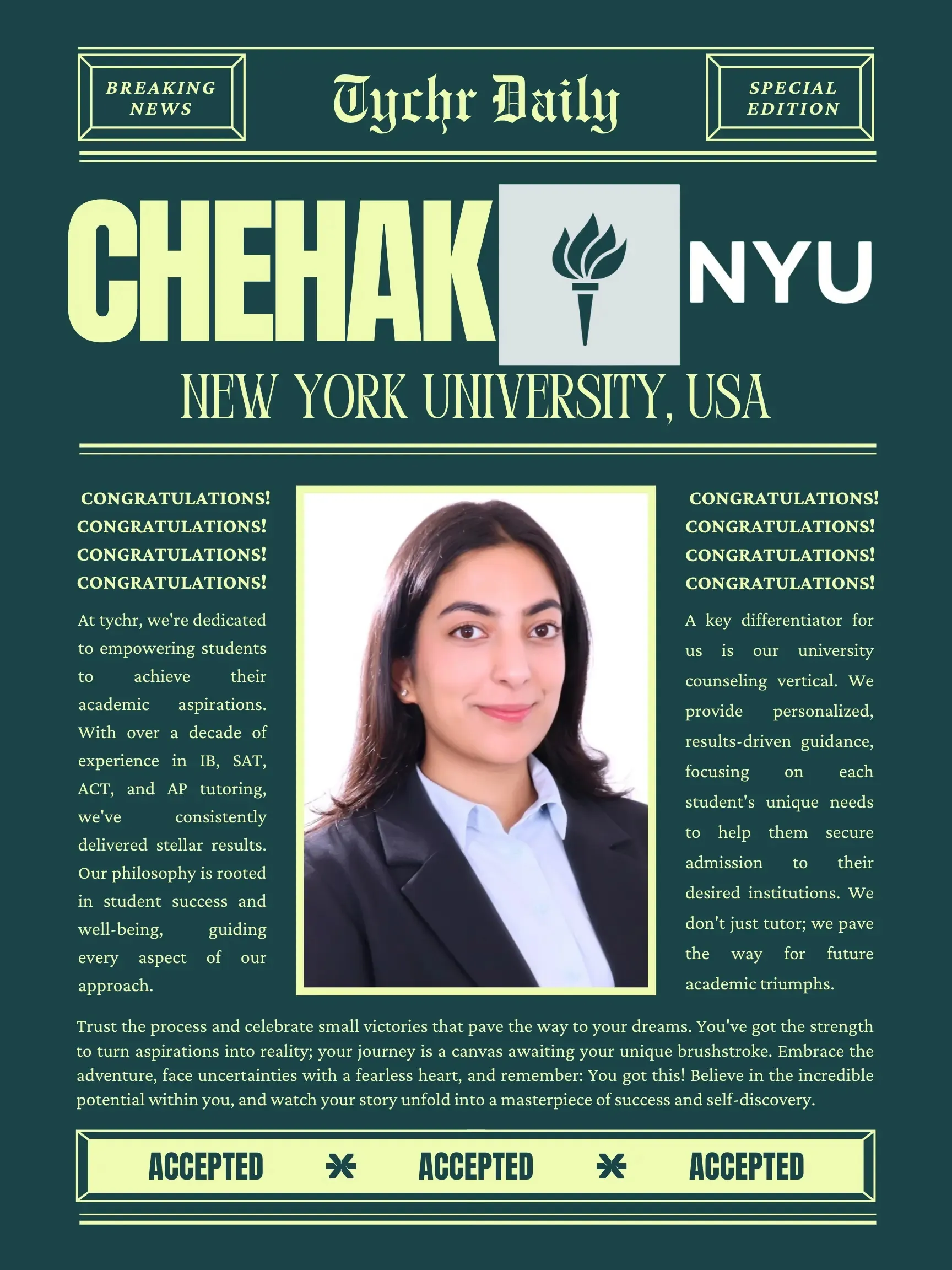
Meet the brilliant minds who transformed their testing potential into world-class AP scores and elite Ivy League academic portfolios.

Start your journey with the right guidance.
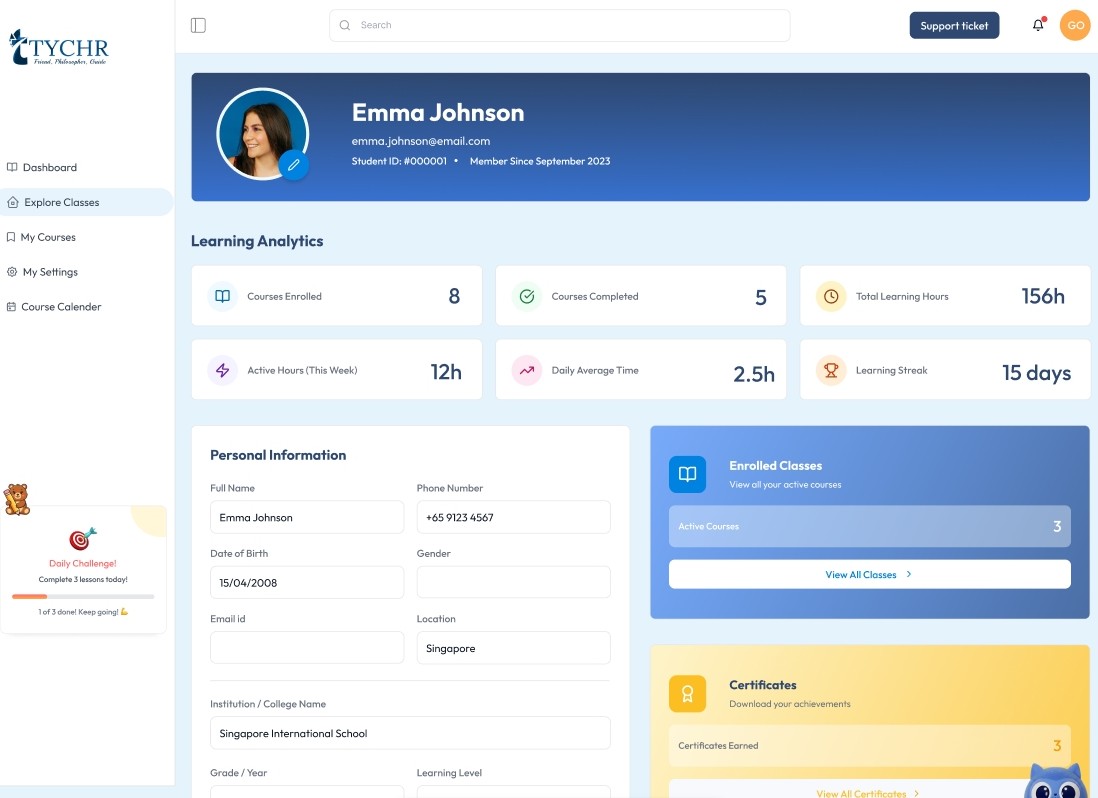
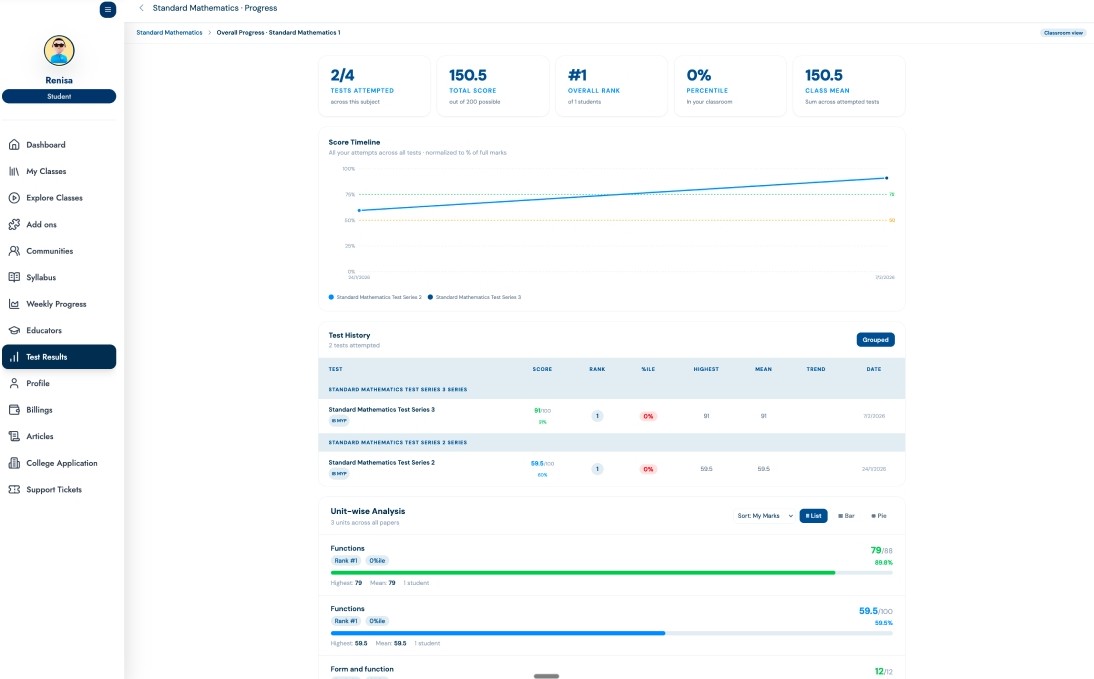
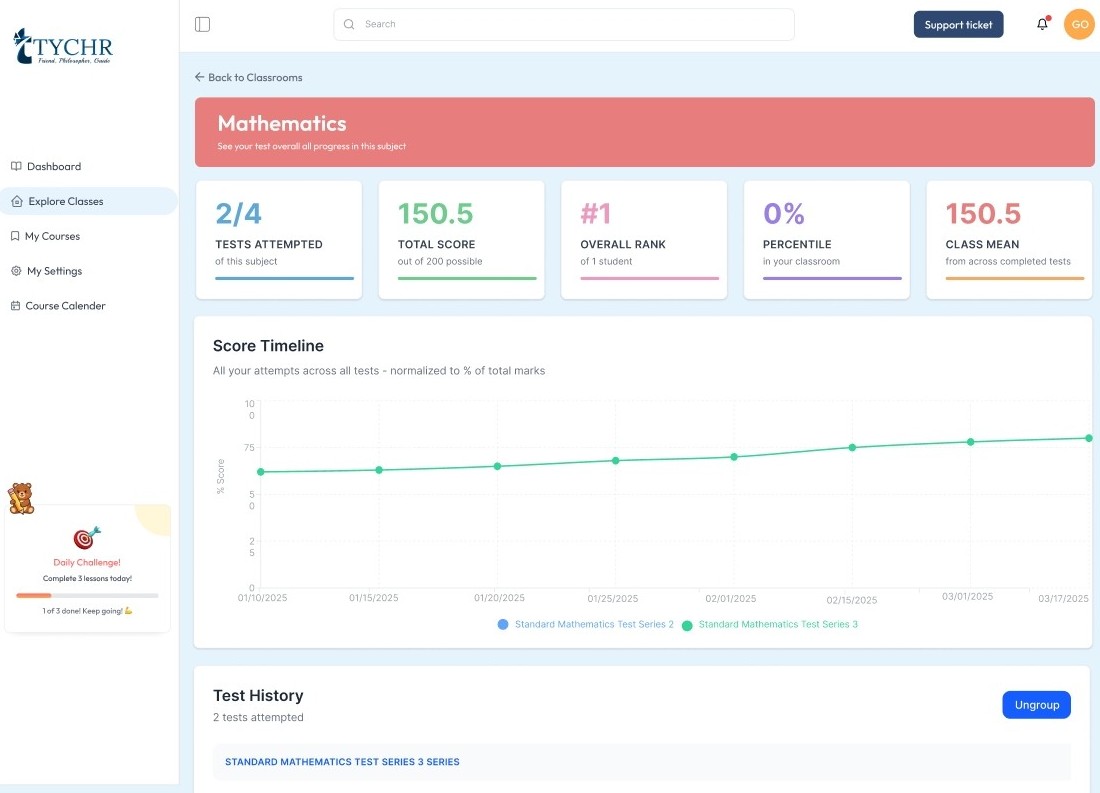
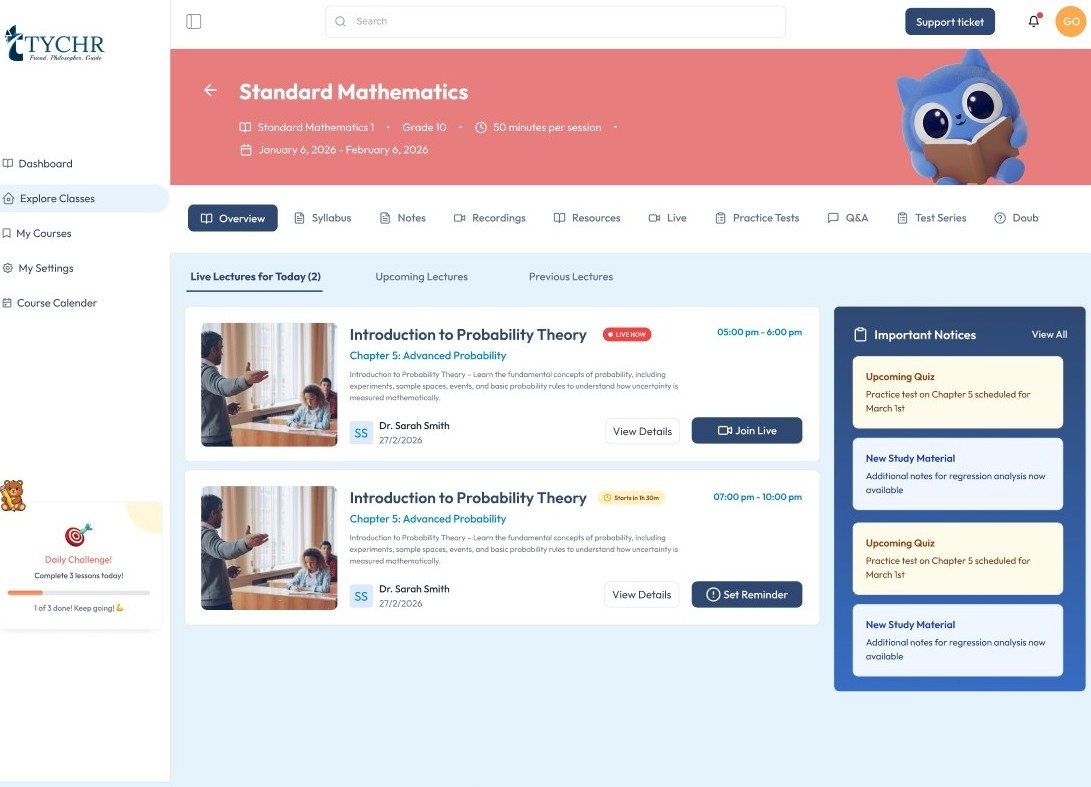
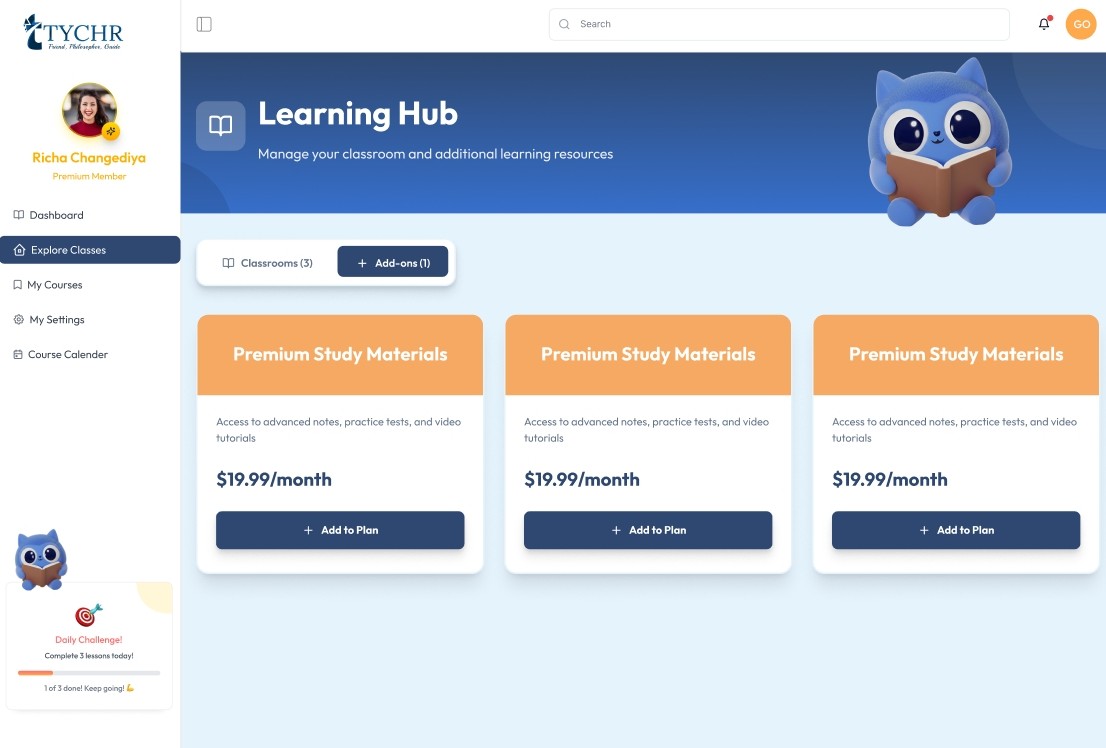
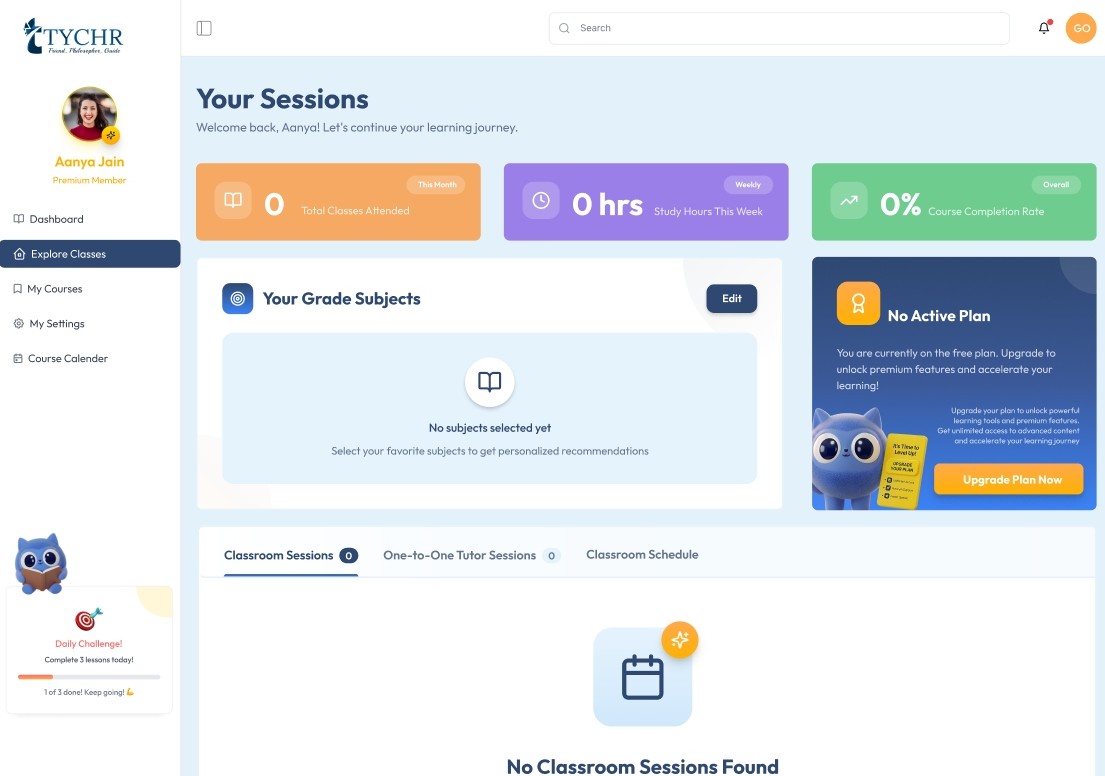
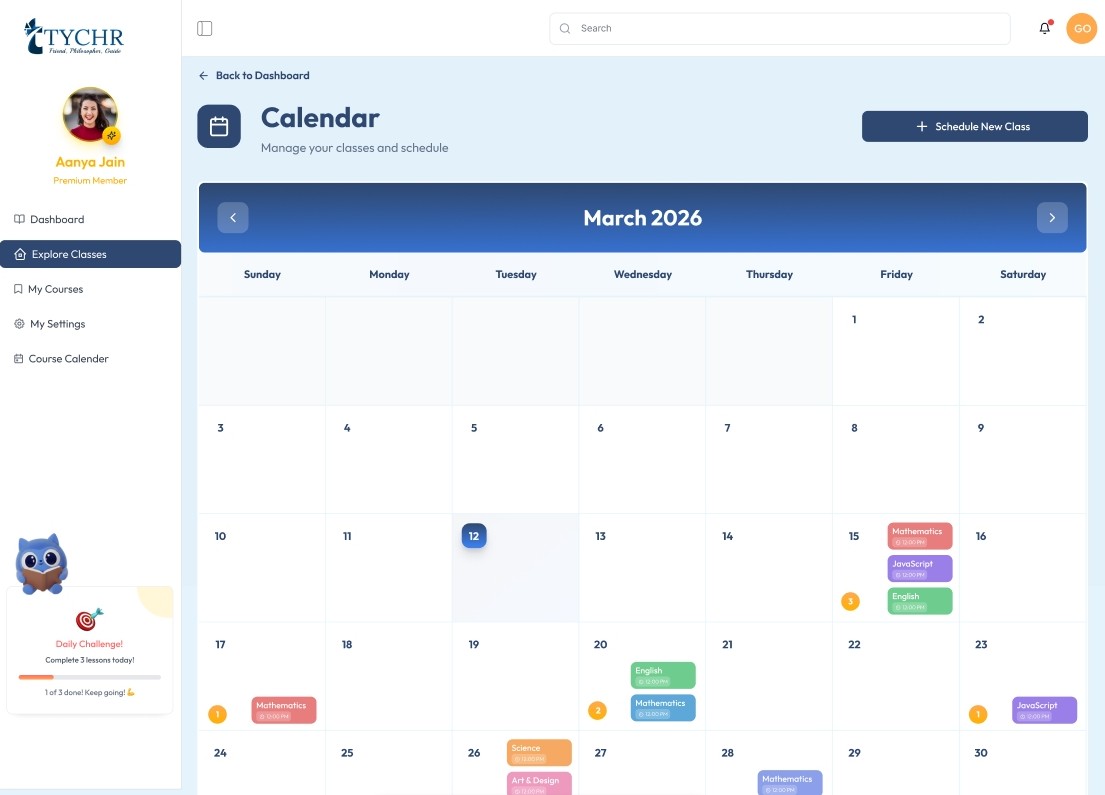
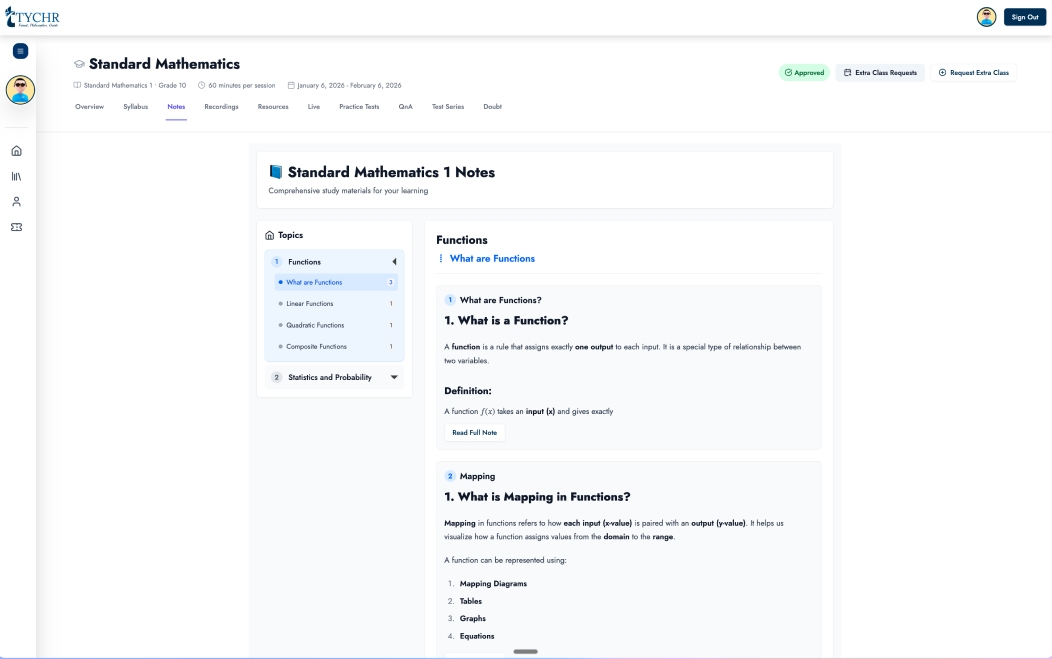
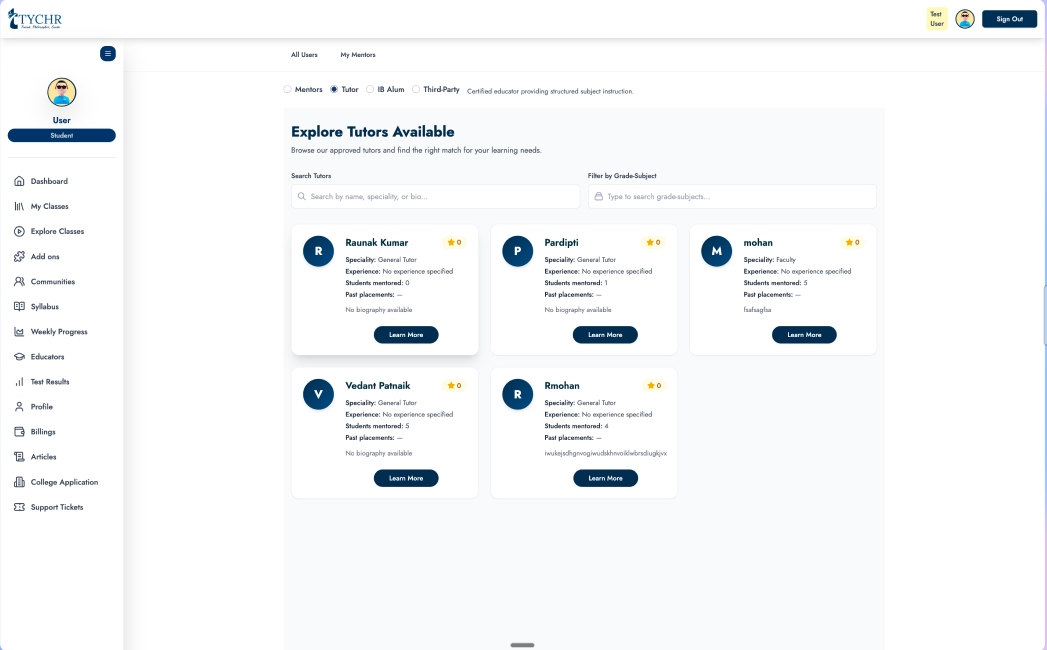
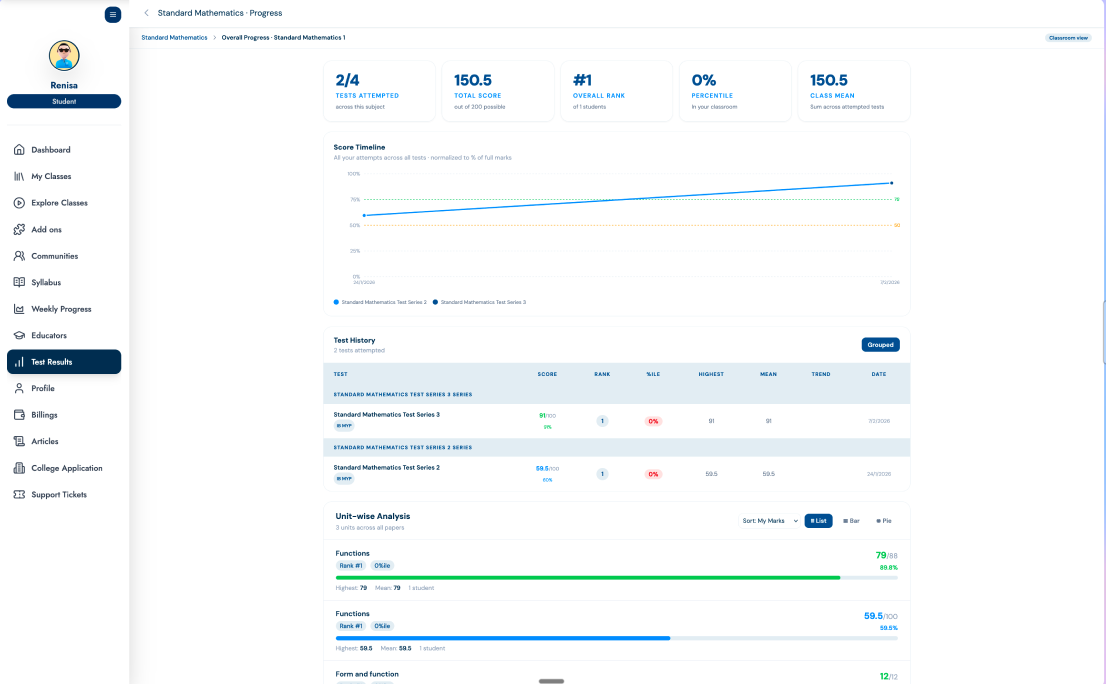
Explore our learning system
A platform designed around how students actually learn — adaptive, intuitive, and always one step ahead.
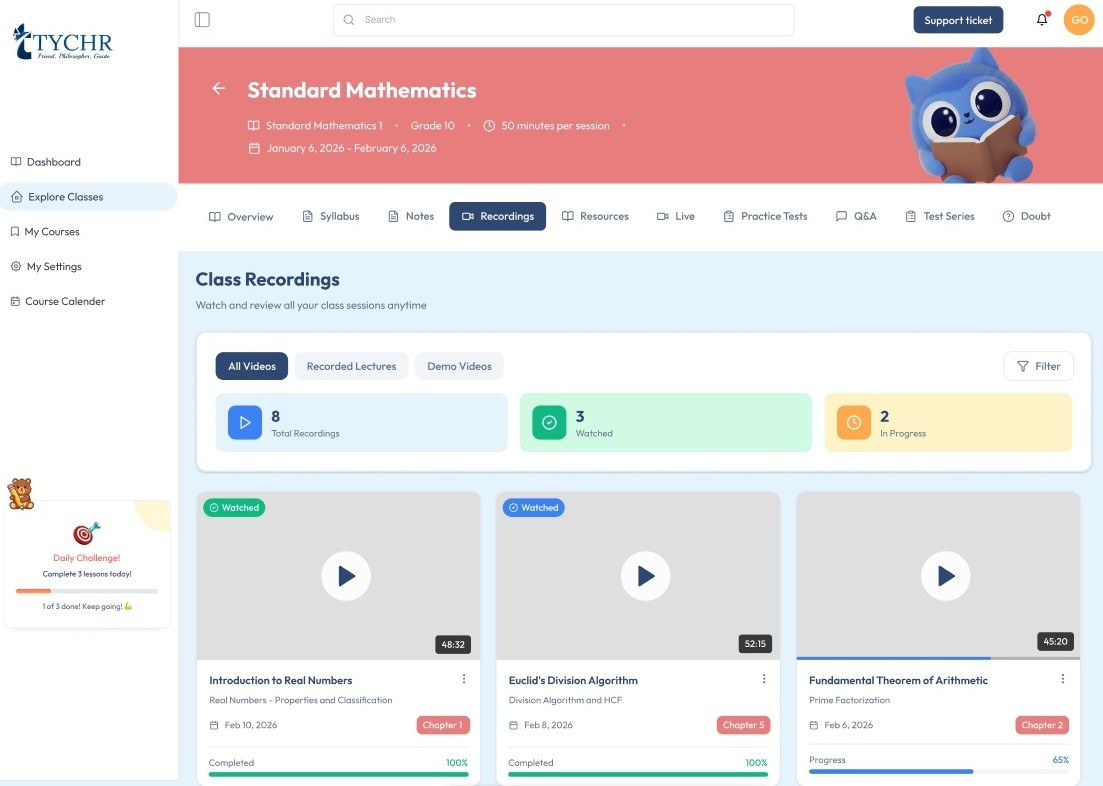
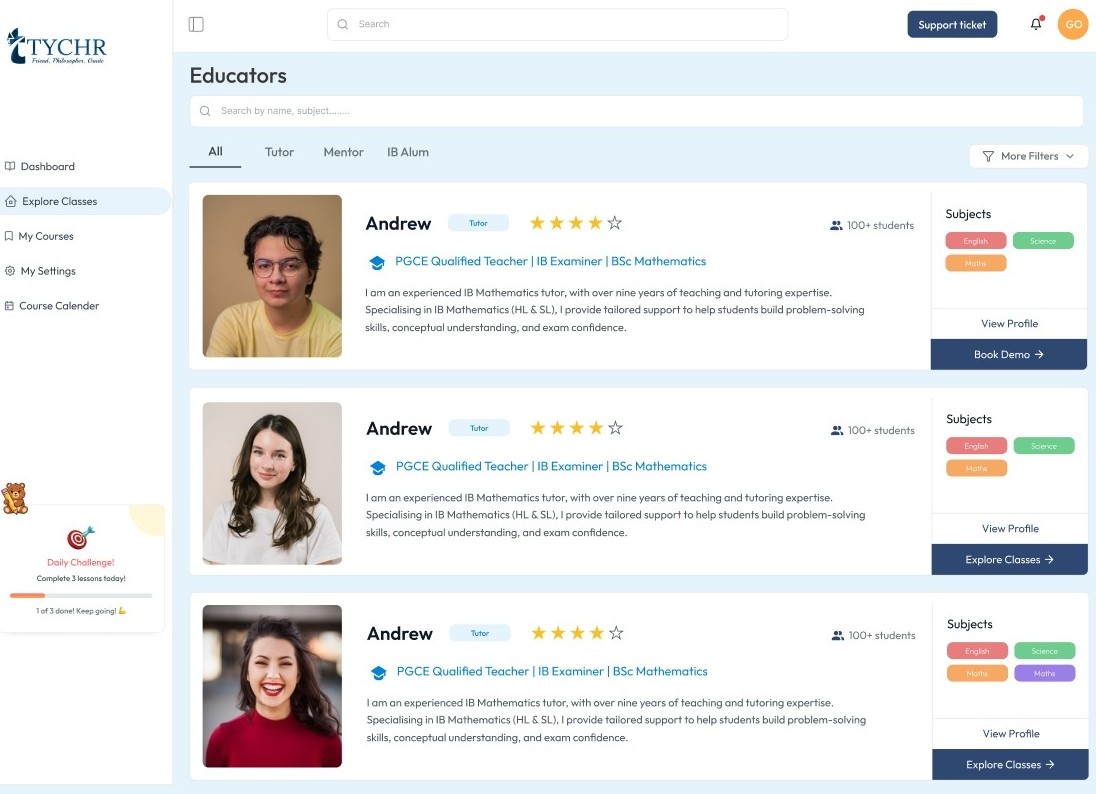
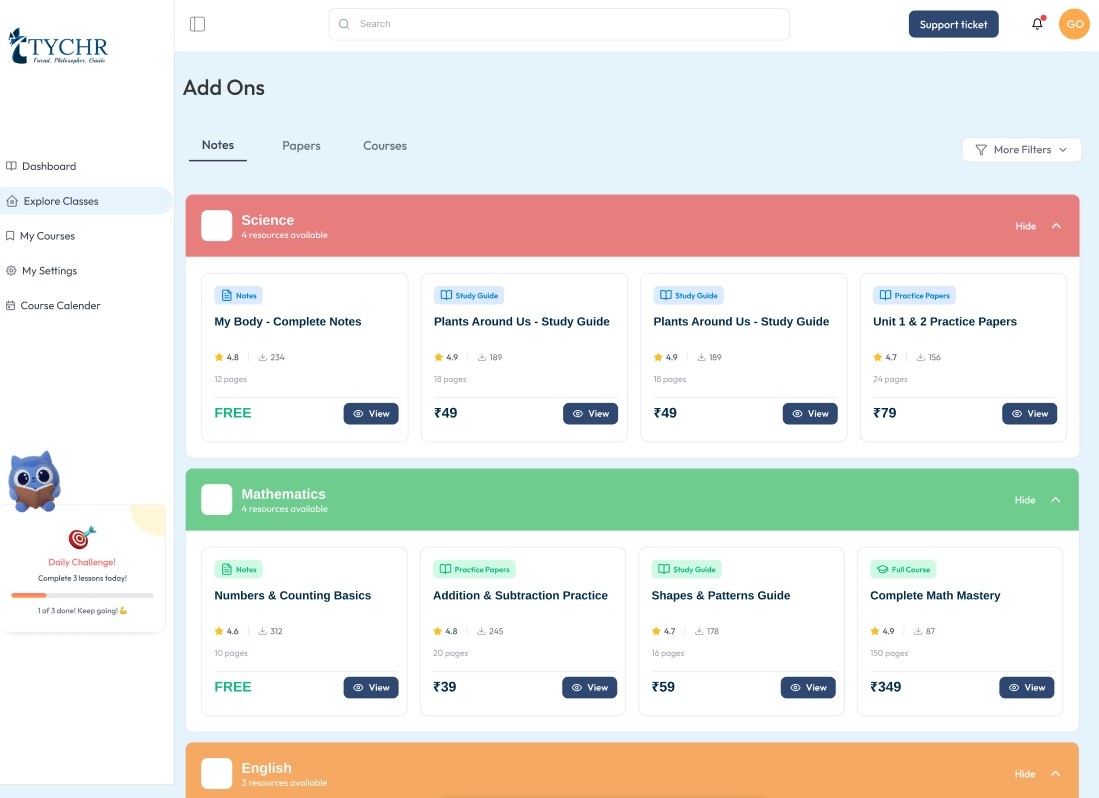
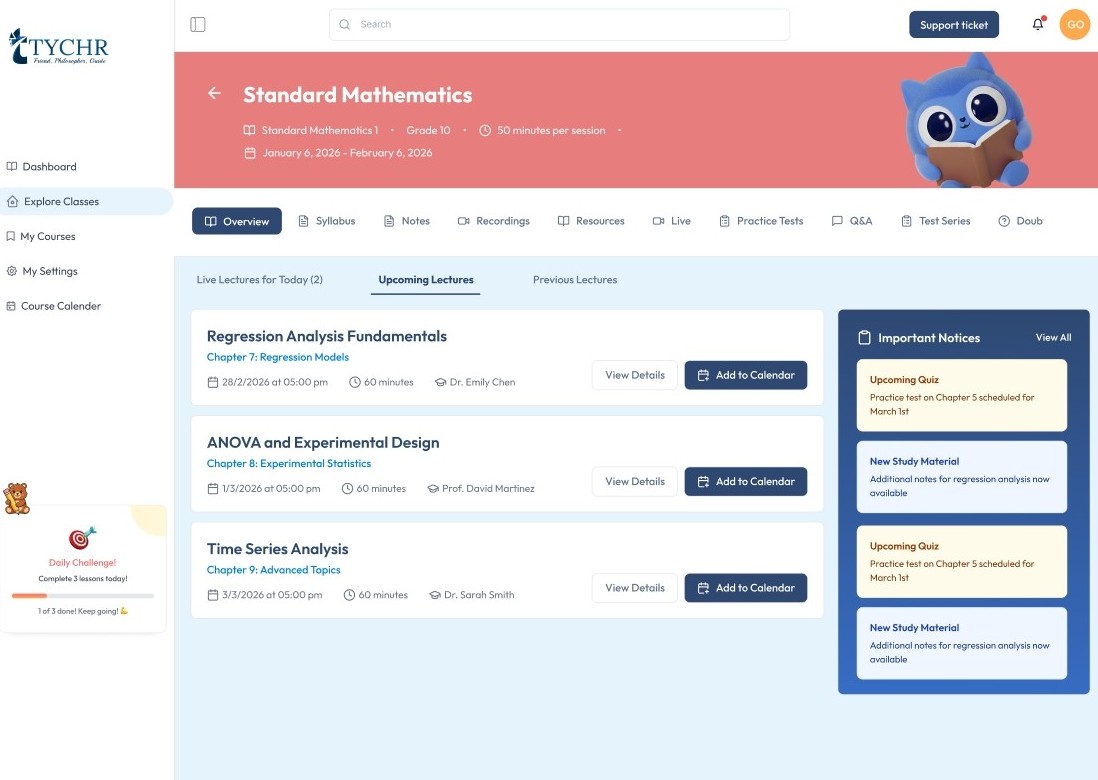
5000+
Students enrolled
100+
Expert tutors
95%
Satisfaction rate
70+
Countries reached
What Is AP Computer Science A?

Course Length
Full academic year
September – May
Exam Date
Early May
Annually
Exam Duration
3 Hours
Total exam time
Exam Structure
Two Sections, Equal Weight
Section I
40 Multiple Choice Questions
90 min · 50% of score
Section II
4 Free Response Questions
90 min · 50% of score
Multiple Choice (MCQ)
40 questions in 90 minutes, worth 50% of the total score. Focuses on tracing code segments, predicting output, and identifying correct syntax in Java. Tests understanding of classes, arrays, loops, and inheritance.
Free Response (FRQ)
4 questions in 90 minutes, worth 50% of the total score. Students write full Java code segments, including methods, classes, and logic. Requires solving problems involving array processing, object-oriented design, and algorithms.
Tools & Reference
No calculator or IDE permitted. Success relies on 'pencil-and-paper' code tracing, mastery of the Java Quick Reference sheet, and the ability to write syntactically correct code under time pressure.
AP Computer Science A Syllabus
Unit-by-Unit Breakdown
Primitive Types
- Variables & operators
- Assignment statements
- Compound assignment operators
Using Objects
- Objects & classes
- String methods
- Wrapper classes
Boolean Expressions & if Statements
- Logical operators
- Comparison operators
- if-else structures
Iteration
- while loops
- for loops
- Nested loops
Writing Classes
- Constructors
- Methods
- Scope & static keyword
Array
- Traversal
- Insertion & deletion
- Algorithms (search/sort)
ArrayList
- ArrayList methods
- Traversal & modification
- Algorithms
2D Array
- Traversing 2D arrays
- Row-major vs column-major
Inheritance
- Superclasses & subclasses
- Method overriding
- Polymorphism
Recursion
- Recursive base cases
- Recursive logic
- Search & sort algorithms
Foundations (Units 1–3)
Object-Oriented Programming & Logic
The TRACE Framework
We drill manual code tracing (tracking variable states on paper through every iteration) to ensure students can predict output and identify logic bugs in MCQ sections without an IDE.
Object Design Strategy
For class implementation, we focus on the distinction between reference types and primitives, specifically regarding scope, static vs. instance members, and proper encapsulation—critical areas for FRQ scoring.
Primitive Types
Using Objects
Logic & Control

Control Structures & Iteration (Unit 4)
Coaching for Flawless Loop Logic

Loop Structures
while, for, and enhanced for loops. We teach students how to identify the most efficient iteration style for specific traversal tasks and describe their logic flawlessly.
Algorithm Design
Traversals, insertions, and deletions. Mastering how to modify data while iterating is a frequent FRQ differentiator.
Logic Flow
Tracking variable states without a debugger. We emphasize identifying off-by-one errors and why proper loop bounds are critical for correct output.
Loop Invariants
Boundary Conditions
Nested Iteration
Infinite Loops
Mastering the Core Distinctions
The conceptual gaps between `while` loops and `for` loops, and the nuances of nested iteration dictate your ability to process complex data structures. These logical pitfalls are heavily targeted in both MCQ and FRQ sections. We drill students using scenario-based coding profiles until they can confidently identify boundary conditions, prevent infinite loops, and justify any custom algorithmic framework in under 60 seconds.
Data Structures & Iteration
Concepts & Practice
Arrays & Iteration
ArrayList Dynamics
2D Arrays
Master Data Structures for FRQs
Array and ArrayList questions are core to the FRQ section. Our tutors focus on avoiding index-out-of-bounds errors and writing clean, efficient traversal logic.
Inheritance & Recursion
Object-Oriented Design & Advanced Algorithms
Inheritance Hierarchies
Recursive Logic

Polymorphism
Handling object references
Class Hierarchies
Designing parent-child classes
Recursive Search
Binary search implementation
Recursive Sort
Merge sort algorithm
Interfaces
Contractual implementation
Abstract Classes
Template method design
AP Computer Science A Free Response Questions
FRQ Strategies for Maximizing Rubric Points
6 Questions in 90 Minutes (50% of Score)
FRQs are where the exam is won or lost. Precise vocabulary is mandatory.
Rubric Maximization Rules
Analyze Method Signatures
Many FRQs ask you to implement a method within a class. Start by identifying the parameters and return type. Use the JQR to verify methods for classes like List or String to ensure your implementation is standard-compliant.
Master Loop Bounds & Indices
AP CSA graders look for 'off-by-one' errors in loops. Whether iterating through an array or ArrayList, explicitly check your bounds (e.g., using `arr.length` vs `arr.length - 1`) to ensure you don't throw an ArrayIndexOutOfBoundsException.
Prioritize Code Readability
Avoid 'magic numbers' or overly complex nested loops. Focus on clear, logical code that a human reader can trace easily. If a solution is too complex, rethink your approach using helper methods to break the problem into smaller parts.
Understand Inheritance Hierarchies
In Inheritance questions, ensure you understand `super` calls and method overriding. A common mistake is failing to properly initialize the superclass state in a constructor, which leads to immediate point deductions.
Recognize FRQ Archetypes
FRQ 1 (Methods/Control Structures), FRQ 2 (Classes), FRQ 3 (Array/ArrayList), and FRQ 4 (2D Array) are the standard pattern. We train students to recognize these archetypes so they can anticipate the logic required for each question type.
Why Precise FRQ Language Matters
The College Board rubric is unforgiving regarding Java syntax. Using `==` to compare String contents instead of `.equals()` is a critical error that demonstrates a fundamental misunderstanding of reference types. Trained students automatically default to `.equals()` for object comparison and `==` only for primitive types. We explicitly drill these syntax rules until they become instinctual.
Writing "using == for String comparison" instead of "use .equals() for String comparison".
Calculator Skills for AP Computer Science A
Java Syntax & Logic
Essential Java Concepts & Methods
String.substring()
Extracting portions of strings (be mindful of index bounds)
List.add() / get()
Manipulating ArrayList contents
Math.random()
Generating numbers in a specific range
Array.length
Accessing the fixed size of a standard array
ArrayList.size()
Retrieving the number of elements in an ArrayList
super()
Calling the superclass constructor in inheritance
Interface implementation
Ensuring all required abstract methods are defined
String.equals()
Comparing contents of two String objects
Trace Code Manually
Never rely on mental execution. Always maintain a variable trace table on paper during MCQs.
Use the JQR
The Java Quick Reference is your best friend. Know exactly where to find method signatures to avoid syntax errors.
Practice Syntax
You don't have a compiler. Practice writing code by hand to develop muscle memory for semicolons, braces, and casting.
AP Computer Science A Multiple Choice
Tips & Timed Practice
40 Questions • 90 Minutes
Average 2.25 minutes per question • Worth 50% of exam score
Trace Code Manually
Maintain a variable state table on paper for every iteration
Use Quick Reference
Know the Java Quick Reference (JQR) structure by heart
Check Bounds First
Verify index bounds before tracing loops or array access
Analyze Logic Logic
Identify output without running code; look for syntax traps
Manage Time
Don't spend more than 2 minutes on complex tracing
Skip & Return
Flag long code-tracing questions and return to them
Common Topics
- •Array & ArrayList traversals
- •Class design & inheritance
- •Recursive method tracing
- •Loop bounds and logic
- •Boolean expression evaluation
Practice Approach
Weeks 1-4
Untimed syntax & logic practice by unit
Weeks 5-8
Mixed untimed code-tracing practice
Weeks 9-12
Full 40-question timed mock exams
Our tutors provide official College Board practice materials and teach time-tested strategies
One-to-One vs Group Tutoring
AP Computer Science A Sessions
One-to-One
- ✓Personalized pacing through all 9 units
- ✓Focus on your weak areas (probability, inference, etc.)
- ✓Flexible scheduling around your calendar
- ✓Individual FRQ review and feedback
- ✓Custom practice problem sets
Group Sessions
- ✓Learn with 3-4 students at similar level
- ✓Cost-effective exam preparation
- ✓Collaborative problem-solving
- ✓Structured curriculum coverage
- ✓Group practice test reviews
Tutor Profiles Subject Experts
Meet our highly qualified tutors with proven track records of student success.

Sreevidya KG
MSc in Chemistry with a Bachelor’s in Education, IB training, and Google certification.
20 Years
Experience
1500+
Students
5
Rating
Over 20 years of experience teaching Chemistry across IBDP, IGCSE, and AS/A Level curricula, including extensive international online tutoring.
Personalized IB tutoring with concept-focused learning approach.

Sandeep Nehra
IB Physics – Category 2 Certified | IBDP • IGCSE • AS/A Level • AP • AQA Physics
10+ Years
Experience
1200+
Students
4.9
Rating
An experienced IBDP and international Physics educator with over 10 years of multi-curriculum teaching experience across IBDP, IGCSE, AS/A Level, AP, and AQA.
Personalized IB tutoring with concept-focused learning approach.

Anjali Nayan Mistry
BA (Psychology), DELF B1 (French), B2.2 Alliance Française
11+ Years
Experience
1000+
Students
5
Rating
Have 11 years of experience teaching international curricula, including IB French B (SL & HL), French Ab Initio, AP Psychology, and IGCSE French, across leading IB and Cambridge schools.
Personalized IB tutoring with concept-focused learning approach.

Anish Chauhan
IB DP Physics • IGCSE Physics • Cambridge AS/A Level Physics | Former Academic Head
15 Years
Experience
1100+
Students
5
Rating
15+ years teaching IB DP, IGCSE, and Cambridge AS/A Level Physics
Achievements
Personalized IB tutoring with concept-focused learning approach.

Prem Raj Kumar
B.Sc. Computer Science | IB Educator Certificates | Google Certified Trainer
8+ Years
Experience
700+
Students
5
Rating
An experienced IB Computer Science educator specializing in Mathematics, ICT, and Computer Science across IB MYP, IBDP, IGCSE, AP, and A Level.
Personalized IB tutoring with concept-focused learning approach.
Grade Improvements — AP Score Results
From Students
ett
ett
Practice Tests & Past Exam Resources
Computer Science A Materials
Official Practice Tests
15+- ✓ Released College Board exams
- ✓ Scored answer keys
- ✓ Topic breakdowns
FRQ Bank
200+- ✓ Organized by unit
- ✓ Scoring rubrics
- ✓ Sample responses
Multiple Choice
500+- ✓ Unit quizzes
- ✓ Mixed practice
- ✓ Timed tests
Calculator Guides
25+- ✓ TI-84 tutorials
- ✓ Function walkthroughs
- ✓ Quick reference

All Resources Included Free
Every tutoring student gets unlimited access to our complete Computer Science A resource library
What students say
“I was scoring a 2 on AP Chemistry practice tests in January. By May I had a 5. Pooja ma'am focus on the FRQ rubric was the thing that made the biggest difference, I'd never understood how strictly it was marked.”
Amasha
Chemistry
“Prannoy sir helped me go from a 3 to a 5 in AP Calculus BC. The sessions were intense but the way he broke down FRQ justification was completely different from what my school taught. I finally understood what 'show your work' actually means for College Board”

Jiya
Calculus BC
Frequently Asked Questions
Everything About IB Computer Science A Tutoring
Our tutors break down complex Java principles—such as class design, inheritance, polymorphism, and encapsulation—using real-world coding analogies and live debugging sessions to build deep programming logic.
Yes, we provide intensive algorithmic practice on traversing, manipulating, and searching multi-dimensional arrays and lists, ensuring students can handle complex data manipulation effortlessly.
We run targeted coding drills on past exam FRQs, teaching students how to write clean, efficient Java code that meets all College Board rubric specifications for methods, classes, and logic structures.
Absolutely. Every lesson strictly follows the official AP Computer Science A curriculum guidelines, covering all required syntax, standard algorithms, and object-oriented paradigms without unnecessary distractions.
Yes, we use step-by-step trace tables and conceptual visualization to help students understand base cases, recursive calls, and how control flows through complex recursive methods like merge sort.
We train students on systematic code-tracing techniques using mental execution models and dry-run tables, enabling them to spot logic errors, off-by-one mistakes, and null pointer exceptions quickly.
Book Your AP Computer Science A Tutor Today
Start with a Free Trial Session
Book Free Trial
Choose your preferred time slot
Meet Your Tutor
Get matched with Computer Science A expert
Start Improving
Begin your personalized prep plan
No credit card required • No commitment • 100% satisfaction guarantee
1000+
Students Taught
4.8
Average Score
89%
Score 4 or 5
200+
Expert Tutors