Expert AP Chemistry Tutors Online score 5/5 with Tychr
AP Chemistry is one of the most intellectually demanding AP courses. Mastering its core methodologies and executing precise FRQ arguments require deliberate, expert-led structure practice.

GULIA
5/5

TANISHA
5/5

ADAA
5/5

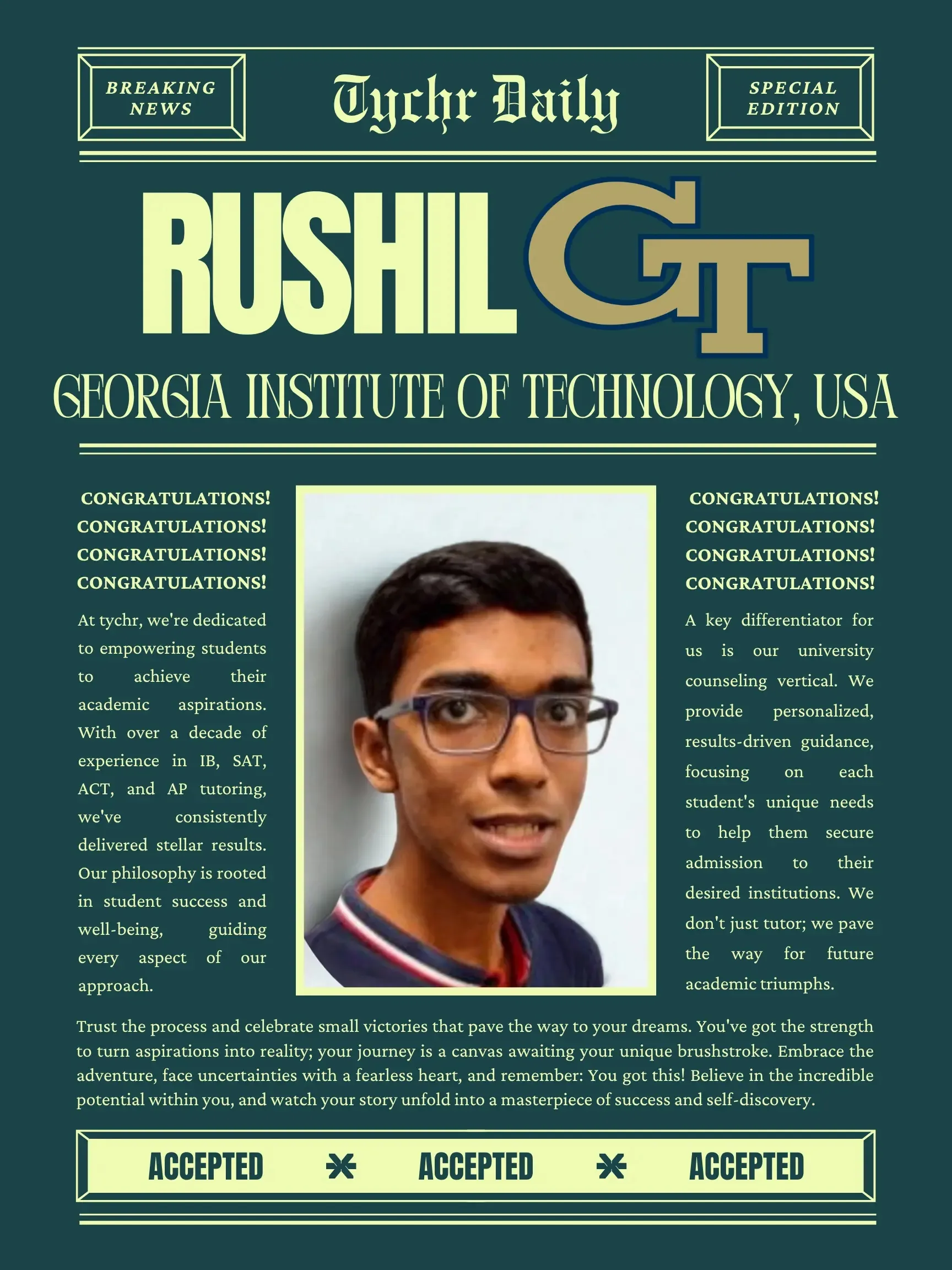
RUSHIL
5/5

ESHAAN
5/5

VISHAAL
5/5
Start your journey with the right guidance.
Your information is kept private and never shared with third parties.
92%
Students score a 5/5
+1.8
Average score improvement
22+
AP subjects covered
4.9★
Average tutor rating
94% of Graduates Secure Admissions into the Top 50 Global Universities
Meet the brilliant minds who transformed their testing potential into world-class AP scores and elite Ivy League academic portfolios.
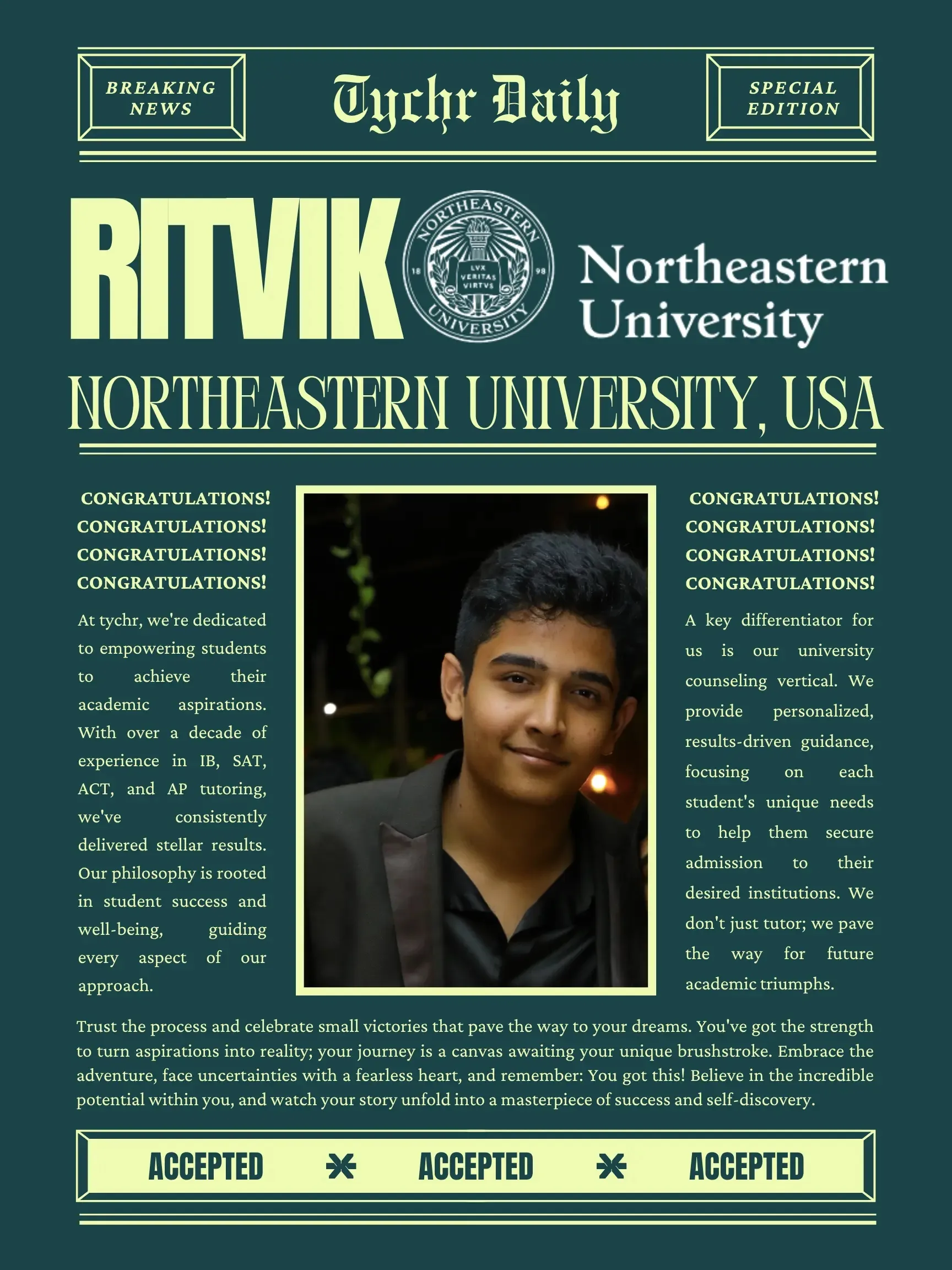

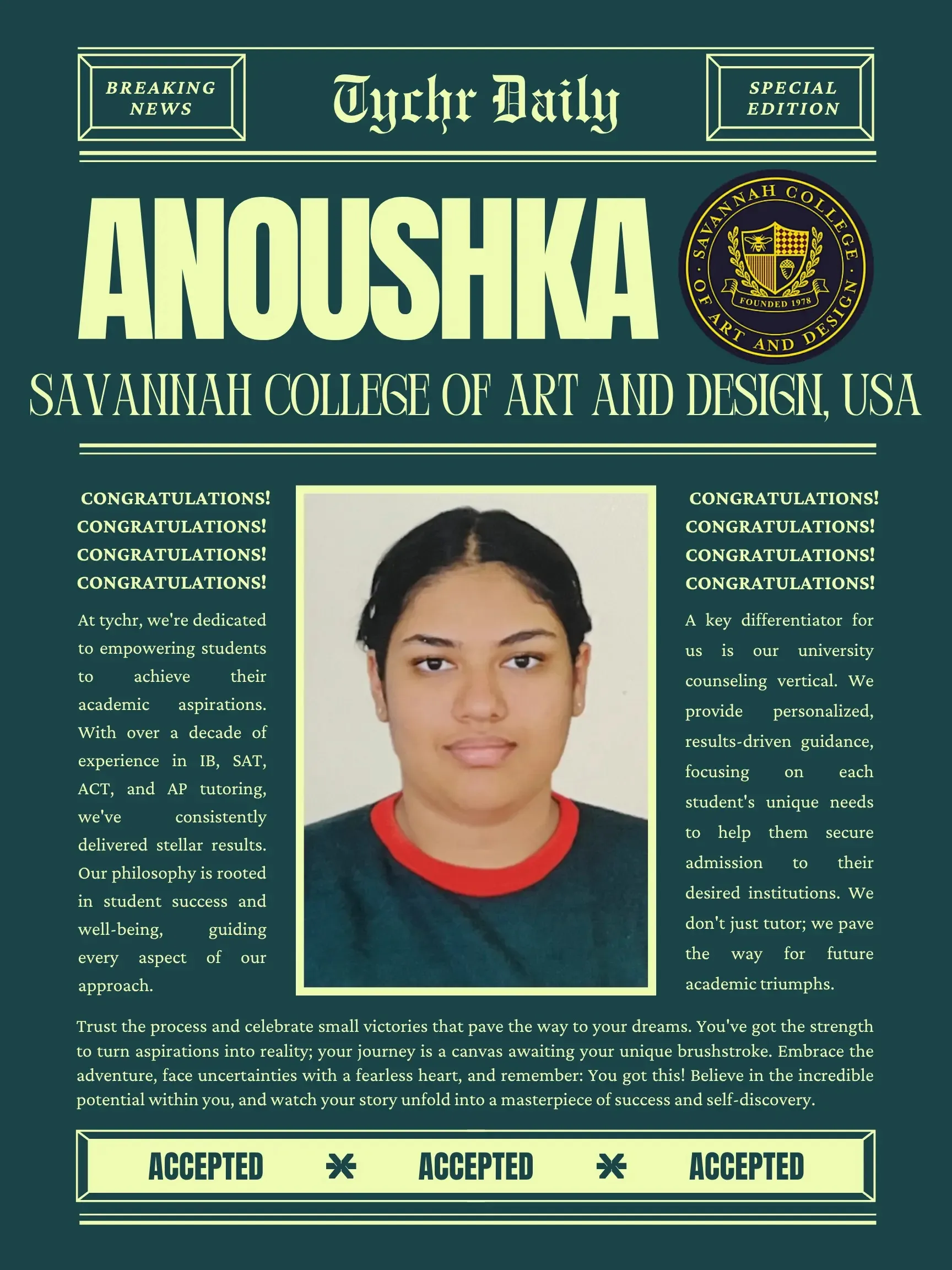
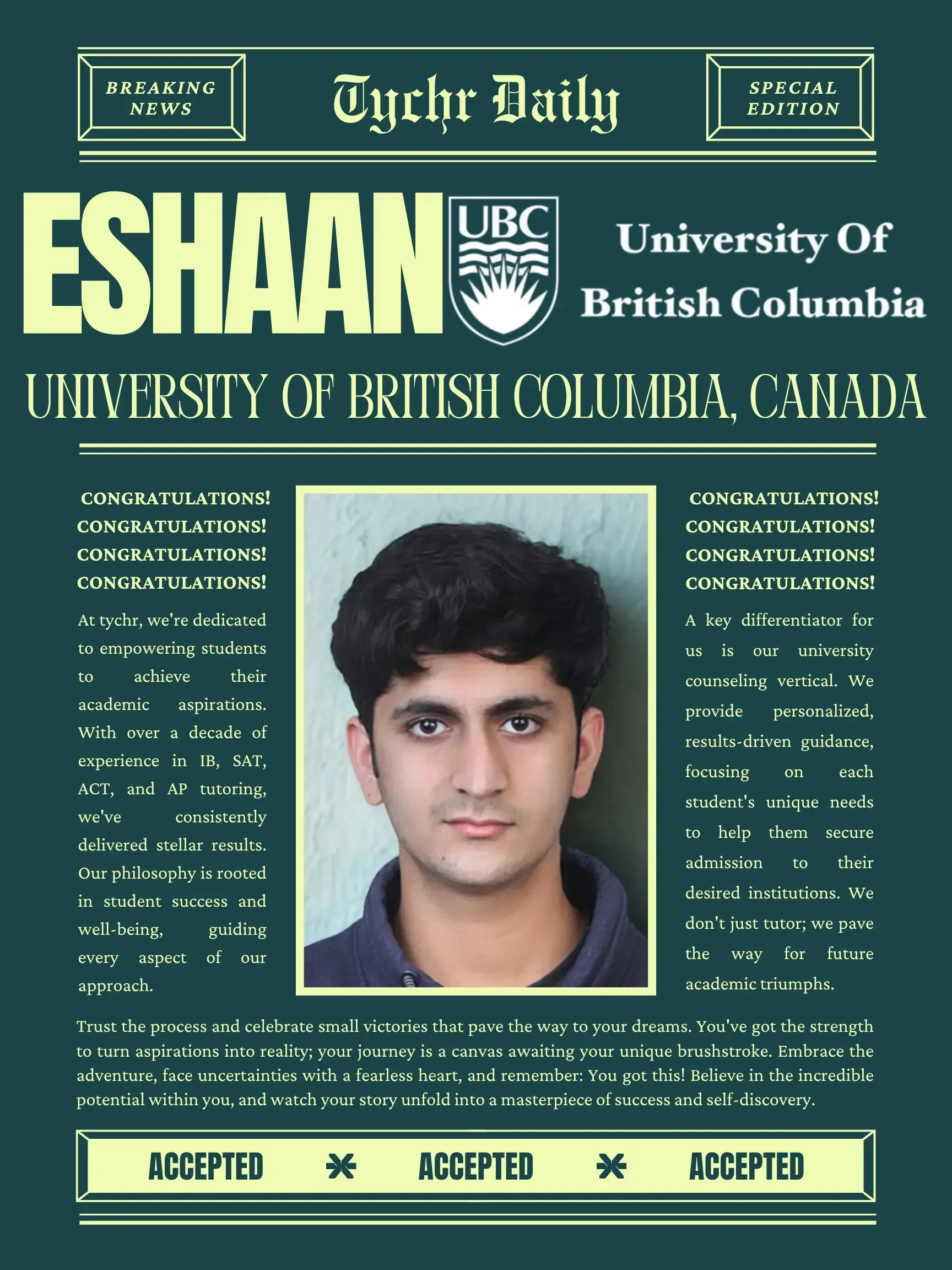
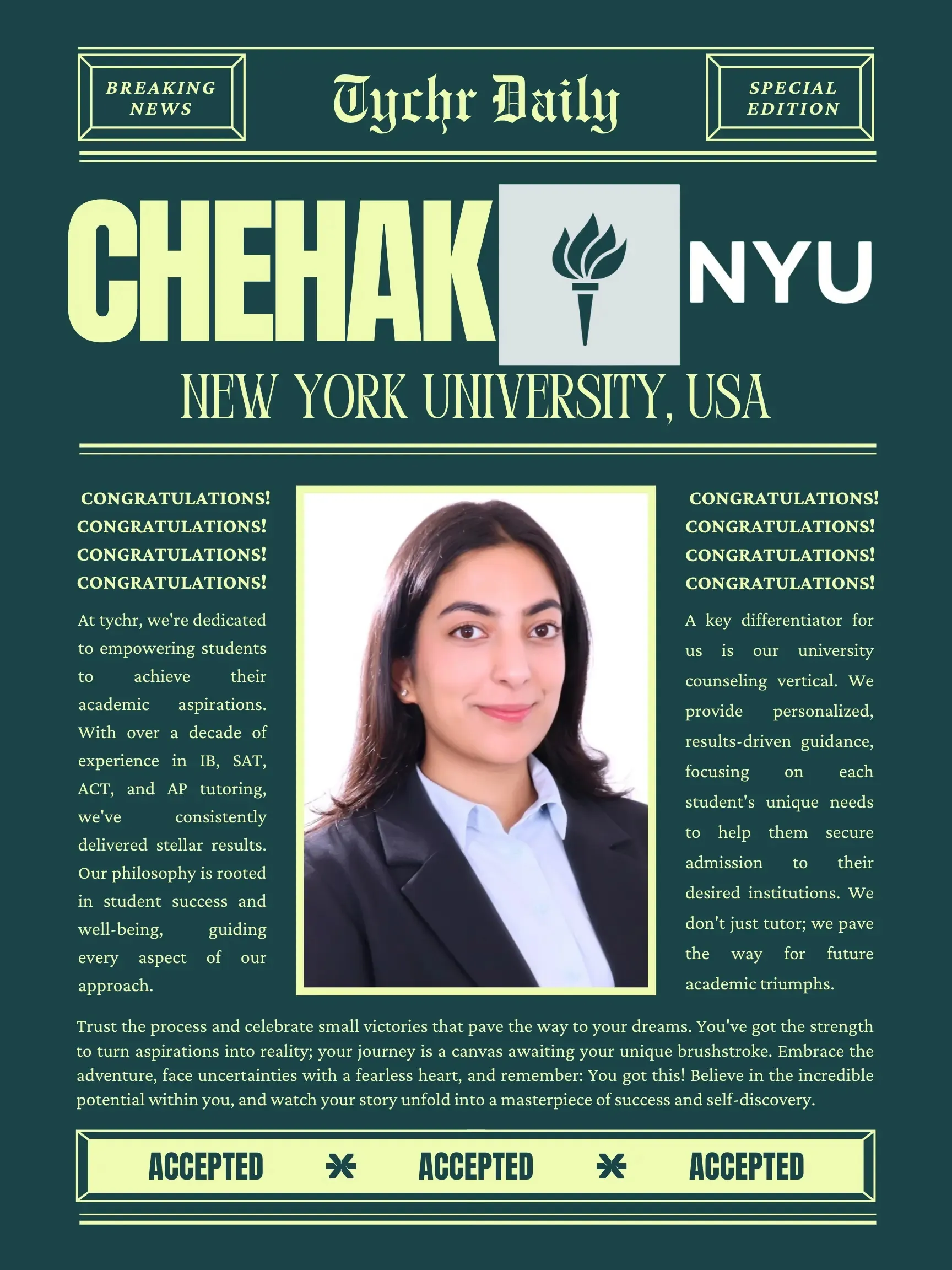
Start your journey with the right guidance.
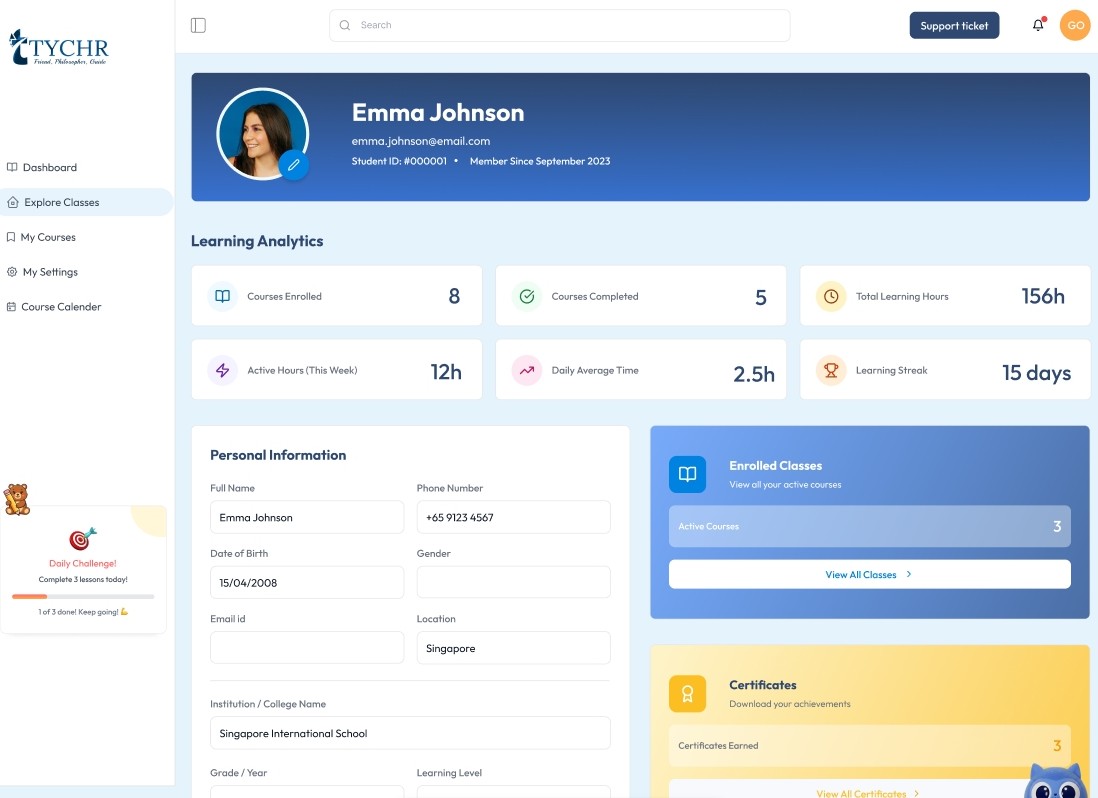
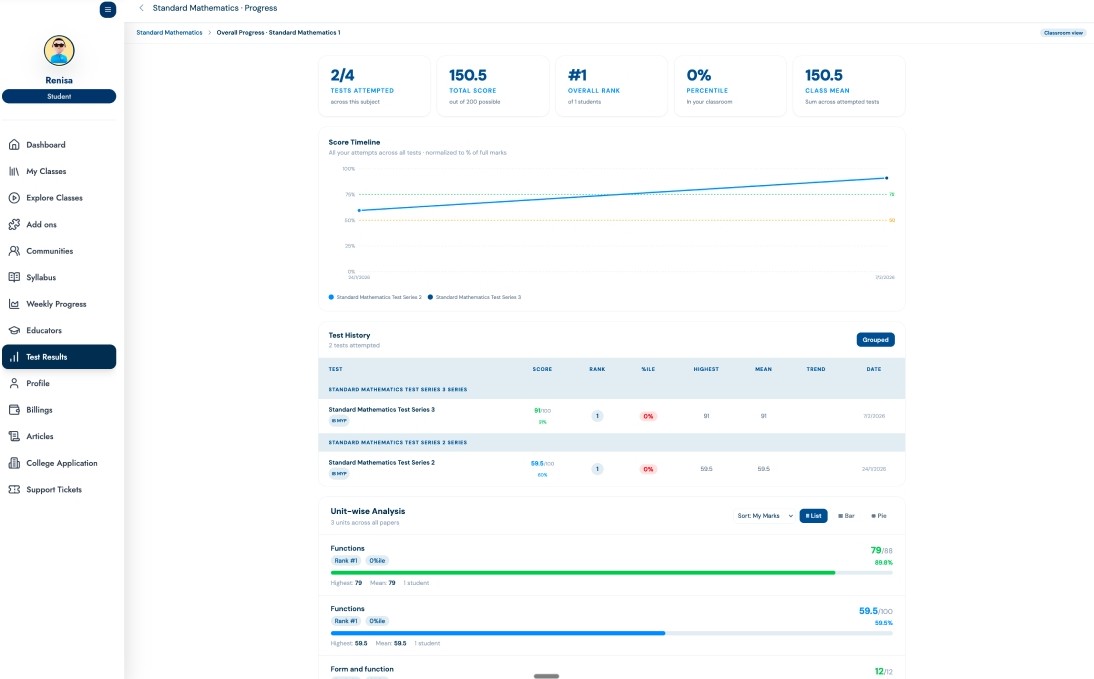
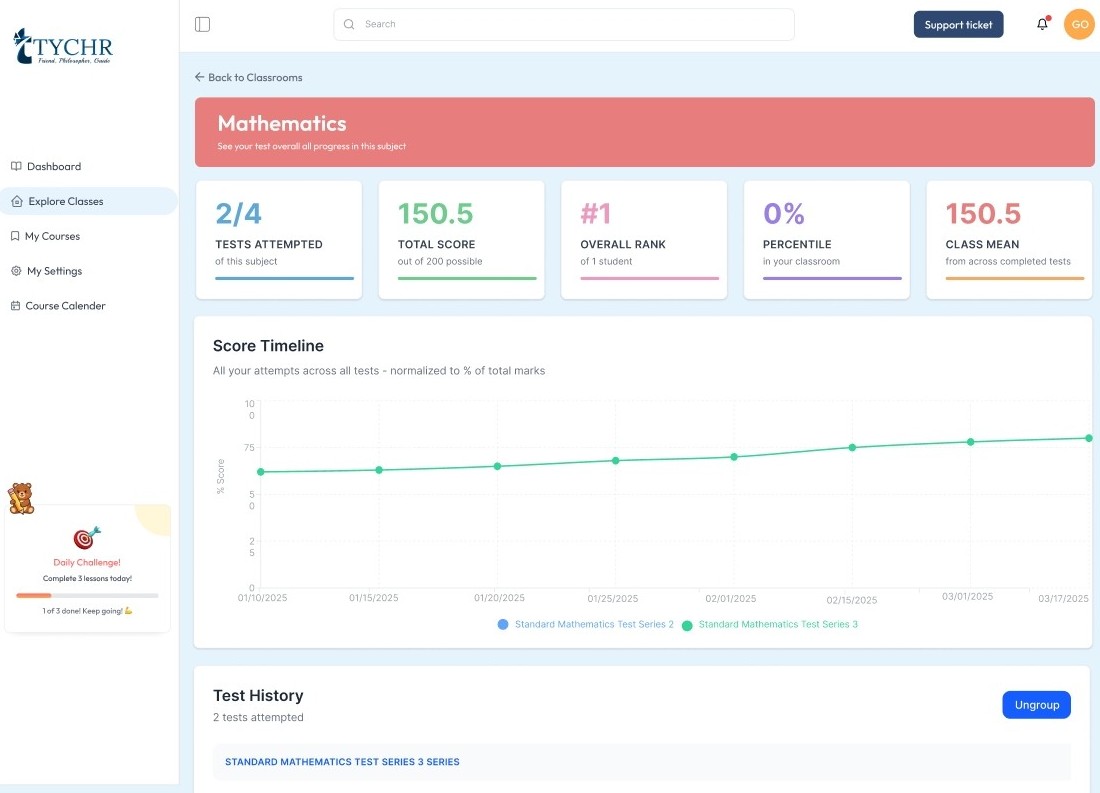
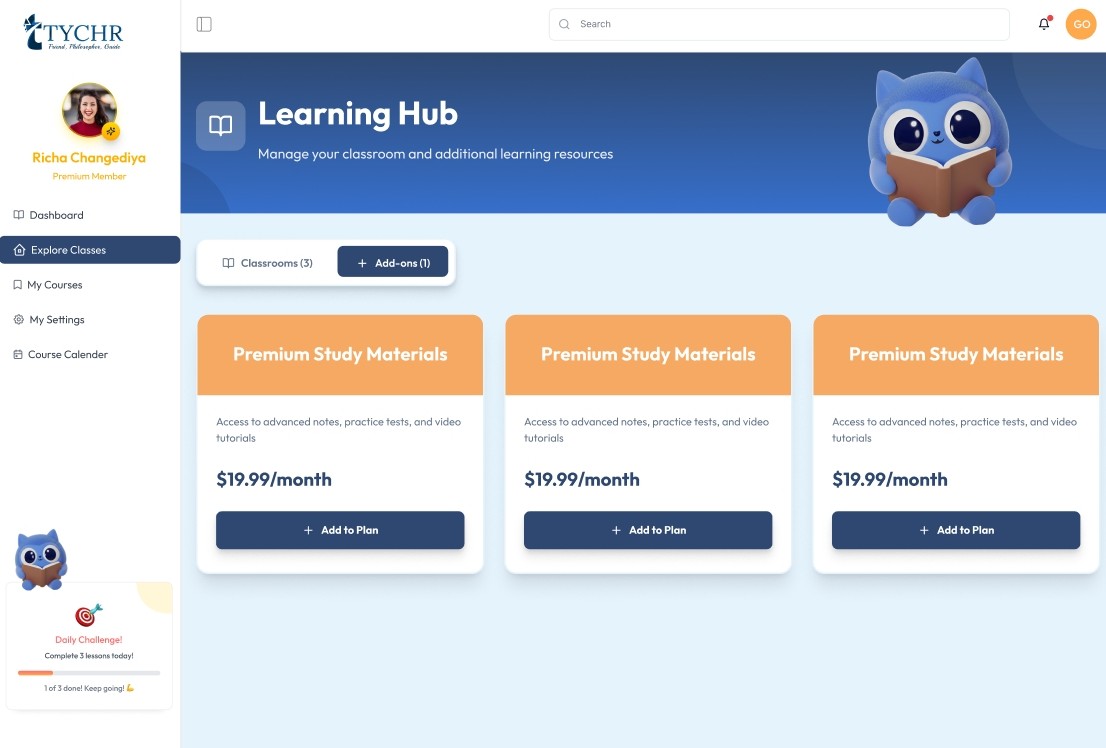
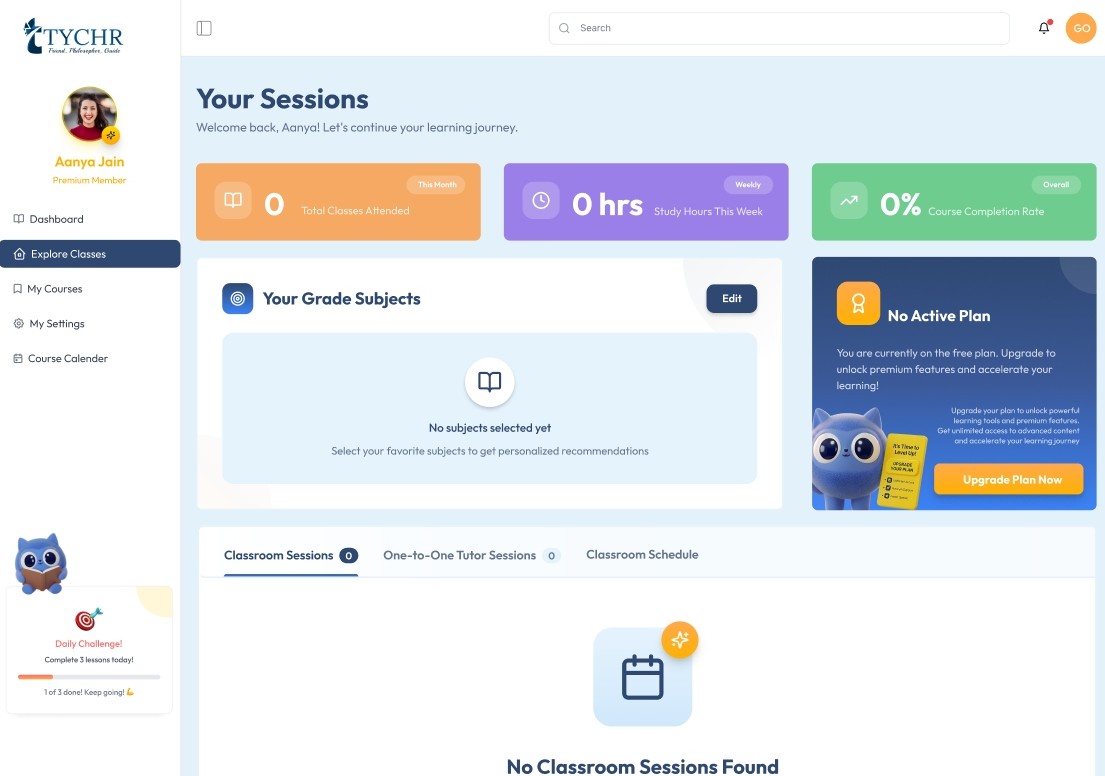
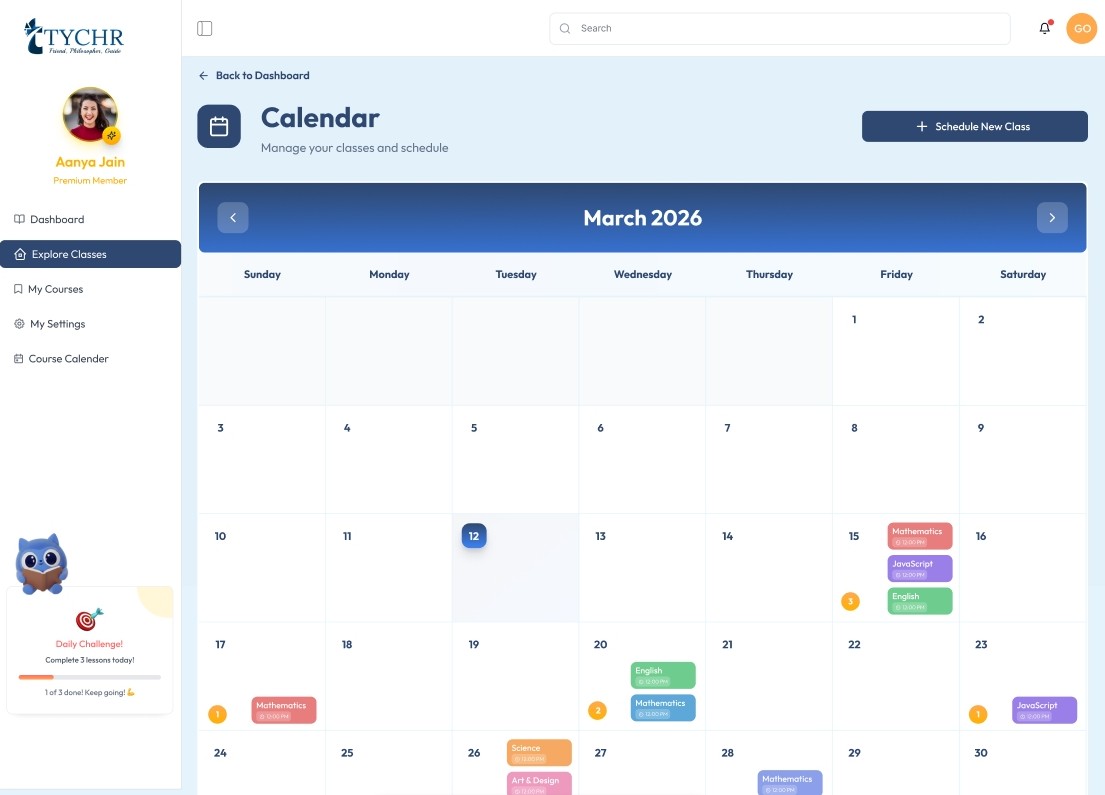
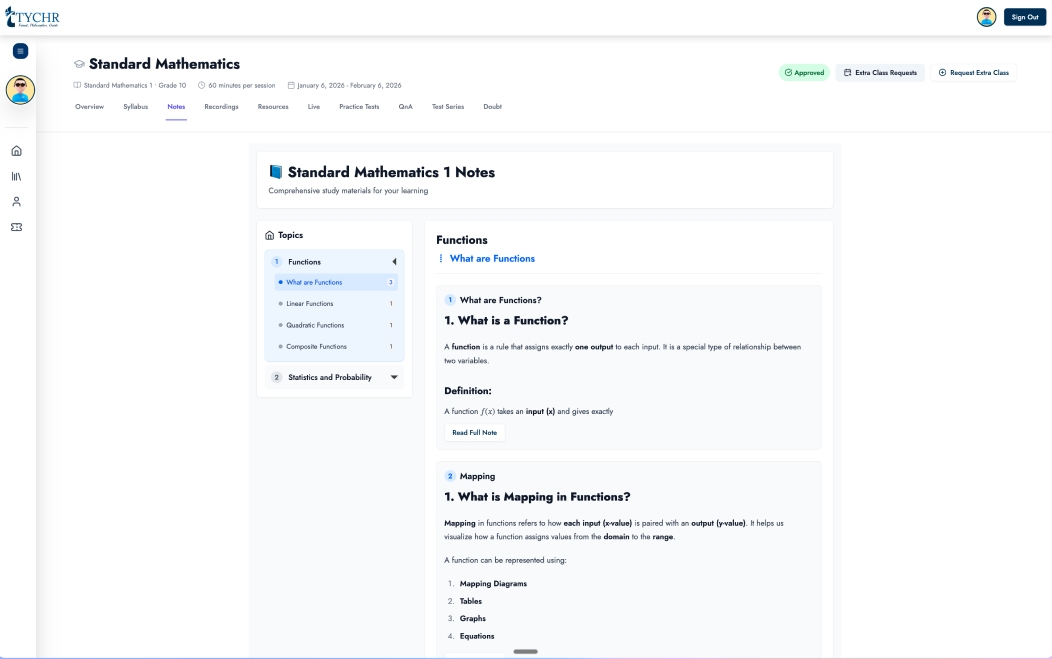
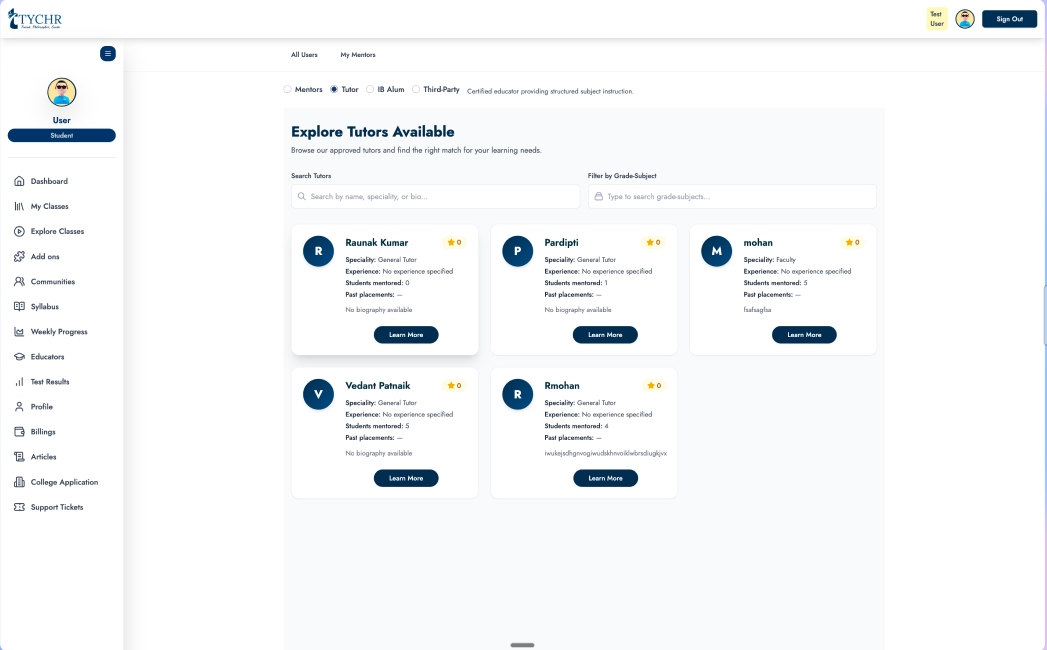
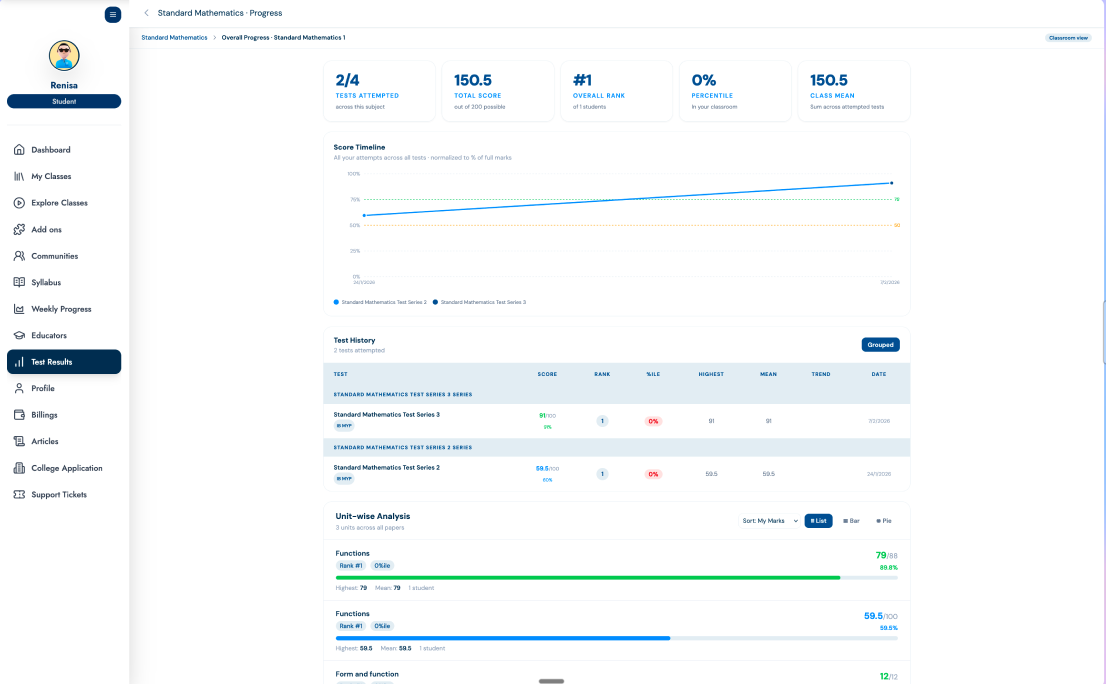
Explore our learning system
A platform designed around how students actually learn — adaptive, intuitive, and always one step ahead.
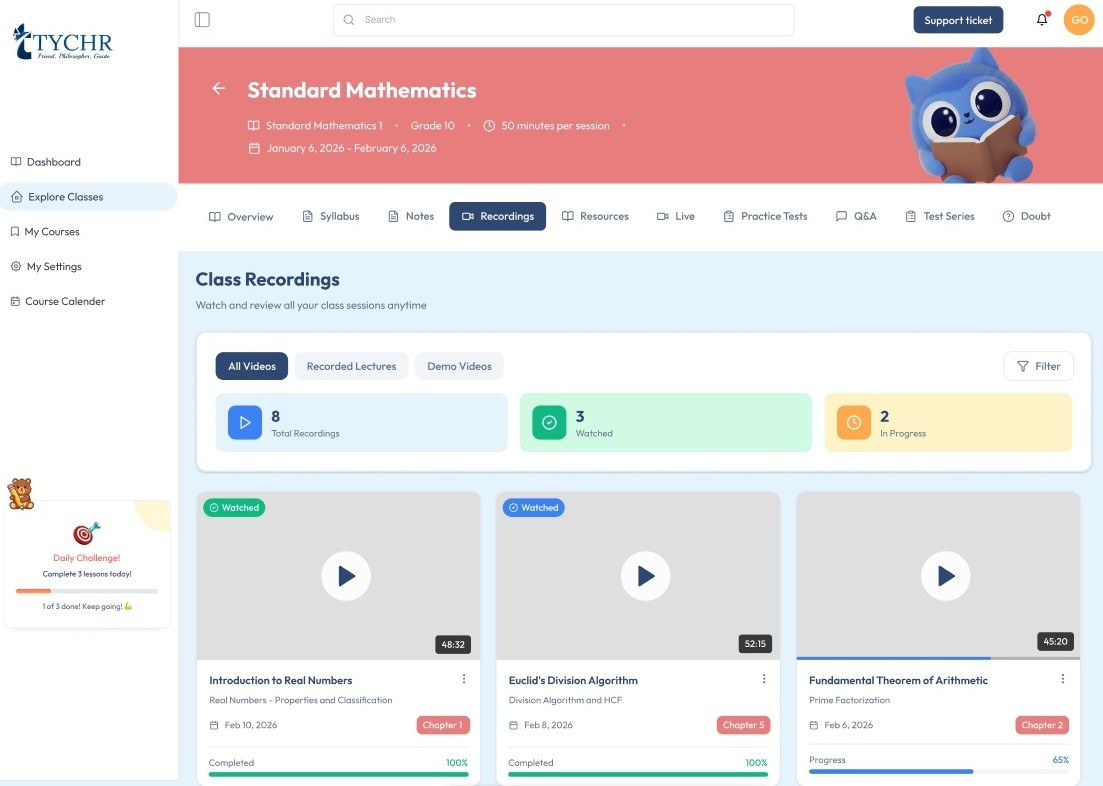

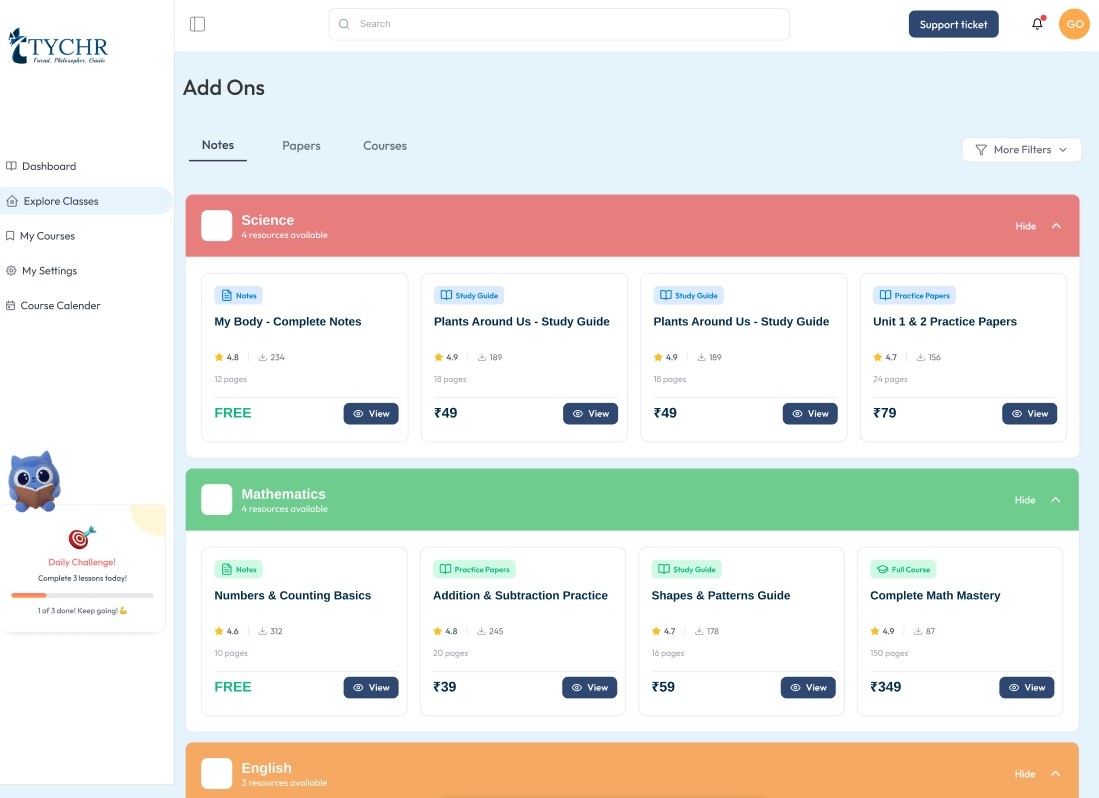
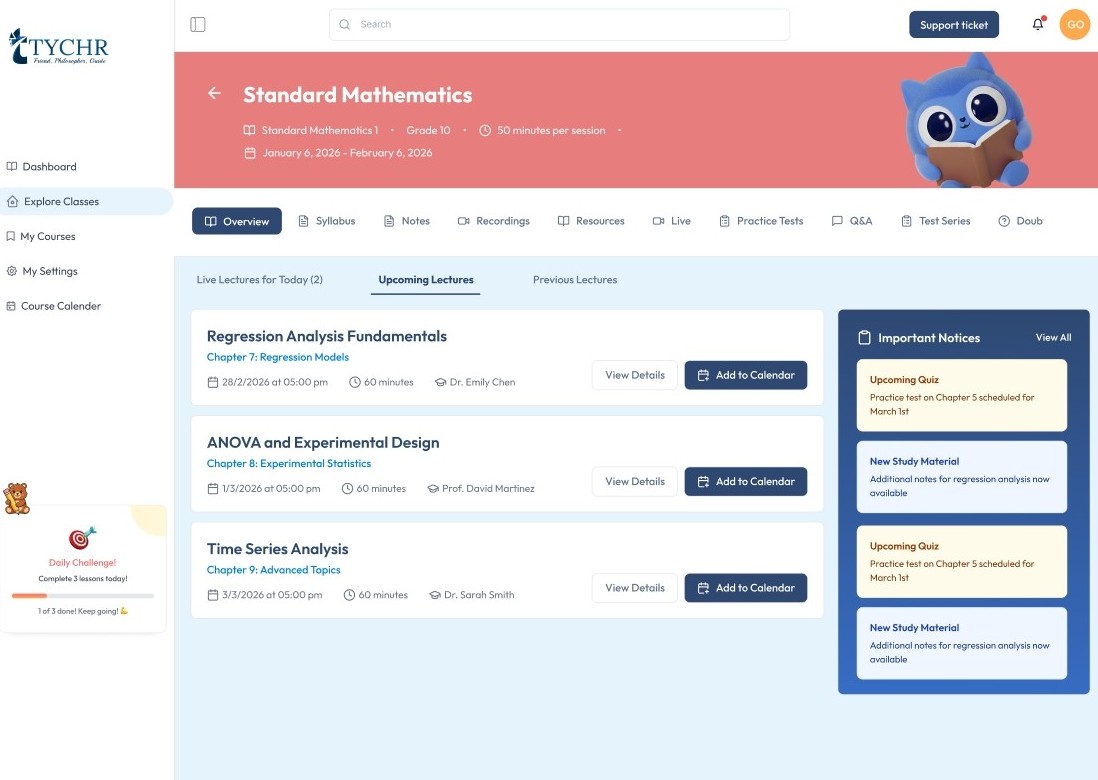
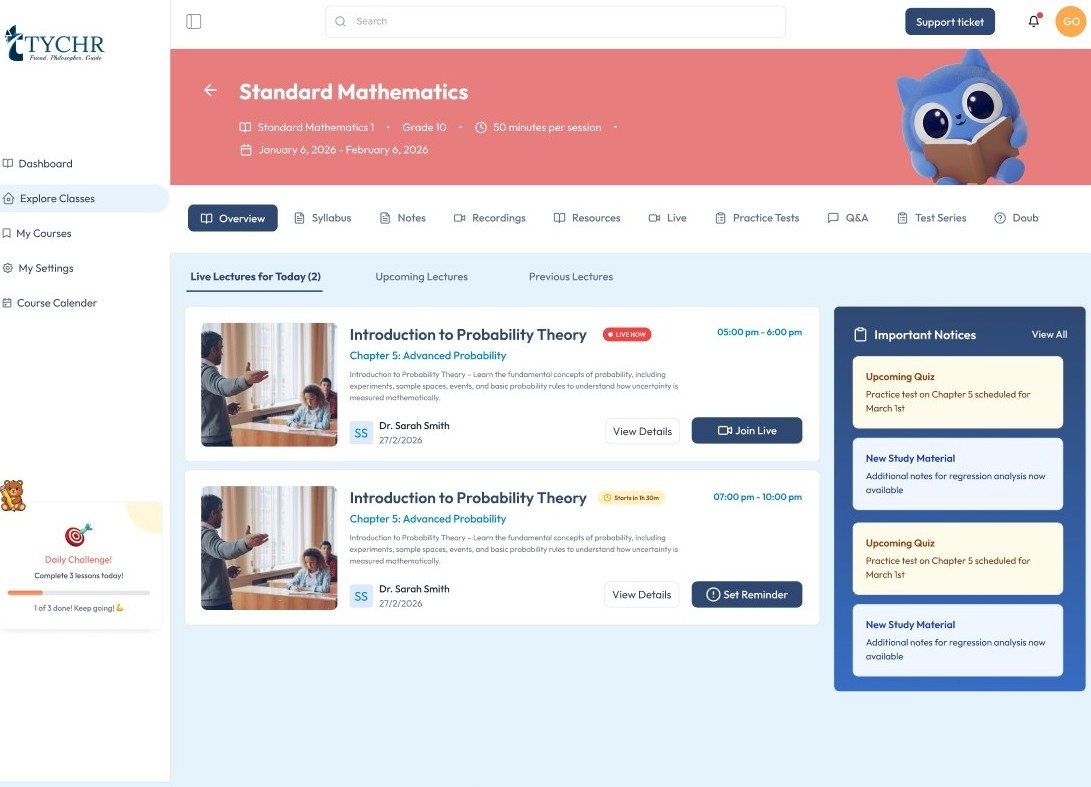
5000+
Students enrolled
100+
Expert tutors
95%
Satisfaction rate
70+
Countries reached
What Is AP Chemistry?

Course Length
Full academic year
September – May
Exam Date
Early May
Annually
Exam Duration
3 Hours 15 Minutes
Total exam time
Exam Structure
Two Sections, Equal Weight
Section I
60 Multiple Choice Questions
90 min · 50% of score
Section II
7 Free Response Questions
105 min · 50% of score
Multiple Choice (MCQ)
60 questions in 90 minutes, worth 50% of the total score. Covers all nine units including atomic structure, thermodynamics, and kinetics. Includes both discrete questions and question sets based on data or experiments.
Free Response (FRQ)
7 questions in 105 minutes, worth 50% of the total score. Includes 3 long-form questions and 4 short-form questions. Requires deep application of chemical principles, laboratory data analysis, and complex stoichiometric calculations.
Tools & Formula Sheets
A provided periodic table and a formula sheet are permitted throughout the entire exam. A scientific or graphing calculator is allowed on the FRQ section; mastering your calculator for equilibrium and rate constant calculations is essential.
AP Chemistry Syllabus
Unit-by-Unit Breakdown
Atomic Structure and Properties
- Moles and molar mass
- Mass spectrometry
- Electron configuration
- Periodic trends
Molecular and Ionic Compound Structure and Properties
- Lewis diagrams
- Resonance and formal charge
- VSEPR and hybridization
- Ionic solids
Intermolecular Forces and Properties
- Intermolecular forces (IMFs)
- Properties of solids/liquids/gases
- Ideal gas law
- Solutions and mixtures
Chemical Reactions
- Introduction to reactions
- Net ionic equations
- Representations of reactions
- Physical and chemical changes
Kinetics
- Reaction rates
- Rate laws
- Concentration changes
- Collision theory and mechanisms
Thermodynamics
- Endothermic and exothermic processes
- Heat transfer and calorimetry
- Energy of phase changes
- Enthalpy of reaction
Equilibrium
- Introduction to equilibrium
- Calculating equilibrium constants
- Le Chatelier's principle
- Solubility equilibria
Acids and Bases
- pH and pOH
- Weak acid/base equilibria
- Acid-base reactions and buffers
- Acid-base titrations
Applications of Thermodynamics
- Entropy
- Gibbs free energy
- Thermodynamic and kinetic control
- Galvanic and electrolytic cells
Foundations of Chemistry (Units 1–2)
Atomic Models & Molecular Properties
The CER Framework
We drill the CER framework (Claim, Evidence, Reasoning) so students can construct scientifically rigorous explanations for chemical phenomena, ensuring every response links specific observations to core chemical principles.
Quantitative Precision
For calculation-heavy units, we focus on unit analysis and significant figure accuracy—the primary areas where students lose easy points on stoichiometry and gas law FRQs.
Atomic Structure
Molecular Structure
States of Matter

Chemical Reactions (Unit 3)
Coaching for Flawless Reaction Analysis

Net Ionic Equations
We teach students how to identify soluble/insoluble compounds and isolate the essential chemical changes to write accurate, balanced net ionic equations.
Redox Reactions
Oxidation states, half-reactions, and electron flow. Mastering the balancing of redox reactions in acidic or basic conditions is a frequent FRQ differentiator.
Quantitative Stoichiometry
Tracking limiting reactants and theoretical yield. We emphasize identifying the 'limiting' factor and why precise mole ratios are essential for laboratory accuracy.
Net Ionic Equations
Redox Electron Transfer
Stoichiometry
Titration Curves
Mastering Reaction Mechanisms
The conceptual gaps between precipitation, acid-base, and redox reactions dictate your success in predicting products. These subtle nuances are heavily targeted in both MCQ and FRQ sections. We drill students using scenario-based laboratory profiles until they can confidently write net ionic equations, identify spectator ions, and justify reaction pathways in under 60 seconds.
Kinetics, Thermodynamics & Equilibrium
Concepts & Practice
Kinetics
Thermodynamics
Equilibrium

Master Chemical Principles for FRQs
Kinetics and equilibrium questions require rigorous application of quantitative data. Our tutors focus on showing calculation steps clearly and providing scientific justification.
Advanced Chemical Equilibrium & Electrochemistry
Acids, Bases & Redox Applications
Acid-Base Equilibria
Electrochemistry

Strong vs Weak Acids
Dissociation constants and pH
Buffer Systems
Henderson-Hasselbalch applications
Ksp Calculations
Solubility product constants
Galvanic Cells
Spontaneous electron flow
Electrolytic Cells
Non-spontaneous reactions
Nernst Equation
Cell potential at non-standard states
AP Chemistry Free Response Questions
FRQ Strategies for Maximizing Rubric Points
6 Questions in 90 Minutes (50% of Score)
FRQs are where the exam is won or lost. Precise vocabulary is mandatory.
Rubric Maximization Rules
Master Particle-Level Diagrams
Many FRQs ask for particle-level representations. Draw clear circles to represent atoms, label them, and include a legend if necessary. Graders look for correct ratios, interactions (like IMFs), and proper phase behavior.
Use ICE Tables & Balanced Equations
For stoichiometry and equilibrium problems, always start by defining the balanced chemical equation. If an ICE (Initial, Change, Equilibrium) table is applicable, write it out fully—it is the best way to earn partial credit even if you make a calculation slip.
Provide Scientific Justification
AP Chemistry questions often require 'Justification.' Do not just state a trend; explain the underlying physical principle (e.g., Coulomb's Law, effective nuclear charge, or molecular polarity). A 'why' is always required.
Analyze Reaction Mechanisms
When asked about kinetics, clearly identify the rate-determining step and how changes in concentration affect the collision frequency. Connect these to the proposed mechanism for full rubric points.
Manage Multi-Part FRQs
Question 1 (often a long FRQ) is frequently dedicated to equilibrium or thermodynamics. Practice these problems in multi-part sets, as they require carrying values from one part to the next; precision and labeling are vital.
Why Precise FRQ Language Matters
College Board rubric criteria penalize students who fail to recognize conservation of mass and energy. Answers that imply atoms disappear or energy is spontaneously created score zero. Trained answers require rigorous reference to Law of Conservation principles: 'mass is conserved because the number and type of atoms remain constant throughout the chemical rearrangement.' We drill these fundamental laws until they are the foundation of every answer.
Writing "atoms are destroyed in a reaction" instead of "atoms are rearranged into new products".
Calculator Skills for AP Chemistry
Calculator Work & Quantitative Skills
Essential AP Chemistry Calculations
Molar Mass
Summing atomic masses from the periodic table
Stoichiometry
Mole-to-mole conversions using balanced equations
Ideal Gas Law
Solving PV = nRT for various variables
pH Calculation
Using -log[H+] and pOH = 14 - pH
Keq/Q Calculations
Determining equilibrium constants or reaction direction
Beer’s Law
A = abc for spectrophotometry data
Rate Laws
Calculating rate constants from concentration data
Gibbs Free Energy
Calculating ΔG° = ΔH° - TΔS°
Show All Calculation Steps
Always write down the formula, the substitution of values with units, and the final answer to ensure partial credit.
Significant Figures
Strictly adhere to sig-fig rules in every calculation; incorrect rounding is a common point deduction on the FRQ.
Calculator Familiarity
Scientific or graphing calculators are allowed on the FRQ. Know how to handle logs, exponents, and complex system solving quickly.
AP Chemistry Multiple Choice
Tips & Timed Practice
60 Questions • 90 Minutes
Average 1.5 minutes per question • Worth 50% of exam score
Analyze Stimuli First
Examine graphs, data tables, and chemical diagrams before reading the question stem
Apply First Principles
Use foundational concepts (Coulomb’s Law, IMFs, Conservation of Mass) to eliminate distractors
Watch for Traps
Be wary of 'always' or 'never' statements that don't account for exceptions in chemical behavior
Dimensional Analysis
Double-check units to ensure your answer follows logical chemical progression
Manage Time
Aim for roughly 1.5 minutes per question to allow time for complex calculation sets
Skip & Return
Flag time-consuming calculation problems and return to them after answering conceptual ones
Common Topics
- •Atomic structure & periodicity
- •Intermolecular forces & phase changes
- •Chemical equilibrium & kinetics
- •Acid-base & redox titrations
- •Thermodynamics & entropy
Practice Approach
Weeks 1-4
Untimed conceptual drill by unit
Weeks 5-8
Mixed untimed practice with data sets
Weeks 9-12
Full 60-question timed mock exams
Our tutors provide official College Board practice materials and teach time-tested strategies
One-to-One vs Group Tutoring
AP Chemistry Sessions
One-to-One
- ✓Personalized pacing through all 9 units
- ✓Focus on your weak areas (probability, inference, etc.)
- ✓Flexible scheduling around your calendar
- ✓Individual FRQ review and feedback
- ✓Custom practice problem sets
Group Sessions
- ✓Learn with 3-4 students at similar level
- ✓Cost-effective exam preparation
- ✓Collaborative problem-solving
- ✓Structured curriculum coverage
- ✓Group practice test reviews
Tutor Profiles Subject Experts
Meet our highly qualified tutors with proven track records of student success.

Sreevidya KG
MSc in Chemistry with a Bachelor’s in Education, IB training, and Google certification.
20 Years
Experience
1500+
Students
5
Rating
Over 20 years of experience teaching Chemistry across IBDP, IGCSE, and AS/A Level curricula, including extensive international online tutoring.
Personalized IB tutoring with concept-focused learning approach.

Sandeep Nehra
IB Physics – Category 2 Certified | IBDP • IGCSE • AS/A Level • AP • AQA Physics
10+ Years
Experience
1200+
Students
4.9
Rating
An experienced IBDP and international Physics educator with over 10 years of multi-curriculum teaching experience across IBDP, IGCSE, AS/A Level, AP, and AQA.
Personalized IB tutoring with concept-focused learning approach.

Anjali Nayan Mistry
BA (Psychology), DELF B1 (French), B2.2 Alliance Française
11+ Years
Experience
1000+
Students
5
Rating
Have 11 years of experience teaching international curricula, including IB French B (SL & HL), French Ab Initio, AP Psychology, and IGCSE French, across leading IB and Cambridge schools.
Personalized IB tutoring with concept-focused learning approach.

Anish Chauhan
IB DP Physics • IGCSE Physics • Cambridge AS/A Level Physics | Former Academic Head
15 Years
Experience
1100+
Students
5
Rating
15+ years teaching IB DP, IGCSE, and Cambridge AS/A Level Physics
Achievements
Personalized IB tutoring with concept-focused learning approach.

Prem Raj Kumar
B.Sc. Computer Science | IB Educator Certificates | Google Certified Trainer
8+ Years
Experience
700+
Students
5
Rating
An experienced IB Computer Science educator specializing in Mathematics, ICT, and Computer Science across IB MYP, IBDP, IGCSE, AP, and A Level.
Personalized IB tutoring with concept-focused learning approach.
Grade Improvements — AP Score Results
From Students
ett
ett
Practice Tests & Past Exam Resources
Chemistry Materials
Official Practice Tests
15+- ✓ Released College Board exams
- ✓ Scored answer keys
- ✓ Topic breakdowns
FRQ Bank
200+- ✓ Organized by unit
- ✓ Scoring rubrics
- ✓ Sample responses
Multiple Choice
500+- ✓ Unit quizzes
- ✓ Mixed practice
- ✓ Timed tests
Calculator Guides
25+- ✓ TI-84 tutorials
- ✓ Function walkthroughs
- ✓ Quick reference

All Resources Included Free
Every tutoring student gets unlimited access to our complete Chemistry resource library
What students say
“I was scoring a 2 on AP Chemistry practice tests in January. By May I had a 5. Pooja ma'am focus on the FRQ rubric was the thing that made the biggest difference, I'd never understood how strictly it was marked.”

Amasha
Chemistry
“Prannoy sir helped me go from a 3 to a 5 in AP Calculus BC. The sessions were intense but the way he broke down FRQ justification was completely different from what my school taught. I finally understood what 'show your work' actually means for College Board”

Jiya
Calculus BC
Frequently Asked Questions
Everything About IB Chemistry Tutoring
Our tutors use molecular-level visualizations, energy diagrams, and interactive problem-solving to make invisible chemical behaviors—such as entropy shifts, Le Chatelier's principle, and Gibbs free energy—concrete and intuitive.
Yes, we break down multi-step chemical math using dimensional analysis frameworks, teaching students how to seamlessly navigate molar masses, solution concentrations, and pH buffer calculations.
We conduct targeted drills on past exam FRQs, training students on how to precisely format particle representations, justify atomic trends with Coulombic attraction, and write complete net ionic equations.
Absolutely. Our curriculum maps directly to the official AP Chemistry Course and Exam Description (CED), ensuring thorough coverage of everything from intermolecular forces to electrochemistry.
Yes, we walk students through standard College Board lab protocols—such as spectrophotometry, titration curves, and reaction rate kinetics—focusing on error analysis and data graphing techniques.
We use step-by-step titration curve mapping and ICE (Initial, Change, Equilibrium) table drills to ensure students can accurately predict pH changes and understand conjugate acid-base pairings.
Book Your AP Chemistry Tutor Today
Start with a Free Trial Session
Book Free Trial
Choose your preferred time slot
Meet Your Tutor
Get matched with Chemistry expert
Start Improving
Begin your personalized prep plan
No credit card required • No commitment • 100% satisfaction guarantee
1000+
Students Taught
4.8
Average Score
89%
Score 4 or 5
200+
Expert Tutors