Expert AP Calculus Bc Tutors Online score 5/5 with Tychr
AP Calculus Bc is one of the most intellectually demanding AP courses. Mastering its core methodologies and executing precise FRQ arguments require deliberate, expert-led structure practice.

GULIA
5/5

TANISHA
5/5

ADAA
5/5

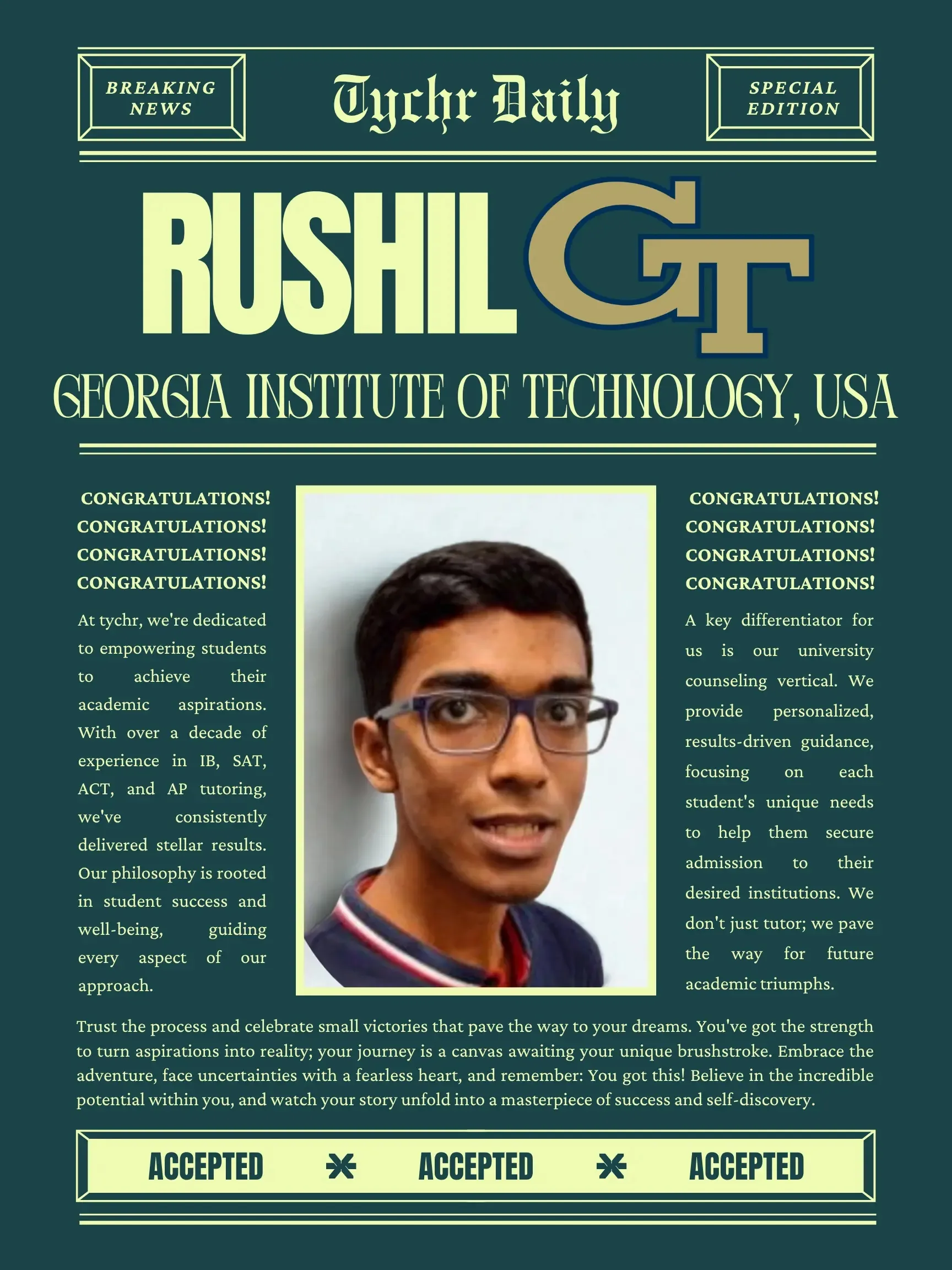
RUSHIL
5/5

ESHAAN
5/5

VISHAAL
5/5
Start your journey with the right guidance.
Your information is kept private and never shared with third parties.
92%
Students score a 5/5
+1.8
Average score improvement
22+
AP subjects covered
4.9★
Average tutor rating
94% of Graduates Secure Admissions into the Top 50 Global Universities
Meet the brilliant minds who transformed their testing potential into world-class AP scores and elite Ivy League academic portfolios.
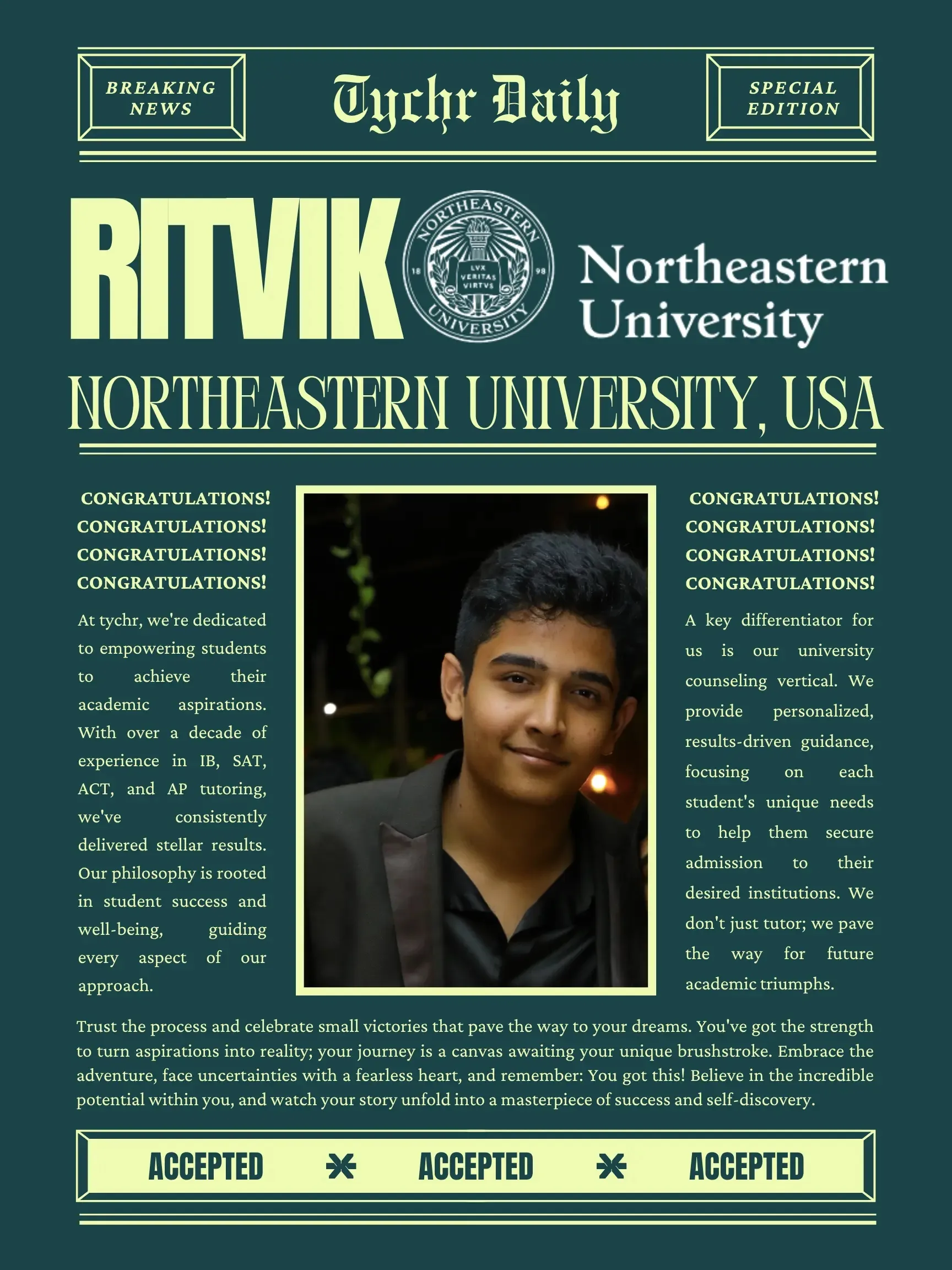

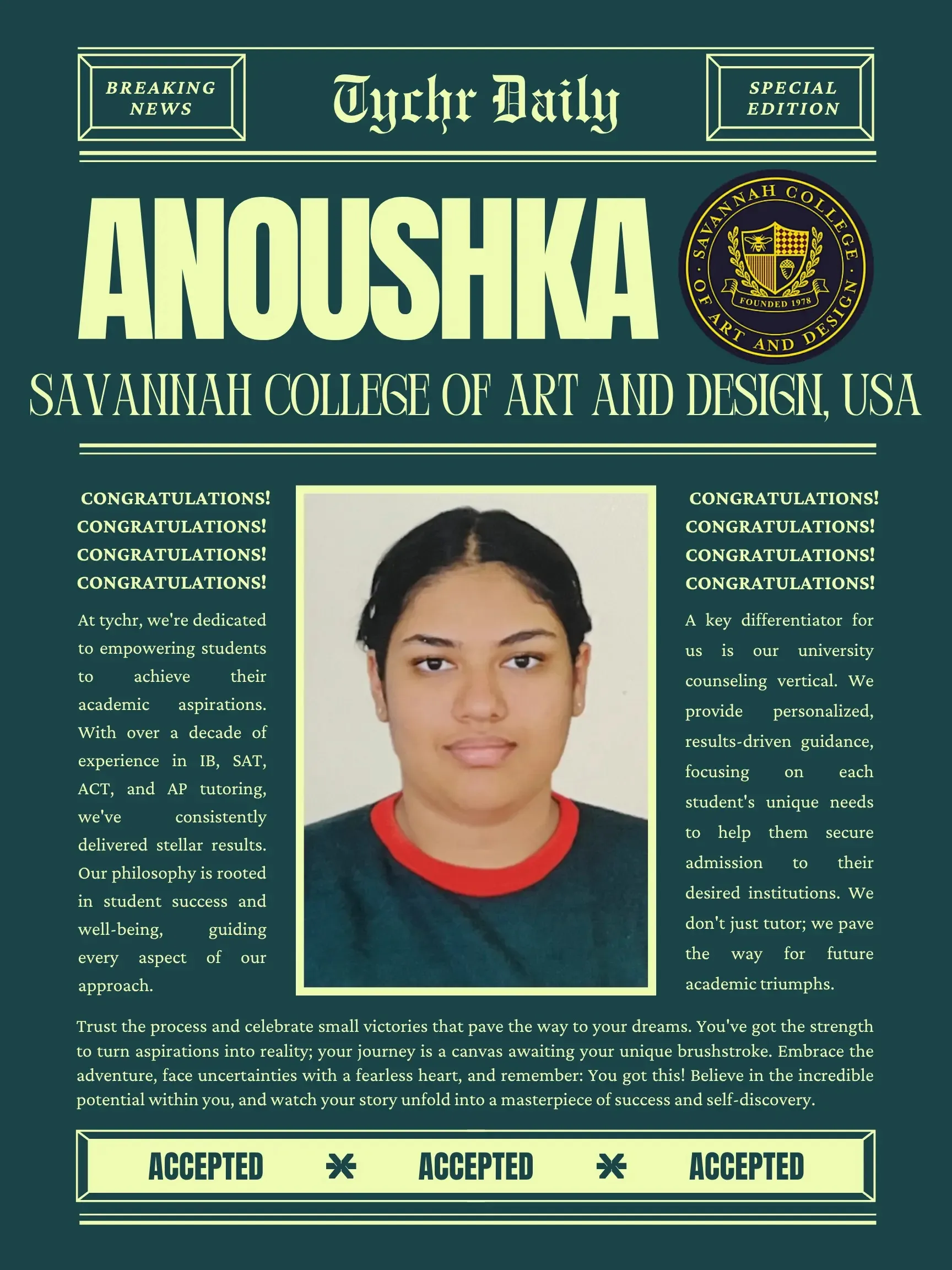
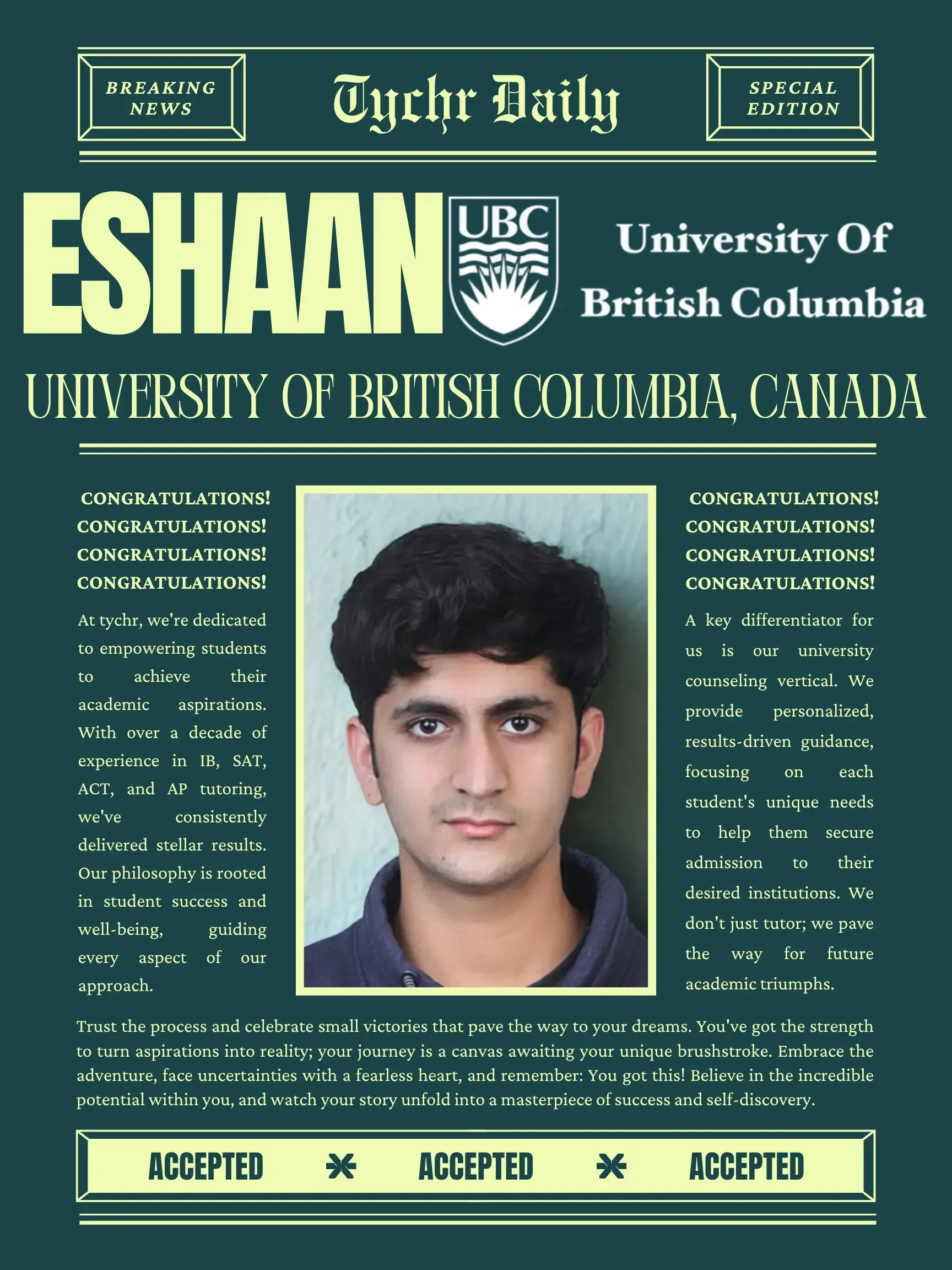
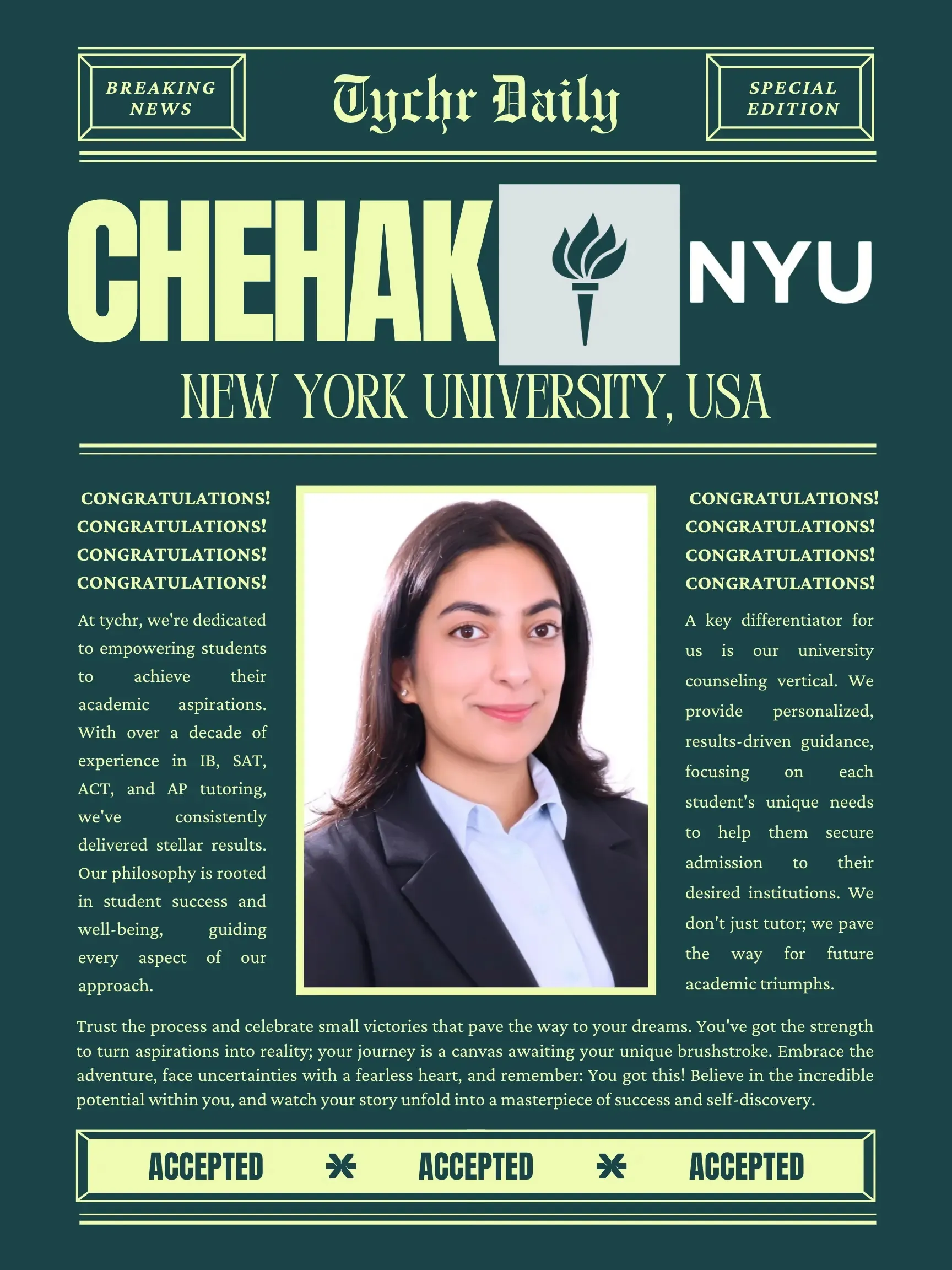
Start your journey with the right guidance.
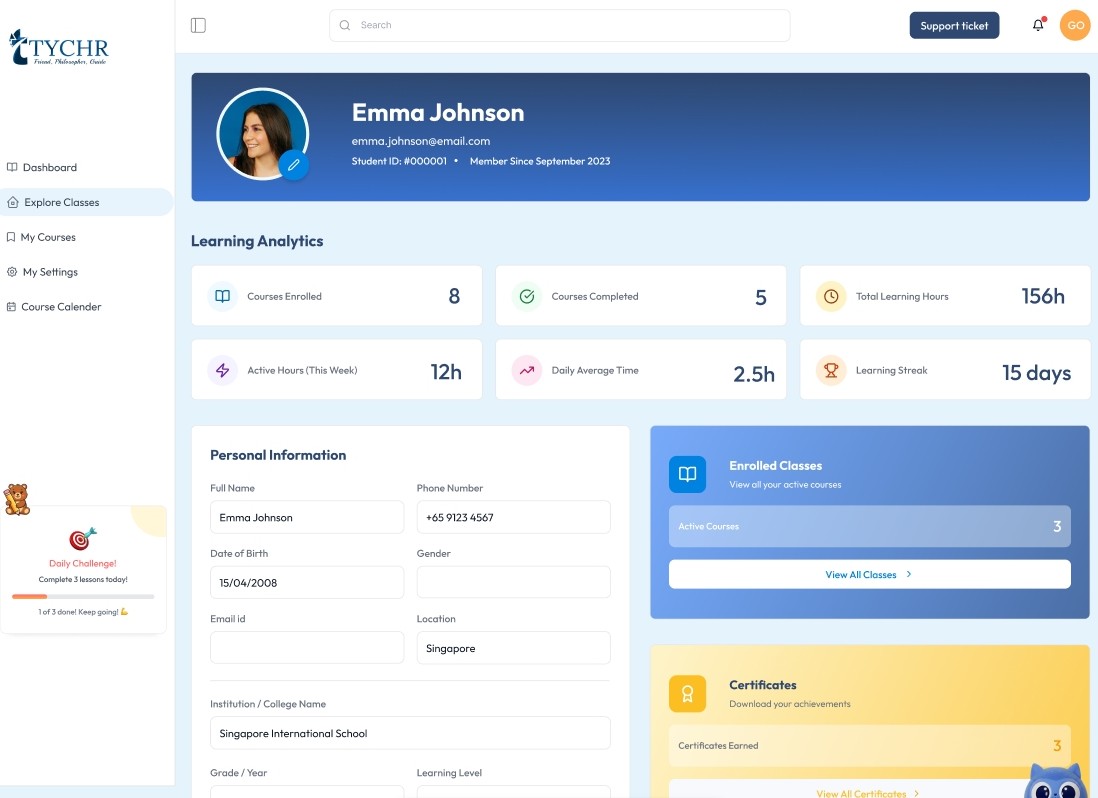
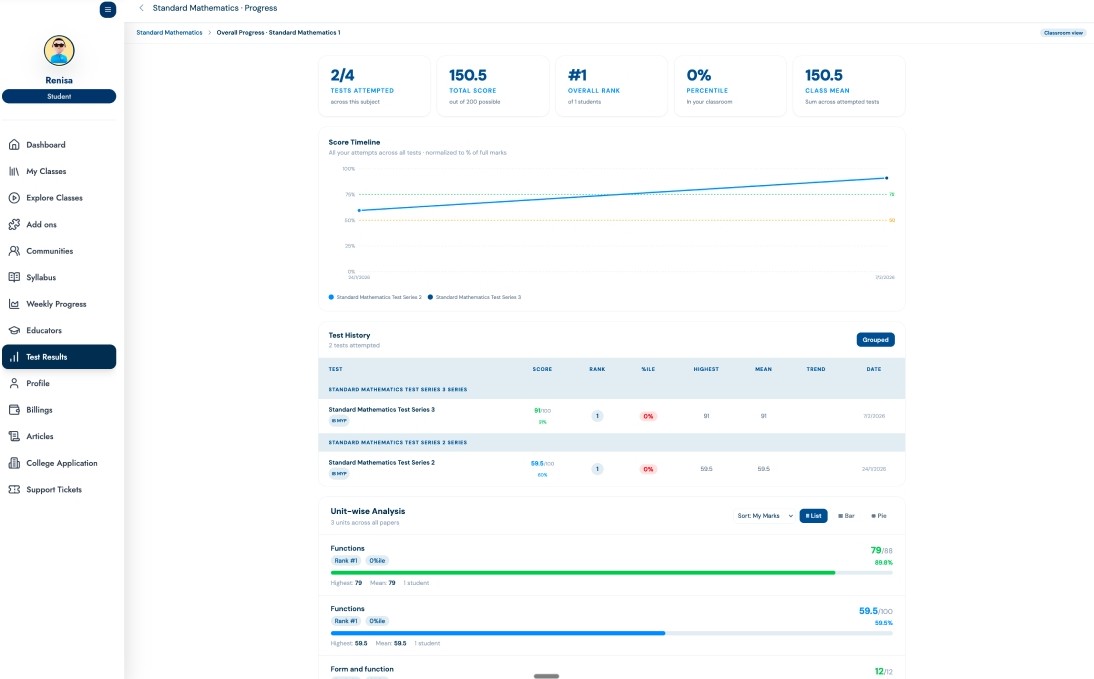
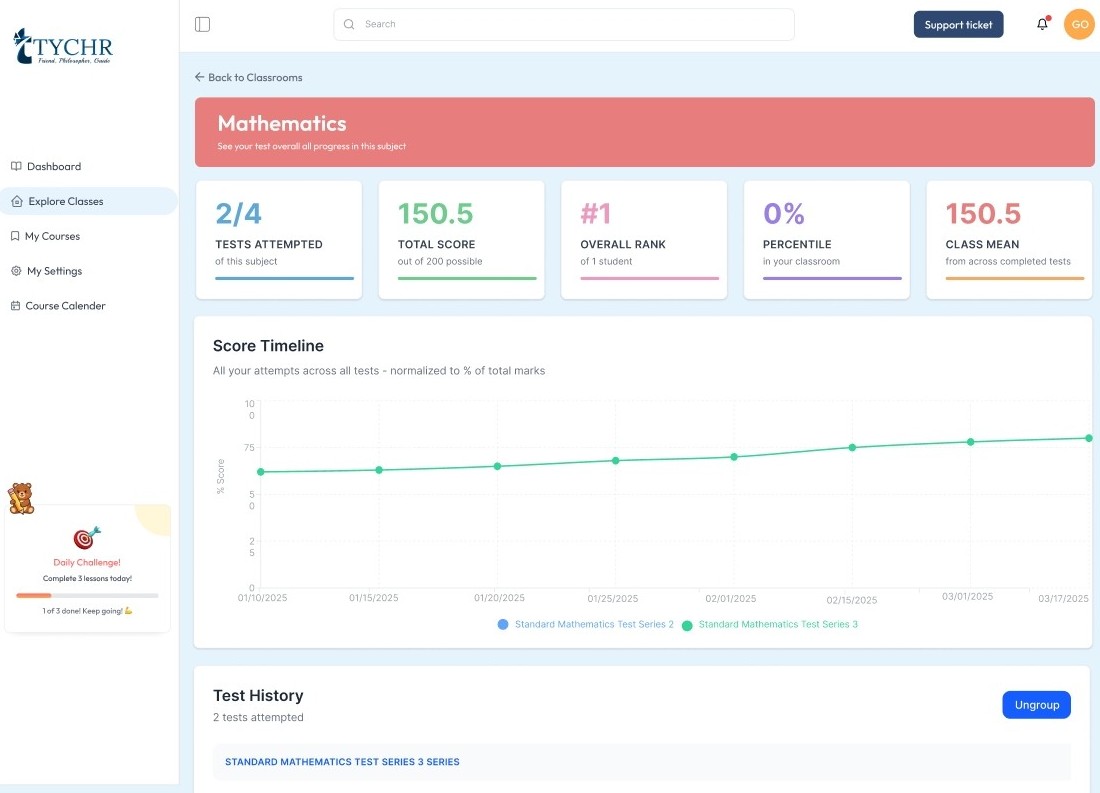
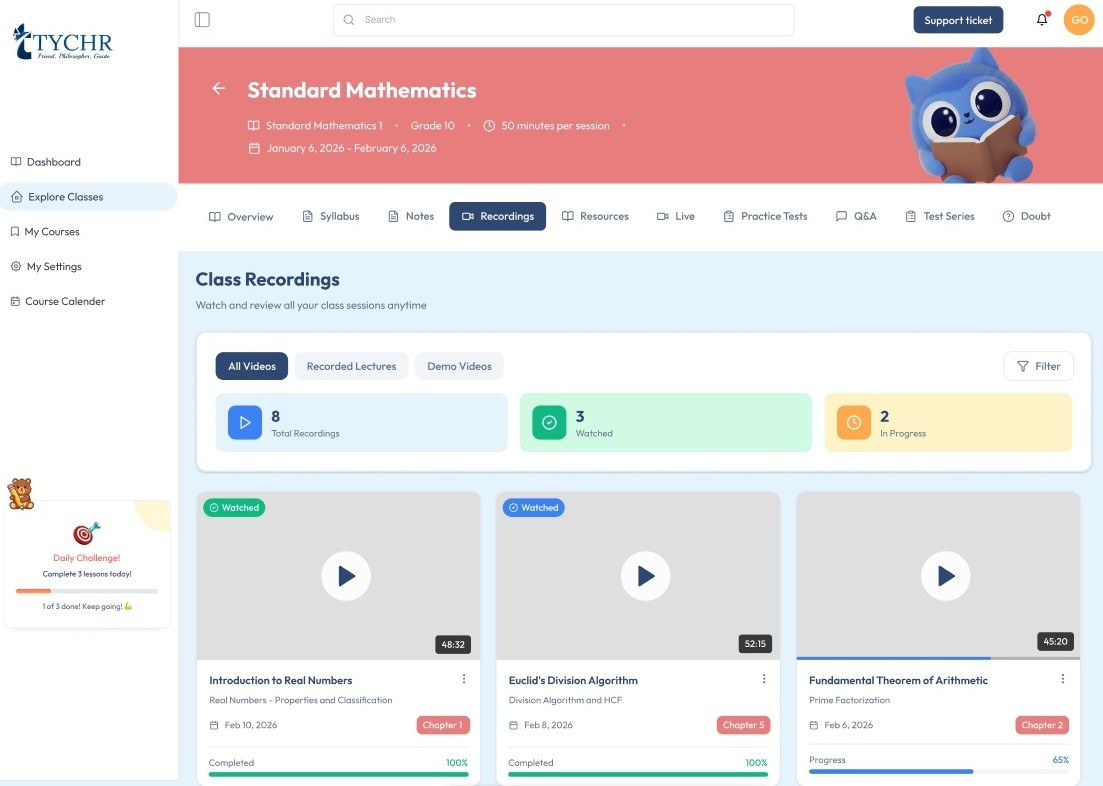
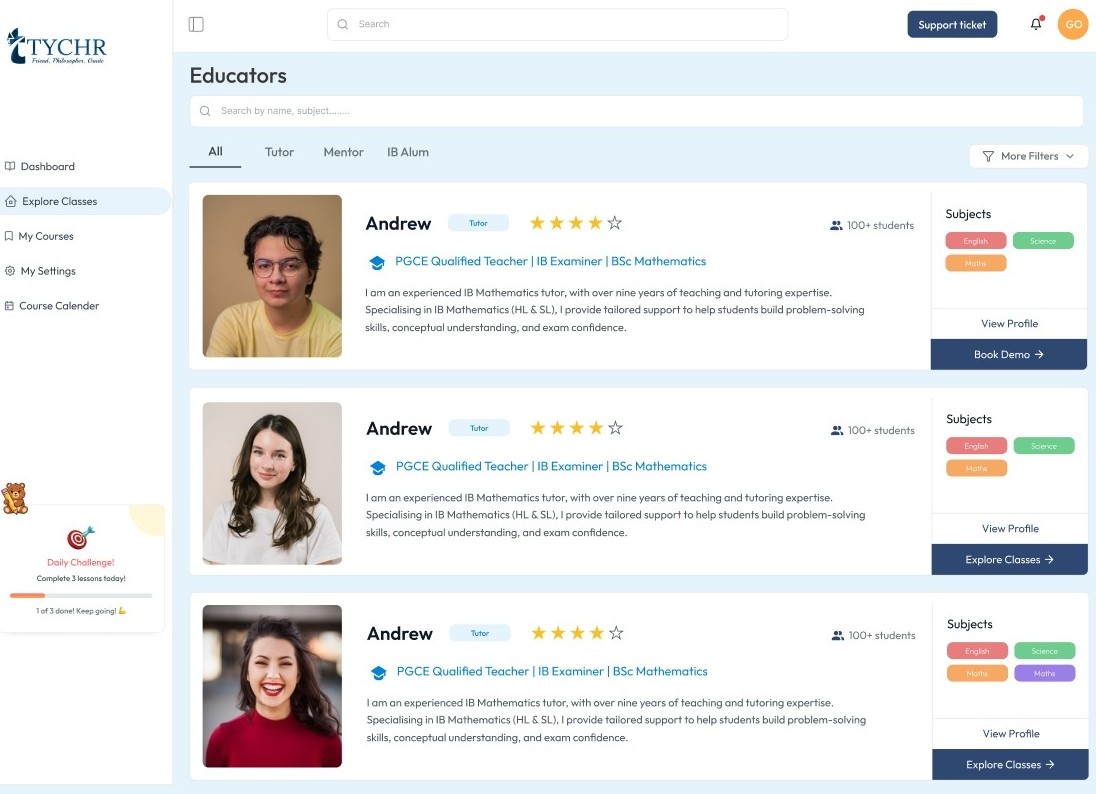
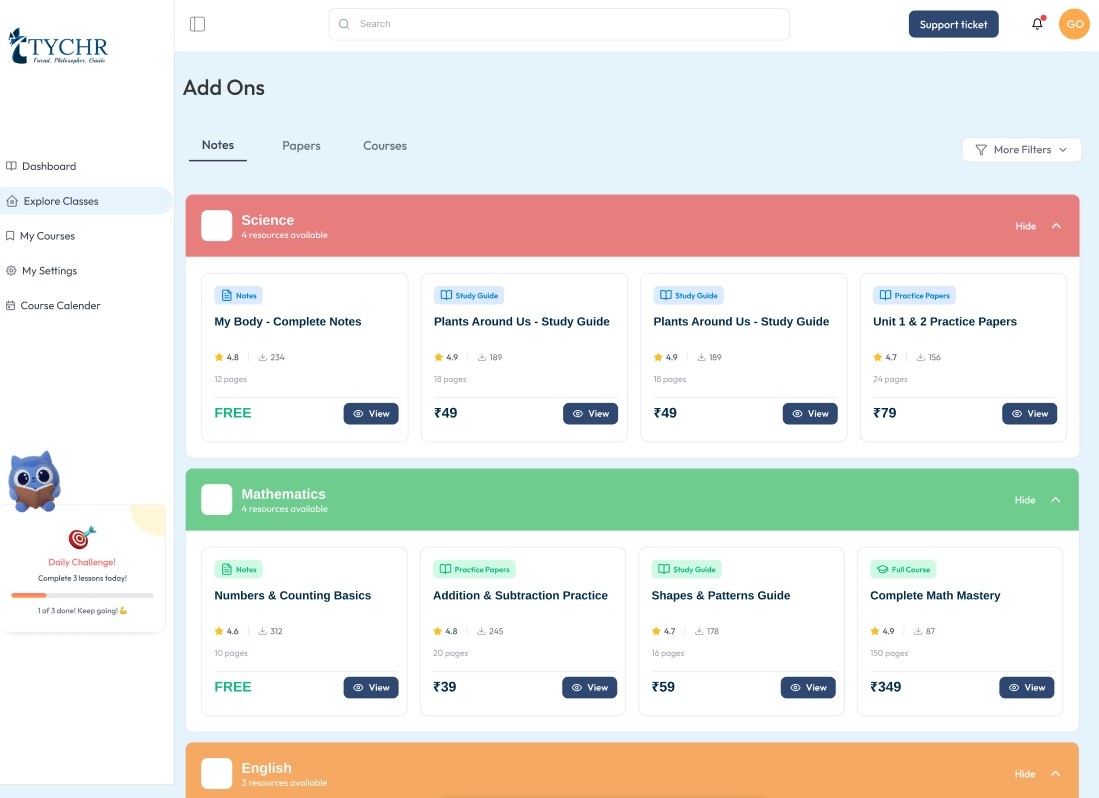
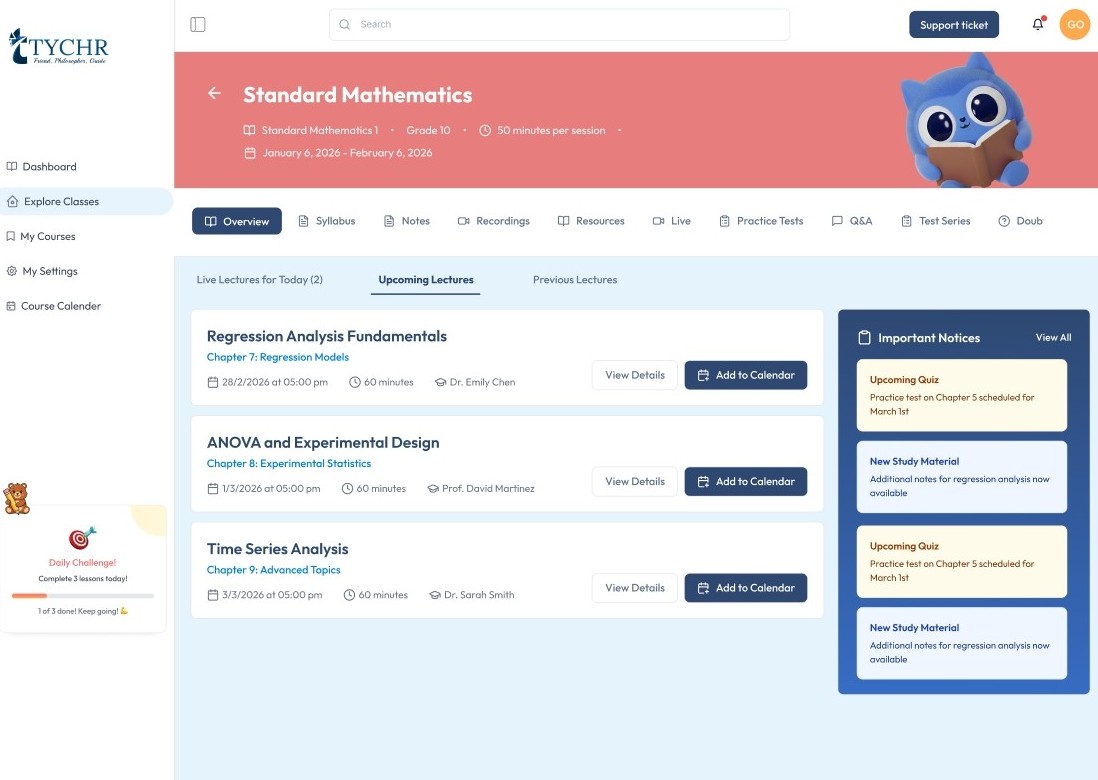
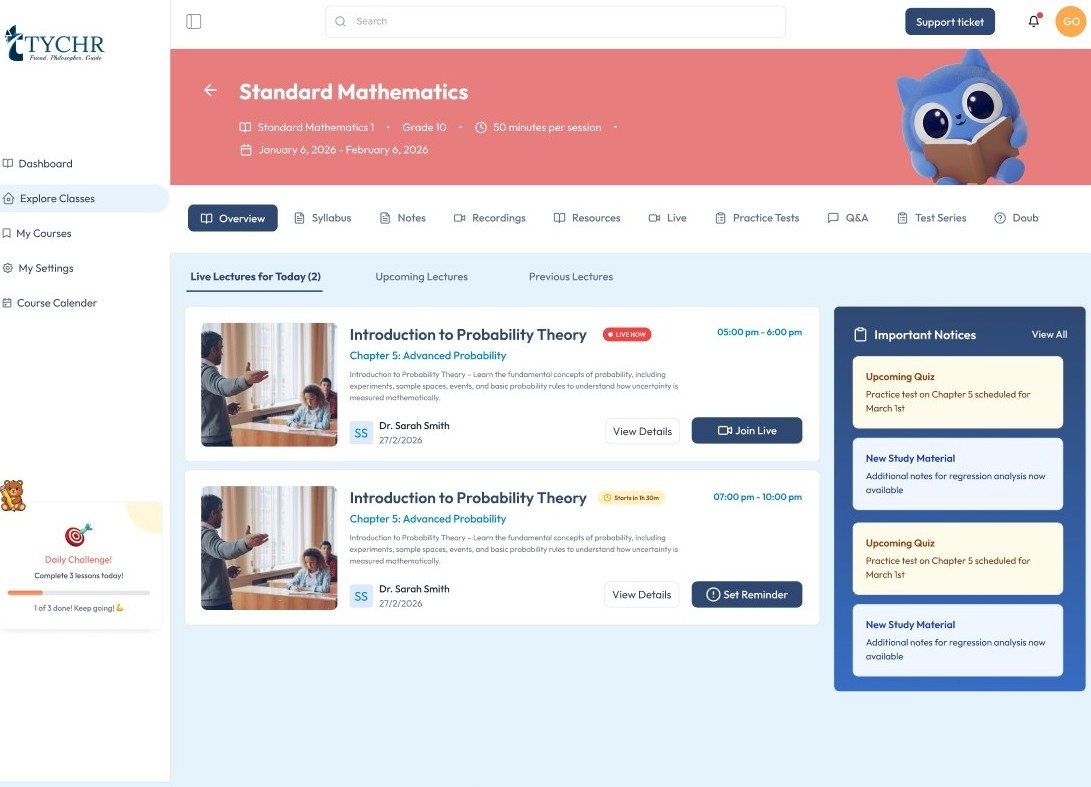
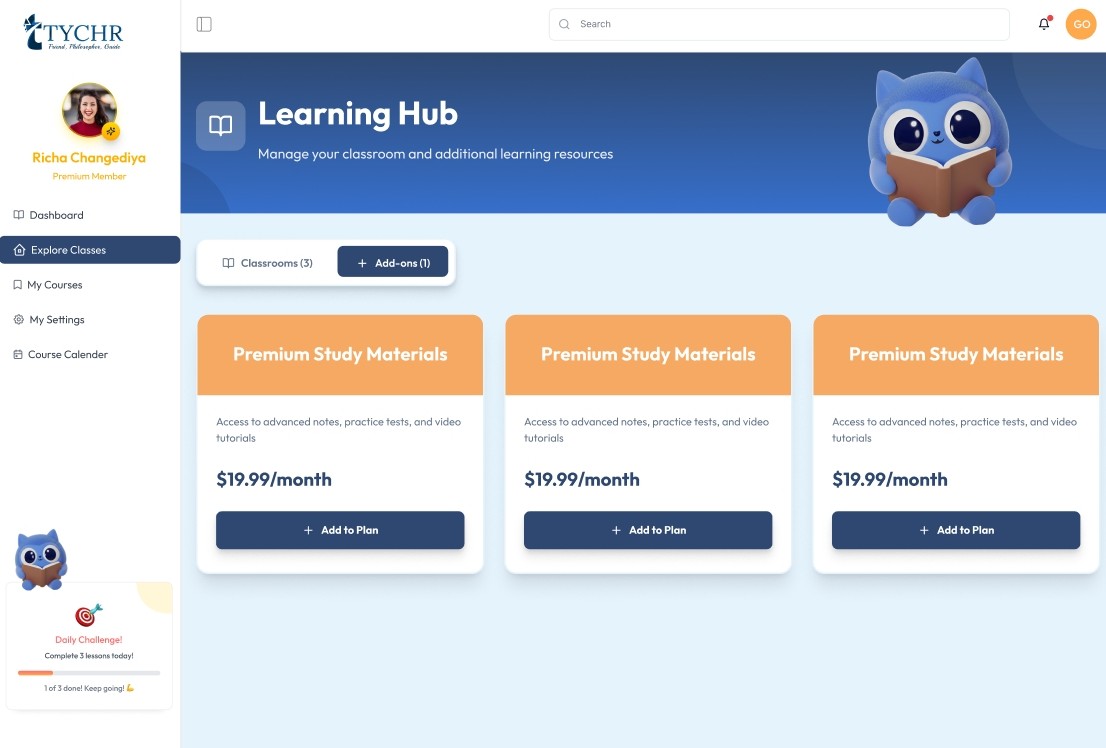
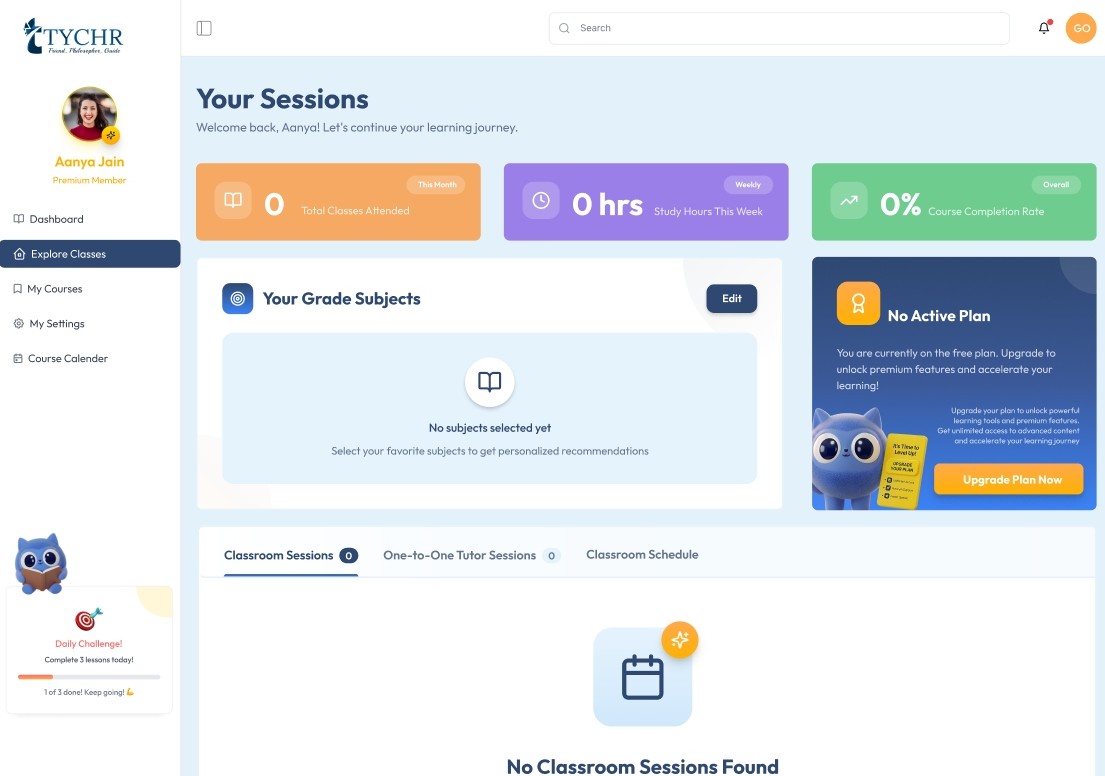
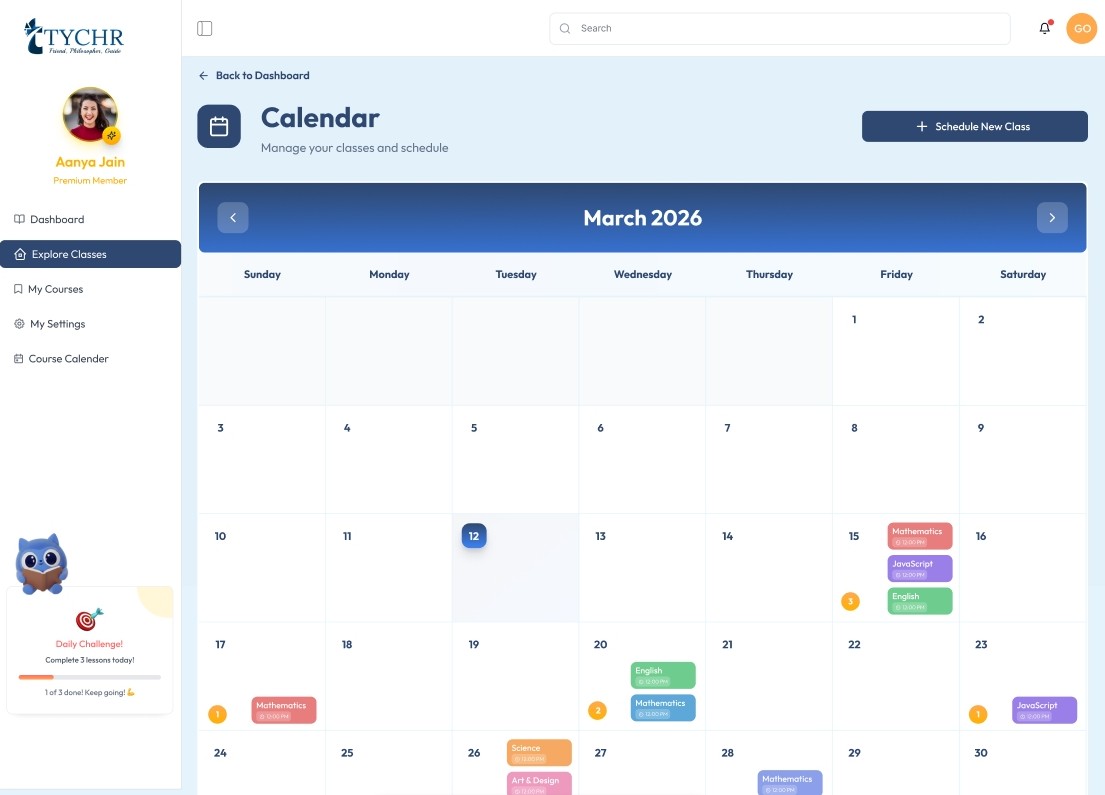
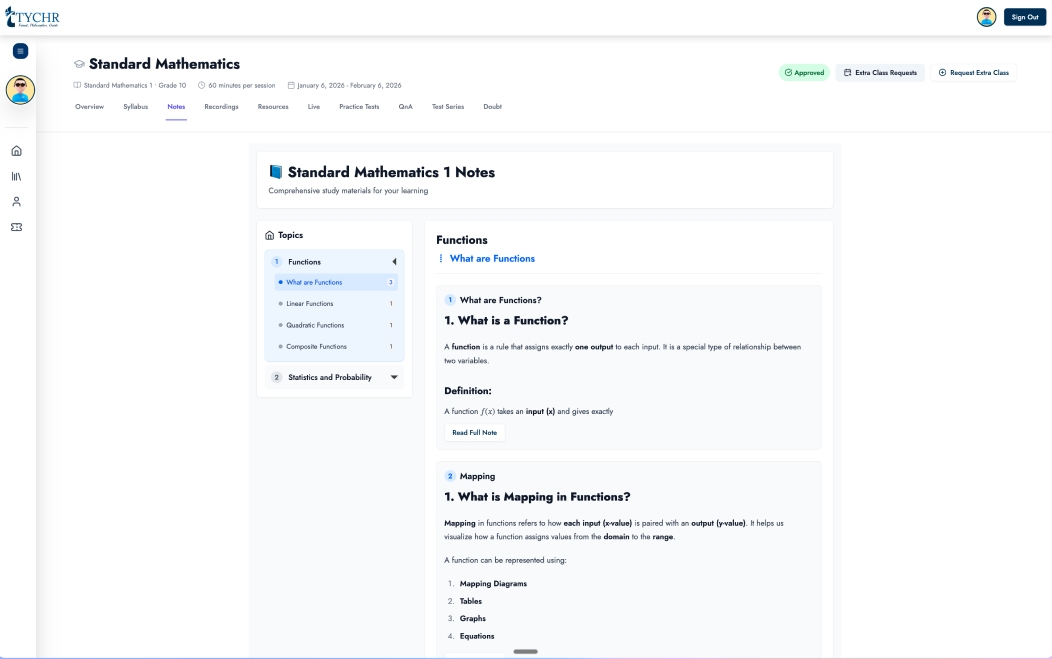
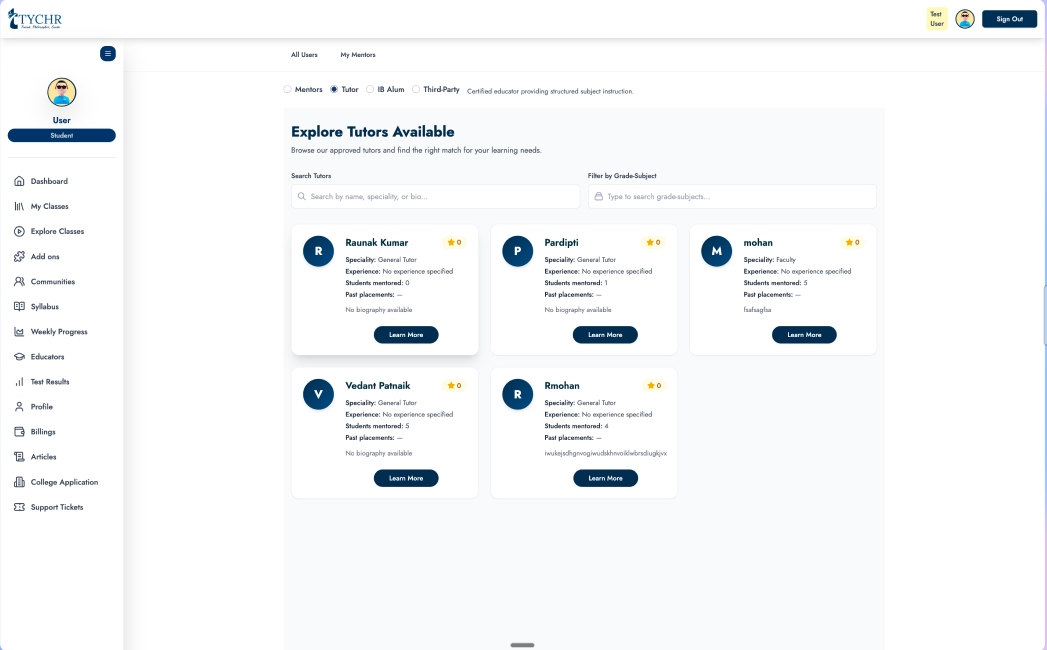
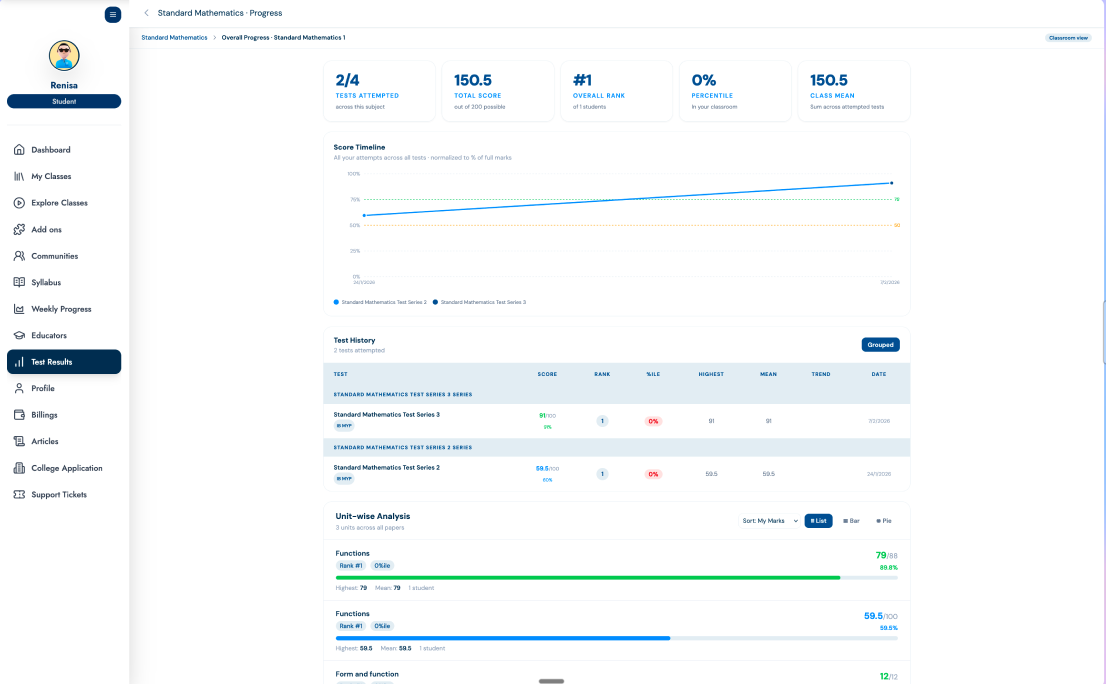
Explore our learning system
A platform designed around how students actually learn — adaptive, intuitive, and always one step ahead.
5000+
Students enrolled
100+
Expert tutors
95%
Satisfaction rate
70+
Countries reached
What Is AP Calculus BC?

Course Length
Full academic year
September – May
Exam Date
Early May
Annually
Exam Duration
3 Hours 15 Minutes
Total exam time
Exam Structure
Two Sections, Equal Weight
Section I
45 Multiple Choice Questions
105 min · 50% of score
Section II
6 Free Response Questions
90 min · 50% of score
Multiple Choice (MCQ)
45 questions in 105 minutes, worth 50% of the total score. Part A (30 questions) is non-calculator; Part B (15 questions) allows a graphing calculator. Covers limits, derivatives, integrals, and series.
Free Response (FRQ)
6 questions in 90 minutes, worth 50% of the total score. Part A (2 questions) allows a calculator; Part B (4 questions) is non-calculator. Requires rigorous justification of mathematical reasoning.
Tools & Calculators
A graphing calculator is permitted for specific parts of both sections. Mastering calculator techniques for numerical differentiation, integration, and function evaluation is essential for maximizing efficiency.
AP Calculus BC Syllabus
Unit-by-Unit Breakdown
Limits and Continuity
- Limits at a point
- Limits at infinity
- Continuity
- Intermediate Value Theorem
Differentiation: Definition and Fundamental Properties
- Derivative definition
- Power/Product/Quotient rules
- Chain rule
- Implicit differentiation
Differentiation: Composite, Implicit, and Inverse Functions
- Inverse trigonometric derivatives
- Logarithmic differentiation
- Inverse function derivatives
Contextual Applications of Differentiation
- Related rates
- Local linearity
- L'Hôpital's Rule
Analytical Applications of Differentiation
- Mean Value Theorem
- Extreme Value Theorem
- Concavity and inflection points
- Optimization
Integration and Accumulation of Change
- Riemann sums
- Fundamental Theorem of Calculus
- Integration by substitution
- Integration by parts (BC)
Differential Equations
- Slope fields
- Euler's Method (BC)
- Logistic growth (BC)
- Separable differential equations
Applications of Integration
- Area between curves
- Volumes of solids of revolution
- Arc length (BC)
- Improper integrals (BC)
Parametric, Polar, and Vector Functions
- Parametric derivatives/integrals
- Polar coordinates and area
- Vector-valued functions
Infinite Sequences and Series
- Convergence tests
- Power series
- Taylor and Maclaurin series
- Lagrange Error Bound
Foundations of Calculus (Units 1–5)
Differentiation & Limit Analysis
The IVT/MVT Framework
We drill the specific conditions required to apply the Intermediate Value Theorem, Mean Value Theorem, and Extreme Value Theorem. Students learn to verify continuity and differentiability requirements before ever stating a theorem, securing points that are often lost to minor omissions.
Rate of Change Strategy
For differentiation applications, we focus on translating word problems into mathematical models. We emphasize setting up related rates and optimization problems by explicitly defining variables and identifying the target function before starting the calculus.
Limits & Continuity
Differentiation
Applications of Differentiation

Integration & Its Applications (Units 6 & 8)
Coaching for Flawless Integration Techniques

Accumulation Logic
Riemann sums, trapezoidal approximations, and the Fundamental Theorem. We teach students how to identify accumulation patterns and translate verbal descriptions into precise integral expressions.
Geometric Modeling
Volumes of revolution (disk/washer/shell methods) and cross-sections. Mastering how to setup the radius/height functions is a frequent FRQ differentiator.
Advanced Techniques
Integration by parts and partial fractions (BC topics). We emphasize careful substitution and algebraic manipulation to avoid errors in complex integral evaluations.
Fundamental Theorem
Riemann Sums
Volumes of Solids
Improper Integrals
Mastering Accumulation & Geometry
The conceptual gaps between Riemann sums, definite integrals, and improper integrals dictate your ability to model accumulation. These subtle nuances, including convergence behavior, are heavily targeted in both MCQ and FRQ sections. We drill students using geometric and analytic profiles until they can confidently setup, evaluate, and justify any volume or area accumulation framework in under 60 seconds.
Advanced Calculus BC Topics
Concepts & Practice
Differential Equations
Parametric, Polar & Vectors
Infinite Series

Master Series & Parametrics for FRQs
BC-specific topics appear frequently in FRQ sections. Our tutors focus on rigorous notation for convergence tests and accurate formula application for polar/parametric curves.
Calculus Applications & Analytical Methods
Series, Parametrics, & Differential Equations
Infinite Series
Differential Equations

Parametric Calculus
Derivatives and arc length
Polar Coordinates
Area and tangent slopes
Vector Functions
Velocity, speed, and position
Improper Integrals
Evaluating infinite boundaries
Optimization
Critical points and absolute extrema
Related Rates
Implicit differentiation models
AP Calculus BC Free Response Questions
FRQ Strategies for Maximizing Rubric Points
6 Questions in 90 Minutes (50% of Score)
FRQs are where the exam is won or lost. Precise vocabulary is mandatory.
Rubric Maximization Rules
State Theorems Explicitly
Many FRQ points depend on clearly stated justifications. When determining convergence or finding extrema, you must explicitly name the theorem used (e.g., 'By the Integral Test...' or 'Since f is continuous on [a, b] and differentiable on (a, b)...').
Document Integral Setups
Calculators are permitted for specific parts of the exam. Learn to use your graphing calculator for definite integrals, finding zeros, and intersection points to save time. However, never provide only the final number—always write the integral setup first.
Master Series Convergence Tests
Series problems are unique to BC. Memorize the Taylor and Maclaurin series for common functions (e, sin, cos). When testing for convergence, always show the setup for the ratio test or comparison test clearly.
Use Correct Parametric Formulas
For parametric and polar problems, ensure you are using the correct formulas for derivatives and arc length. Graders specifically look for the correct setup of the integral for arc length ($L = \int \sqrt{(dx/dt)^2 + (dy/dt)^2} dt$).
Prioritize Calculator FRQs
Question 1 and 2 are typically the calculator-active FRQs. Treat these as your highest-opportunity questions to secure points through precise numerical work and clear, labeled graphical reasoning.
Why Precise FRQ Language Matters
College Board rubric criteria heavily penalize missing technical details. Omitting '+C' or failing to state the conditions for a theorem results in immediate point deductions, regardless of the correct numerical final answer. Trained answers require rigorous adherence to formal calculus notation: 'By the Fundamental Theorem of Calculus, the integral is evaluated as...' We drill these formal scripts until they become your second nature.
Writing "dropping the constant of integration" instead of "including +C".
Calculator Skills for AP Calculus BC
Graphing Calculator Mastery
Essential Calculator Functions
nDeriv
Numerical derivative at a point
fnInt
Numerical definite integral evaluation
Zero/Intersect
Find roots and intersection points for graphs
Parametric Mode
Graphing x(t) and y(t) equations
Polar Mode
Graphing r(θ) polar curves
Sequence Mode
Plotting and analyzing series/sequences
Table Setup
Analyzing function values and limits
Sum/Seq
Numerical evaluation of partial sums
Show Analytical Setups
Always write the integral, derivative, or limit expression before using the calculator to evaluate.
Master Numerical Features
Use nDeriv and fnInt fluently to save time during Section I (Part B) and Section II (Part A).
Mode Awareness
Double-check your calculator is in RADIAN mode, especially for all trigonometric and polar/parametric questions.
AP Calculus BC Multiple Choice
Tips & Timed Practice
45 Questions • 105 Minutes
Average 2.33 minutes per question • Worth 50% of exam score
Analyze the Setup
Identify if the question is calculator-active or non-calculator to choose the right strategy
Sketch Quickly
Draw small graphs or slope fields to visualize functions and identify discontinuities
Work Backwards
Plug in test values or differentiate answer choices to verify integral results
Check Boundaries
Verify convergence at boundaries for power series and evaluate limits at asymptotes
Manage Time
Aim for 2 minutes per question in the non-calculator section
Skip & Return
Flag tedious series or polar integration problems to solve at the end of the section
Common Topics
- •Infinite series convergence tests
- •Parametric and polar motion
- •Fundamental Theorem of Calculus applications
- •Differential equation slope fields
- •Taylor polynomial approximations
Practice Approach
Weeks 1-4
Untimed drill by topic (Limits, Derivatives, Integrals)
Weeks 5-8
Section-specific practice (Non-calculator vs. Calculator)
Weeks 9-12
Full 45-question timed mock exams
Our tutors provide official College Board practice materials and teach time-tested strategies
One-to-One vs Group Tutoring
AP Calculus Bc Sessions
One-to-One
- ✓Personalized pacing through all 9 units
- ✓Focus on your weak areas (probability, inference, etc.)
- ✓Flexible scheduling around your calendar
- ✓Individual FRQ review and feedback
- ✓Custom practice problem sets
Group Sessions
- ✓Learn with 3-4 students at similar level
- ✓Cost-effective exam preparation
- ✓Collaborative problem-solving
- ✓Structured curriculum coverage
- ✓Group practice test reviews
Tutor Profiles Subject Experts
Meet our highly qualified tutors with proven track records of student success.

Sreevidya KG
MSc in Chemistry with a Bachelor’s in Education, IB training, and Google certification.
20 Years
Experience
1500+
Students
5
Rating
Over 20 years of experience teaching Chemistry across IBDP, IGCSE, and AS/A Level curricula, including extensive international online tutoring.
Personalized IB tutoring with concept-focused learning approach.

Sandeep Nehra
IB Physics – Category 2 Certified | IBDP • IGCSE • AS/A Level • AP • AQA Physics
10+ Years
Experience
1200+
Students
4.9
Rating
An experienced IBDP and international Physics educator with over 10 years of multi-curriculum teaching experience across IBDP, IGCSE, AS/A Level, AP, and AQA.
Personalized IB tutoring with concept-focused learning approach.

Anjali Nayan Mistry
BA (Psychology), DELF B1 (French), B2.2 Alliance Française
11+ Years
Experience
1000+
Students
5
Rating
Have 11 years of experience teaching international curricula, including IB French B (SL & HL), French Ab Initio, AP Psychology, and IGCSE French, across leading IB and Cambridge schools.
Personalized IB tutoring with concept-focused learning approach.

Anish Chauhan
IB DP Physics • IGCSE Physics • Cambridge AS/A Level Physics | Former Academic Head
15 Years
Experience
1100+
Students
5
Rating
15+ years teaching IB DP, IGCSE, and Cambridge AS/A Level Physics
Achievements
Personalized IB tutoring with concept-focused learning approach.

Prem Raj Kumar
B.Sc. Computer Science | IB Educator Certificates | Google Certified Trainer
8+ Years
Experience
700+
Students
5
Rating
An experienced IB Computer Science educator specializing in Mathematics, ICT, and Computer Science across IB MYP, IBDP, IGCSE, AP, and A Level.
Personalized IB tutoring with concept-focused learning approach.
Grade Improvements — AP Score Results
From Students
ett
ett
Practice Tests & Past Exam Resources
Calculus Bc Materials
Official Practice Tests
15+- ✓ Released College Board exams
- ✓ Scored answer keys
- ✓ Topic breakdowns
FRQ Bank
200+- ✓ Organized by unit
- ✓ Scoring rubrics
- ✓ Sample responses
Multiple Choice
500+- ✓ Unit quizzes
- ✓ Mixed practice
- ✓ Timed tests
Calculator Guides
25+- ✓ TI-84 tutorials
- ✓ Function walkthroughs
- ✓ Quick reference

All Resources Included Free
Every tutoring student gets unlimited access to our complete Calculus Bc resource library
What students say
“I was scoring a 2 on AP Chemistry practice tests in January. By May I had a 5. Pooja ma'am focus on the FRQ rubric was the thing that made the biggest difference, I'd never understood how strictly it was marked.”

Amasha
Chemistry
“Prannoy sir helped me go from a 3 to a 5 in AP Calculus BC. The sessions were intense but the way he broke down FRQ justification was completely different from what my school taught. I finally understood what 'show your work' actually means for College Board”

Jiya
Calculus BC
Frequently Asked Questions
Everything About IB Calculus Bc Tutoring
Our tutors break down multi-variable and non-Cartesian coordinate systems using visual graphing tools and clear step-by-step calculus applications, ensuring students can easily handle curve lengths, areas, and motion problems.
Yes, we provide intensive guidance on mastering the ratio, integral, comparison, and alternating series tests, alongside building deep fluency with Taylor and Maclaurin polynomials and error bounds.
We train students on strategic time management, teaching them when to leverage graphing calculator shortcuts for numerical integration and derivatives, and when to rely on rock-solid algebraic manipulation.
Definitely. Since the BC exam includes a subscore for the AB portion, we ensure students have airtight mastery of AB fundamentals like derivatives, integrals, and differential equations while accelerating smoothly through advanced BC topics.
Yes, we drill students extensively on past exam FRQs, focusing heavily on rigorous mathematical justification, proper notation, and meeting strict AP grader rubric requirements.
We use targeted practice on separation of variables, exponential growth models, and Euler's method, helping students visualize solution curves and solve complex differential equations without confusion.
Book Your AP Calculus Bc Tutor Today
Start with a Free Trial Session
Book Free Trial
Choose your preferred time slot
Meet Your Tutor
Get matched with Calculus Bc expert
Start Improving
Begin your personalized prep plan
No credit card required • No commitment • 100% satisfaction guarantee
1000+
Students Taught
4.8
Average Score
89%
Score 4 or 5
200+
Expert Tutors